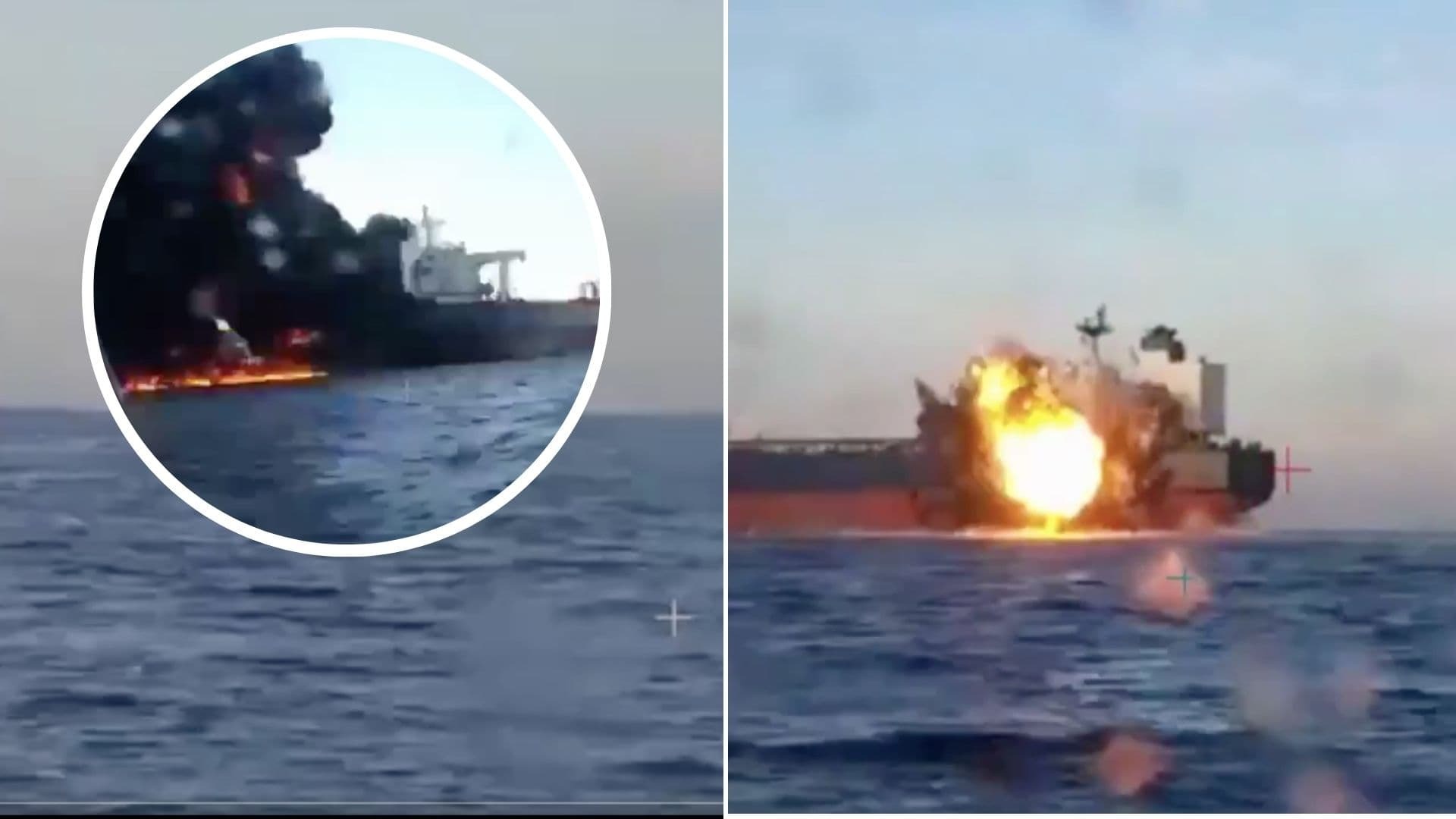
Un par de drones marinos (USV – Unmanned Sea Vessel) ucranianos han destruido dos enormes barcos “Tanker” rusos que transportaban petróleo en el Mar Negro. La misión de ataque ha sido ejecutada por pequeños USV conocidos como “Sea Baby maritime drones”, especialmente diseñados para operaciones de ataque en ese medio. De los rudimentarios USV utilizados en los comienzos de la guerra en 2022, estas plataformas han evolucionado enormemente, con alcances de hasta 1500 km y una carga explosiva de 2.000 kg, pudiendo llevar otro tipo de armas como ametralladoras o antitanque. Frente a la diferencia de poderío naval entre ambos contendientes, estos modestos sistemas autónomos se han convertido en una herramienta fundamental, para las acciones que contribuyen a la estrategia naval asimétrica de Ucrania en el Mar Negro.
Two sea drones have destroyed two giant enemy vessels in the Black Sea. The operation involved two Baby maritime drones, a type of unmanned surface vessel designed for sea operations.
Ukraine’s these drones hit two tankers belonging to Russia’s so-called shadow fleet in the Black Sea. The two sanctioned vessels were going to transport $70 million worth of oil.
The oil tankers, Kairos and Virat, were hit off Turkey’s Black Sea coast while the vessels were en route to the Russian port of Novorossiysk. Officials in Ukraine also claimed that the vessels were helping Russia bypass international sanctions.
Russian vessels engulfed in flames
Officials also released the video of the attack and it shows Russian vessels engulfing in flames after being hit by sea drones.
The blast struck the Kairos around 15:00 GMT on Friday, with rescuers evacuating its 25 crew members after a fire broke out. At the time, it was about 100 kilometers east of the point where the Bosphorus Strait enters the Black Sea. The Virat was struck later. At the time, it was about 400 kilometers further east, according to the VesselFinder tracking site, reported The Moscow Times.
Both vessels were sailing under the Gambian flag.
“These incidents, which occurred within Turkey’s Exclusive Economic Zone in the Black Sea, have posed serious risks to the safety of navigation, life, property, and the environment in the region,” said the Turkish Foreign Ministry in a statement following the strikes on the tankers.
“We are maintaining our contacts with the relevant parties to prevent the spread and further escalation of the war across the Black Sea, and to avoid any negative impact on Turkey’s economic interests and activities in the region,” added the ministry expressing concern for safety in the region.
Long range with higher payload capacities
Developed by the Security Service of Ukraine (SBU), Ukraine’s Sea Baby maritime drones have become a central tool in Ukraine’s asymmetric naval strategy in the Black Sea. Originally conceived as single-use explosive boats, they have evolved into reusable, modular, long-range naval platforms capable of reconnaissance, direct strikes, and specialized missions such as underwater mine deployment.
Their capabilities have expanded significantly as the newest versions reportedly feature ranges exceeding 1,500 km, payload capacities of up to 2,000 kg of explosives, improved navigation and communications systems, and optional weapon modules such as remote machine-gun turrets or even small rocket-launcher systems. Some variants can deploy aerial drones for surveillance or battle-damage assessment, enhancing precision and situational awareness.
Months ago, at a demonstration to journalists in an undisclosed location, two grey-coloured naval drones mounted with rocket launchers and guns were on display. One was taken on a test run on the water, controlled by an operator on shore watching via a live stream, reported Reuters.