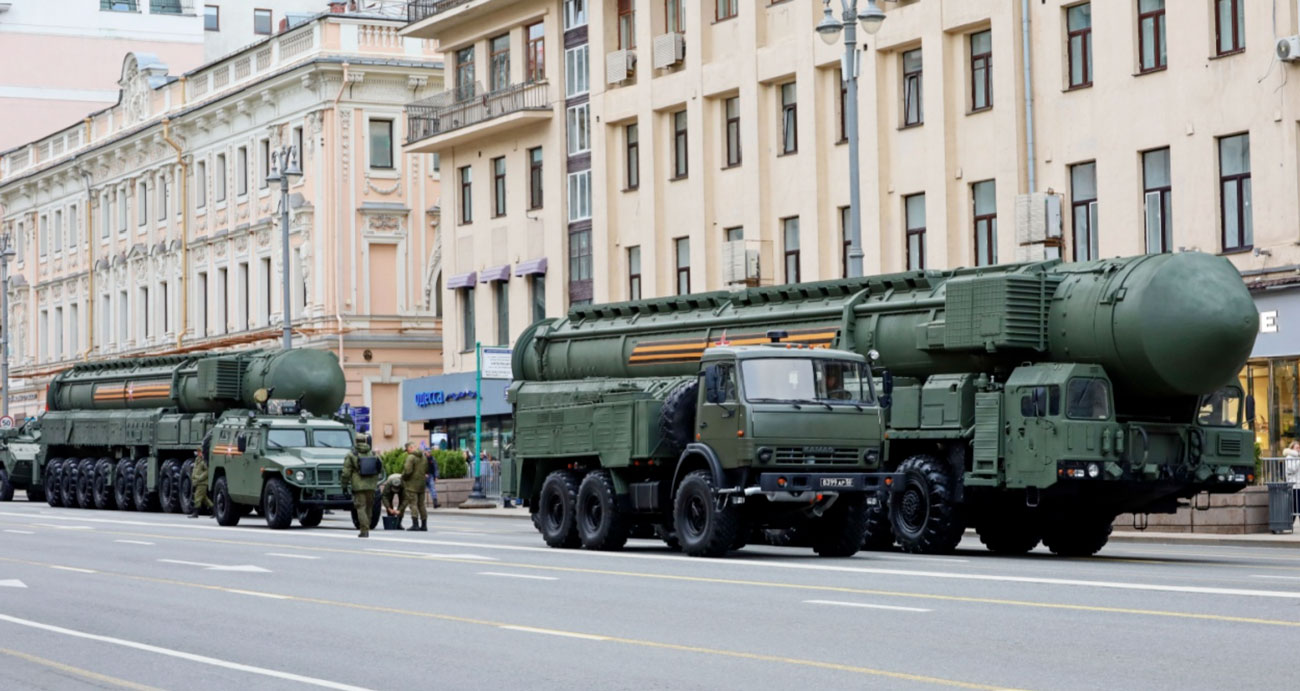
El año 2025 marcó el regreso de los asuntos nucleares al centro de la agenda de seguridad global, que se ha caracterizado por la inestabilidad y el fin de viejos paradigmas. En Europa, la atención sobre el tema nuclear se desplazó hacia la guerra en Ucrania y las constantes señales de Rusia, que utilizó la amenaza de empleo de su arsenal nuclear, para intentar paralizar la ayuda occidental al país invadido. En Asia, China consolidó su tríada nuclear, demostrando que su capacidad ya no es solo una “disuasión limitada”, sino una fuerza estratégica que debe ser tenida en cuenta. Estados Unidos, por su parte, reafirma sus alianzas y se mantiene atento a la modernización de sus rivales y otras amenazas potenciales como Corea del Norte. El informe concluye que, si bien 2025 no terminó en una crisis nuclear, las tendencias actuales apuntan a una posible nueva carrera armamentista y a un entorno de incertidumbre donde cualquier error de cálculo podría ser fatal.
The year 2025 made it crystal clear that the world is changing, and the world of nuclear weapons is changing right along with it. What once appeared a distant, slowly shifting strategic landscape now feels like a system under cumulative pressure, shaped by accelerating technological change and a series of simultaneously unfolding crises.
As 2026 begins, it is worth looking back at the developments that defined last year’s nuclear-security environment. No single event proved shocking, but taken together, they demonstrate how nuclear deterrence has returned to the center of global security thinking. This picture is neither wholly catastrophic nor reassuring. But it is unmistakably more complex, more fluid, and more uncertain than the assumptions that governed the past three decades.
Europe’s Nuclear Center of Gravity Subtly Shifts
One of the notable developments of the year was the quiet but unmistakable tightening of nuclear coordination among Europe’s two nuclear powers. The Northwood Declaration signaled that the United Kingdom and France are now prepared to explore a more integrated approach to European deterrence. As a result, in December, the newly formed UK-France Nuclear Steering Group met for the first time (to lay political steering for future coordination), and the UK observed France’s strategic airborne exercise POKER, with access never before granted to any other country.
The UK, for its part, increasingly signals a nuclear role beyond the submarine force, expressing its intent to participate in NATO’s nuclear-sharing mission through future dual-capable aircraft. France is modernizing and modestly expanding elements of its force de frappe, while opening the door to more structured strategic consultations with select European partners. These are not NPG-like arrangements, yet they hint at a recognition that Europe’s strategic backstop may, at times, require European reinforcement.
This coincided with NATO’s own nuclear evolution. Steadfast Noon, the alliance’s annual nuclear deterrence exercise, was deliberately more transparent and drew the highest level of participation in years. While the political debate over NATO’s force posture remains anything but harmonious, the practical dimension of burden sharing in NATO’s nuclear deterrence mission has moved forward, with new northern members integrating into the broader set of missions. Here, unlike in other policy areas, NATO’s trajectory in 2025 pointed to incremental but genuine cohesion.
Asia and the Middle East: No Nuclear Proliferation but No Security Either
The Middle East avoided a nuclear cascade in 2025. No new nuclear states emerged, and the Israel-Iran War did not escalate into the worst-case scenario many had feared. Yet, the United States reached an unprecedented degree of involvement, including the deployment of nuclear-capable strategic bombers in preventive strikes against Iranian nuclear facilities. These were conventional strikes, but the signal was obvious. Whether such actions stabilize the regional environment or inadvertently accelerate proliferation pressures is a question 2026 will begin to answer.
For now, it is difficult to argue that Iran’s longstanding hedging strategy has produced favorable outcomes. The events of 2025 may well strengthen incentives in Tehran to move beyond hedging toward a more decisive posture, especially in an international environment that may become more permissive for such moves. The region’s nuclear proliferation did not formally expand this year, but that should not be mistaken for a sustainable equilibrium.
Nor is Iran the only proliferation-relevant actor. Pakistan, a nuclear-capable state and strategic partner to multiple Gulf actors, remains intimately connected to the stability calculus of the wider Middle East. The Saudi-Pakistan Strategic Mutual Defence Agreement has re-entered strategic discussion as Iran’s behavior and the Gulf’s shifting security landscape sharpen long-standing questions about guarantees, partnerships, and potential nuclear hedging. This arrangement is more than a bilateral symbolism. It is part of the emerging structural architecture that will shape how states in the region think about deterrence and escalation in their decision-making in the years ahead.
The spring saw the first direct conventional conflict between two nuclear-armed states in this century. The 2025 India-Pakistan crisis was contained before crossing strategic thresholds. Still, it served as a stark reminder that the world now hosts multiple nuclear dyads with disputes, potentially short escalation ladders, and uncertain crisis management mechanisms. The fact that the conflict did not escalate is less a sign of stability than a reminder of how narrow the margins might eventually become. The precedent of two nuclear states engaging in open military confrontation should feature prominently in future assessments of global risk.
If Europe’s nuclear evolution was incremental, China’s was clearly robust. The September 2025 military parade showcased, for the first time, the full extent of China’s nuclear triad. This represented the maturation of China’s strategic forces into a capability that should no longer be viewed as a limited deterrent. The implications for US extended deterrence, for allied reassurance, and for global stability are structural. The shift from a minimal to a robust, expanding arsenal is one more indicator that the assumptions of the early 2000s no longer apply.
Fuente: https://nationalinterest.org