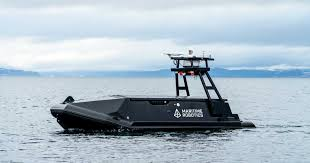
Expertos del Center of European Policy Analysis (CEPA), afirman que los sistemas autónomos, tanto marinos (USV) como aéreos (UAV), resultan fundamentales para contribuír al dominio estratégico de la NATO en el Ártico, región cada vez más disputada por la creciente presencia de buques rusos y chinos. Destacan principalmente la importancia de los USV, por su capacidad de soportar condiciones climáticas extremas durante períodos prolongados, aportando una vigilancia constante en ambientes donde la presencia humana resulta impracticable. Asimismo, además de aportar información en tiempo real para un mejor conocimiento de la situación, estas tecnologías actúan como “multiplicadores de fuerza” de las capacidades militares convencionales.
Unmanned vehicles that can withstand harsh weather for prolonged periods at sea are critical to maintain NATO’s strategic dominance in the Arctic, experts from the Center for European Policy Analysis told Defense News at a January 22 briefing.
The Arctic is becoming a hotly contested environment with increasing incursions from Russian and Chinese vessels in recent years. These intrusions constitute deliberate pressure on NATO, according to Lance K. Landrum, senior fellow at CEPA, who moderated the discussion.
“We could look at it from the sense of, ‘This is a major force-on-force war’ with amphibious assaults and all-domain force-on-force warfare — or we can look at it in the sense of hybrid malign influence and a slow burn of just leaning on the alliance and creating a new norm,” Landrum said.
Jan Kallberg, senior fellow with transatlantic defense and security at CEPA, told Defense News that, while boots on the ground are unlikely due to harsh conditions, maritime threats remain a concern.
“I don’t think there is an imminent ground threat unless they use some of the regular ground forces further up north, which might be tricky,” Kallberg told Defense News. “I see it mainly as a naval threat. They are seeking to destroy cables.”
He cited the sabotage of underwater cables in the Baltic Sea as an example of threats to NATO, which unmanned underwater vehicles, or UUVs, could potentially guard against.
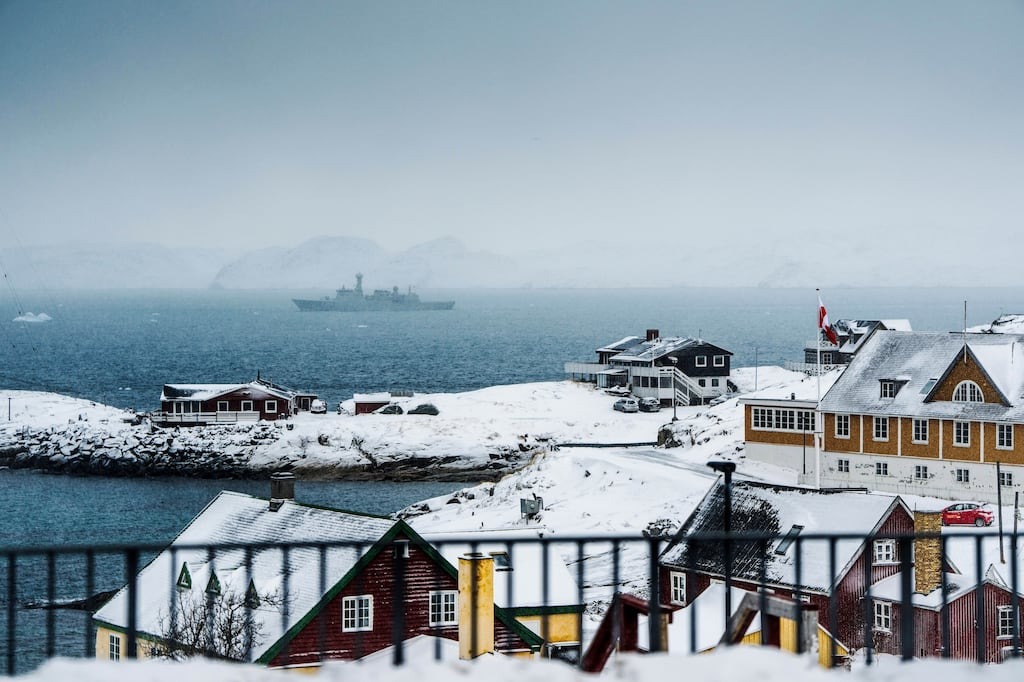
Although the extremely rugged conditions in the Arctic will test the capabilities of autonomous systems, their ability to endure is what will make them vital in the region, senior fellow Maj. Gen. Gordon Davis told reporters.
“Uncrewed systems matter in the High North not because they’re revolutionary but because they enable persistence where continuous human presence is really impractical,” Davis said.
Kallberg added that the use of maritime drones would be an ideal means of conducting surveillance in an environment defined by extreme elements, vast uninhabited areas and volatile weather conditions.
“With drones, what I find really important in a tactical application, is the drones themselves would create a lot of benefits when it comes to intelligence, getting data, answering questions, directing where to strike,” he said.
The Arctic is becoming a fiercely contested hotspot, with Danish military officials speculating that the High North could see an open conflict develop.
Last summer, intrusions by Chinese ships provoked a response from the U.S. Coast Guard. Additionally, the U.S. Air Force conducted a landmark joint exercise with Norwegian armed forces simulating a B-2 stealth bomber strike on a surface vessel in the region.
Fuente: https://www.defensenews.com