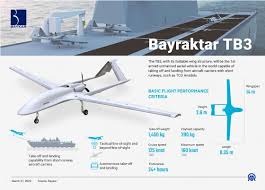
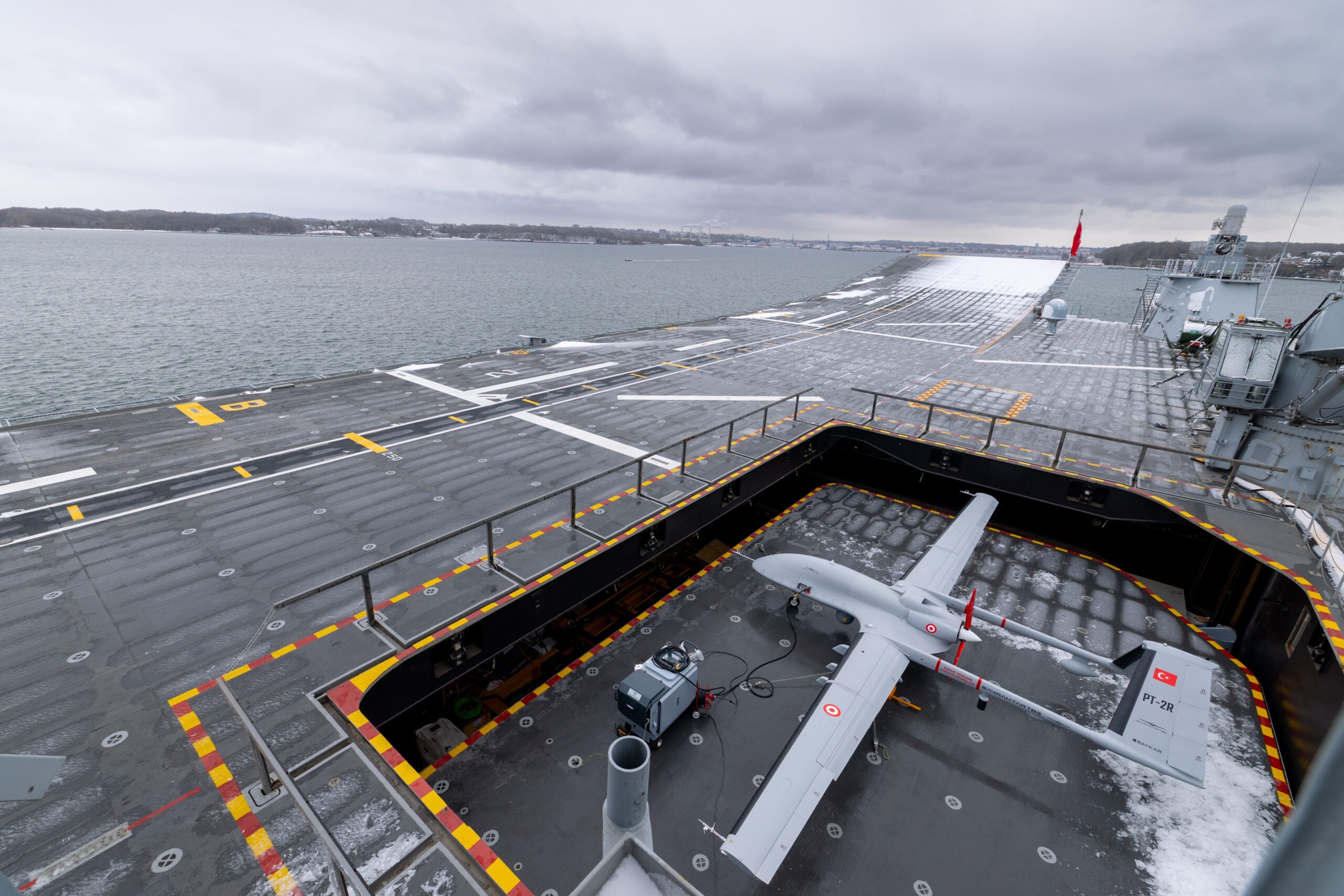
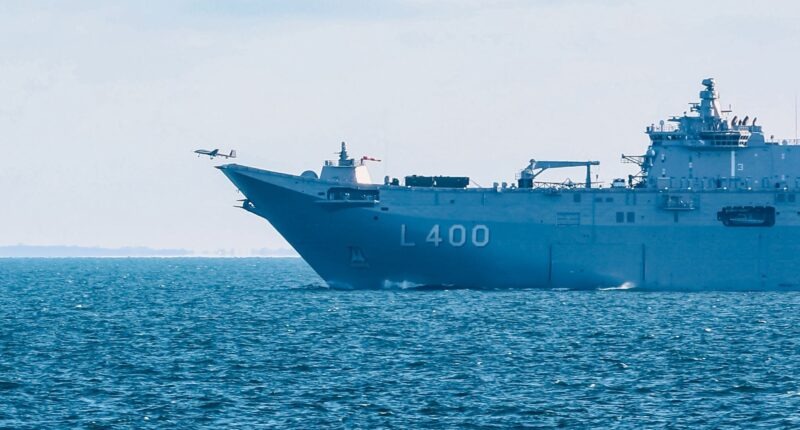
El dron turco Bayraktar TB3 completó con éxito su demostración operativa durante el ejercicio Steadfast Dart 2026 de la OTAN. Operando desde el buque de asalto anfibio TCG “Anadolu” en el Mar Báltico, el vehículo aéreo de combate no tripulado (UCAV) demostró su capacidad de despegue y aterrizaje autónomo en pistas cortas. Asimismo, durante las pruebas de fuego real, el TB3 destruyó objetivos navales y terrestres con gran precisión, mediante ataques simultáneos con dos misiles guiados MAM-L, también producidos por la firma Baykar. Este UCAV tiene una autonomía de hasta 24 hs y una carga útil de 280 kg. Turquía planea incrementar las pruebas coordinando misiones de múltiples TB3 desde un solo buque de asalto. De esta manera, la demostración reafirmó el papel estratégico de la aviación naval en Turquía y el interés de los aliados de la OTAN en estas tecnologías.
The Bayraktar TB3 unmanned combat aerial vehicle (UCAV) just showed NATO it can deliver dual-salvo strikes on surface targets, scoring direct hits during a recent live-fire exercise over the Baltic Sea.
Operating from the Turkish Navy’s TCG Anadolu, the drone took off autonomously from the ship’s short runway before engaging naval targets with “pinpoint accuracy.”
The demo reportedly marked the first time the TB3 flew outside Turkish airspace in real military conditions, proving the system’s capability beyond controlled testing environments.
Baykar plans to expand testing aboard the Anadolu, combining a dual-salvo strike profile on one UCAV with a heavier munition release from another.
The testing was part of NATO’s Steadfast Dart 2026 exercise, described as the alliance’s most comprehensive trial efforts this year.
‘All-Day’ Performance
Beyond covert intelligence and reconnaissance missions, Baykar’s TB3 is designed for strike operations using “smart munitions” mounted under its wings.
It measures 8.4 meters (27.6 feet) long with a 14-meter (46-feet) wingspan and can carry up to 280 kilograms (617 pounds) of payload, including mission critical equipment.
The drone can also remain airborne for up to 24 hours, giving commanders the ability to conduct long-duration missions and maintain continuous situational awareness.
Although still under development, the UCAV is already capable of remote operations, with communication systems supporting both line-of-sight and beyond-line-of-sight control.
Fuente: https://nextgendefense.com