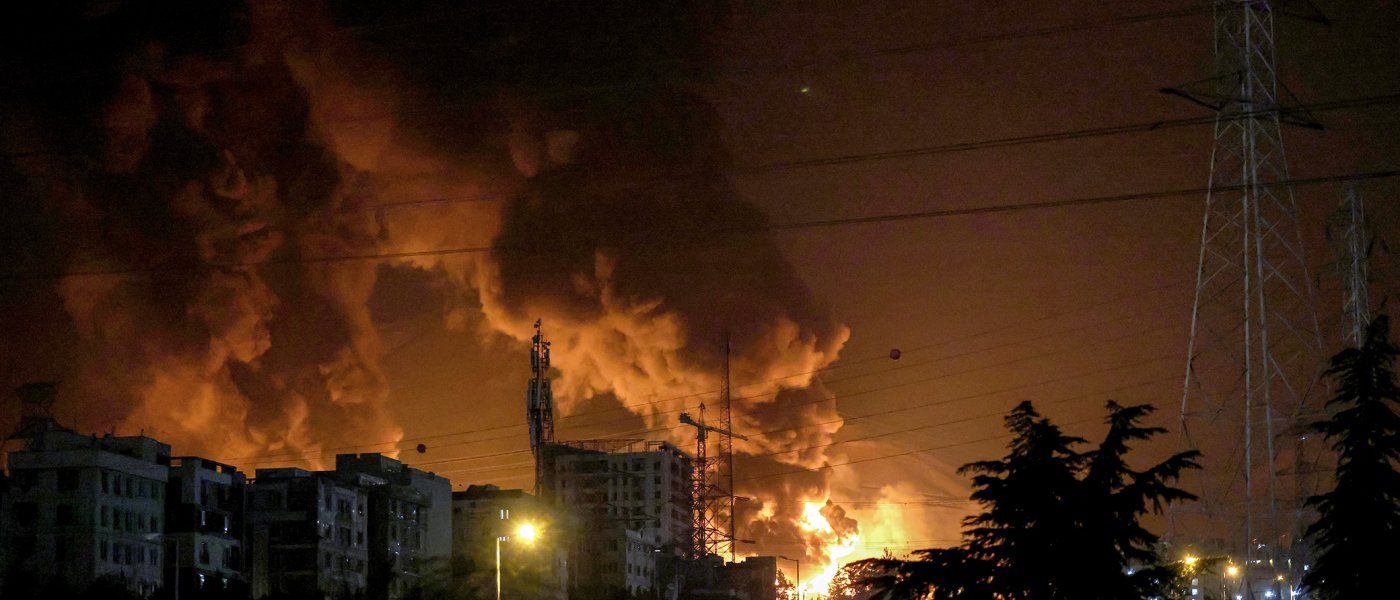
El presente artículo del CSIS (Centro de Estudios Estratégicos e Internacionales), publicado en el contexto de la operación “Epic Fury” de EEUU junto con Israel, analiza cómo el conflicto directo con Irán ha alterado drásticamente el panorama energético mundial. Los efectos más inmediatos y críticos están relacionados con: el bloqueo del estrecho de Ormuz y la parálisis del tráfico marítimo en la zona; los daños en la Infraestructura de Irán y de varios países de la región; la disrupción del mercado de GNL que afecta principalmente a Qatar; la reacción con alzas muy importantes de los precios del petróleo, entre otros efectos adversos observados. El informe concluye, que la guerra ha quebrado la confianza en el sistema de comercio energético global, poniendo en evidencia la necesidad de acelerar la transición energética de los países, moviéndose hacia un modelo donde la energía sea más local y disponga una estructura más resiliente, aunque la consecuencia de todo ello sea que la energía resulte más cara.
The sudden eruption of war in the Mideast Gulf has created dramatic new risks for global energy security. Iranian attacks have damaged oil and gas facilities in the Gulf region, and threats against shipping though the Strait of Hormuz have brought maritime traffic to a near standstill, halting oil and liquified natural gas (LNG) exports. As the crisis continues, announcements of closing production fields and LNG export facilities are beginning to mount. On Friday, March 6, international Brent oil prices surpassed $92 per barrel, up 28 percent since last Friday’s market close. Prolonged disruptions to shipping and/or significant damage to export facilities could cause lasting and larger price increases.
This week, President Donald Trump announced several measures to reduce potential energy price shocks. He said that the United States would guarantee shipping through the strait using both naval escorts and insurance products backed by the U.S. International Development Finance Corporation, and that it would loosen energy sanctions on Russian oil imports into India.
In this Experts React, the CSIS Energy Security and Climate Change team evaluates how markets are responding to current events and identifies signposts for escalation or relaxation.

This Could Leave a Mark
Kevin Book, Senior Adviser (Non-resident), Energy Security and Climate Change Program
This isn’t your grandfather’s oil market. One after another, geopolitical catastrophes that kept scenario planners awake for decades have delivered smaller-than-expected price spikes. But a Strait of Hormuz shutdown is a big deal. Many analysts expected an average global liquids surplus of more than 3 million barrels per day (MM bbl/d) this year. Instead, global supplies are falling ~20 MM bbl/d short. It is still early. But, because oil prices tend to move inversely with inventories, a long interruption could take Brent crude above $100/bbl.
Indeed, we might be there already but for long global balances and robust inventories ahead of the crisis. Much credit goes to the shale patch. According to data from the U.S. Energy Information Administration, U.S. liquids growth from calendar years 2008 to 2025 corresponded to approximately 70 percent of the expansion in global supply. Other Western Hemisphere non-OPEC producers contributed recently, too (looking at you, Argentina, Brazil, Canada, and Guyana). Yet past growth can only go so far if existing output remains bottled up by an expanding war of unknown duration.
The demand side matters, too. The economic pinch might be tighter—and it might come sooner—but for a ~36 percent decline in the oil intensity of real global GDP over the 25 years through calendar year 2024 (based on a synthesis of Energy Institute and World Bank data). Much of that reduction can be ascribed to efficiency gains and economic diversification. It buys the world more time. But if vessel traffic through the strait does not soon resume, the pinch will arrive, and supply will balance demand at a higher price.
Then there is energy fungibility. Substitution across sources has its limits. For example, electricity cannot replace petroleum fuels in transportation without a sizeable global fleet of plug-in hybrid-electric vehicles. But the last big energy war offered a meaningful precedent. In 2022, sanctions and physical dislocations (read: Nord Stream) pared back that ~5 percent share of exported Russian Btus by ~20 percent. Impacts reverberated across subsectors. Most notably, as Asian LNG cargoes diverted to Europe in place of lost pipeline gas flows westbound from Russia, Asian power generators burned more petroleum liquids. Intuitively, impairment in the strait seems likely to produce similar reactions, perhaps by driving up capacity utilization at coal-fired generation facilities in Asia.
Ripples from the strait disruption could affect future investment, too. Import-reliant economies all over the world might look with new interest at lower-48 U.S. LNG. They also might see new strategic impetus in building out endogenous generating capacity (renewables in the near term, nuclear power over time) and accelerating the electrification of end-use sectors. The magnitude of such aftershocks seems likely to be proportional to the duration and scale of the crisis.

No Panic in the Oil Markets
Adi Imsirovic, Senior Associate (Non-resident), Energy Security and Climate Change Program
Despite clear risks to export facilities and shipping through the Strait of Hormuz, oil prices have barely reached $90 a barrel for Brent. This is surprising, as many observers expected such a scenario to lead to prices well more than $100 a barrel. Even more surprising, contracts for oil taking delivery in forward months, like January 2027, are hovering around $70.
What is going on, and is the market mispricing the risk of a prolonged conflict?
First, markets had already priced in the risk of military escalation. In the week preceding the initial strike, Brent rose from just above $60 to over $70 per barrel. Risk was accumulating before the first shot was fired. Then, after Iran targeted energy facilities and threatened shipping through the strait, the June–December Brent spread moved from $3.5 to $9 a barrel, indicating a steep premium for prompt oil delivery.
So why would the front of the curve respond violently, but the back end remain anchored at about $70 a barrel? There are several reasons for this.
First, the market anticipated a large oversupply of oil this year, caused by healthy supply, particularly from the safe regions of the Americas (United States, Brazil, Guyana, and Canada), meeting anemic demand growth from China.
Second, Organization for Economic Co-operation and Development emergency stocks are healthy, holding at least 90 days of consumption. Chinese oil inventory is large enough to last a lot longer, perhaps well over 110 days of consumption. The U.S. Strategic Petroleum Reserve has over 400 million barrels of oil available to its refineries. Being the largest oil producer in the world, and a large exporter, this volume would cover some 125 days of demand.
Finally, the current problem is not a lack of oil but a lack of secure transportation from the Persian Gulf. The Straits of Hormuz are over 20 kilometers wide and cannot be easily shut. But they can be treacherous, and this risk has to be mitigated. This logistical problem can be resolved by the provision of adequate war insurance cover and, ideally, policing of the straits. While the latter is unlikely, the former would get the shipping moving again, supplying the precious commodity.
A prolonged war may well result in elevated prices, but markets work. Oil markets are volatile, but they are not irrational. There will be no shortages, and no reasons to panic.

Factors Mitigating the Long Duration War Scenario
Sarah Emerson, Senior Associate (Non-resident), Energy Security and Climate Change Program
Recent reporting on strikes and damage across the Arab Gulf gives the impression of escalating risk. Fires at Ras Laffan and Ras Tanura and reduced traffic through the Strait of Hormuz have lifted oil prices modestly. While an intentional or accidental attack could still cause significant casualties or damage to energy infrastructure, several factors suggest the conflict may be difficult to sustain at its current intensity and could shorten its duration.
The current pace of strikes cannot continue indefinitely. U.S. and Israeli forces are diminishing Iran’s missile and drone capabilities. Meanwhile, interceptor missile stocks in the Gulf countries are declining. The United States and Israel are claiming air superiority over Iran, which will allow for a shift to aircraft-delivered munitions, allowing closer targeting and perhaps more effective air-to-air elimination of drones.
Iranian attacks on energy infrastructure have caused only modest damage, suggesting they may be a secondary target. Iran’s strategy appears focused on lashing out at as many targets as possible, including air bases, embassies, hotels, and other locations where Americans might be. Reportedly, commanders in the field were given authority to target and strike without centralized coordination. In a conflict covering as much territory as this one, that lack of coordination may explain the pinprick, scattershot nature of Iran’s attacks.
Meanwhile, energy disruption will pressure Iran too. The United States is insulated from the loss of supplies flowing through the strait, at least in the short term. By contrast, Iran’s primary customer, China, is directly and immediately impacted by the drop in flows from the region. China has already called for the return to unfettered shipping though the Strait of Hormuz. Iran’s crude stocks stored at sea are currently about 155 million barrels, which suggests Iran has about 100 days of exports already outside of the Strait of Hormuz. Given the distance of Iran from China, Iran will eventually need to replenish those stocks. They cannot do that if the strait is closed or if their own oil infrastructure is destroyed in retaliation for their attacks on oil facilities and flows.

After the Storm, OPEC+ Will Face Choppy Seas
Raad Alkadiri, Senior Associate (Non-resident), Energy Security and Climate Change Program
OPEC+’s market management task this year just got a lot more difficult at a time when fiscal pressure on key producers, including Saudi Arabia, is growing sharply. With the U.S. and Israeli attacks on Iran, and Tehran’s regional retaliation, the short-term supply-demand picture has gotten a lot more complicated.
But, the immediate supply impact is perhaps clearer than the longer-term impact on demand, complicating what was already OPEC+’s biggest market uncertainty this year. Will global economic growth be slower? Will countries tap reserves and then move quickly to refill them? Will higher prices encourage more investment in non-OPEC production? Will the Trump administration demand compensation—in coin and barrels—for the cost of the war? These are just a few of the questions OPEC+ will be faced with once the rockets stop flying and exports resume.
OPEC+ is most likely to continue its standing short-term market management strategy—adjusting supply to prevent price declines. The diminished disruptive ability of some of its most difficult-to-manage members—Russia, Venezuela, and Iran—will provide some respite.
Nevertheless, volatility and prices swings are likely to be a feature of crude markets for several months, even in the event of a quick and decisive resolution of the conflict. A messy outcome, with violence and instability escalating intermittently for months or even years, will make markets even more jumpy, and short-term fundamentals more difficult to predict. This year will test OPEC+’s market management skills.

The War in Iran Puts Qatar’s LNG Expansion in Question
Leslie Palti-Guzman, Senior Associate (Non-resident), Energy Security and Climate Change Program
The ongoing war introduces a new uncertainty over the large LNG expansion currently underway in Qatar. Doha’s North Field expansion, designed to increase LNG export capacity from 77 million tonnes per annum (mtpa) today to 110 mtpa by 2027 and potentially 126 mtpa by the end of the decade, has been central to expectations of abundant LNG supply later this decade.
LNG megaprojects operate on tight engineering schedules and depend on bottleneck-free supply chains. Even temporary disruptions around Qatar’s main export hub at Ras Laffan or heightened security conditions in the Gulf could slow the commissioning of new liquefaction trains. Sustained shipping “war premiums” for transiting the Strait of Hormuz could also affect the delivery of critical equipment. QatarEnergy had already announced a delay for its 33 mtpa, four-train North Field East project, now expected to start toward the end of 2026 rather than mid-2026. A delay of even six to twelve months would remove significant volumes from the market at a time when global LNG buyers were anticipating lower prices for 2027–2028.
The conflict not only raises questions about the timing of Qatar’s expansion, but also about the future of the tacit arrangement governing the shared reservoir between Qatar and Iran. The field contains roughly 51 trillion cubic meters (tcm) of non-associated gas in place, including an estimated 25 tcm of recoverable reserves in Qatari waters and about 14 tcm in Iranian waters. Reservoir management requires coordination between the two countries because production rates on one side can influence gas migration, pressure, and recovery on the other side. Political fragmentation in Iran or a shift toward resource nationalism could complicate cooperation and introduce uncertainty around the long-term development of the field.
The best-case scenario for Qatar would be the emergence of a stable and pragmatic leadership in Tehran that continues to respect the bilateral arrangements governing the shared reservoir. If the war ultimately leads to the emergence of a more pro-American government in Tehran, one of Qatar’s most persistent structural geographic and shipping vulnerabilities could diminish. For Doha, this outcome would likely require repositioning itself more clearly alongside the U.S. and Israel as the regional balance of power shifts.

Collateral Damage for Qatar’s LNG Industry
Ben Cahill, Senior Associate (Non-resident), Energy Security and Climate Change Program
Tiny Qatar is a giant in the LNG world, but its unique standing in the global market just took a hit. Since the inception of Qatar’s LNG industry, the country has prized its reputation as a stable supplier. It offered scale and dependability to buyers. Qatar Energy leveraged this status in commercial negotiations, especially with buyers in Northeast Asia, who regard LNG as a vital source of energy security. Qatar typically insists on long-term contracts with oil-linked pricing, as well as destination restrictions. No other country could successfully demand such terms. Even some buyers who previously balked at Qatar’s commercial terms have recently signed new supply contracts.
In part, this is because Qatar is expanding supply. The International Energy Agency estimates that Qatar’s multi-phase North Field expansion will account for about 21 percent of expected global supply additions between now and 2030—although project timing had already started to slip.
Now, through no fault of its own, Qatar’s near-flawless delivery record has been dented. Qatar Energy halted operations at its giant Ras Laffan complex on March 2 after a drone strike, and it declared force majeure to buyers on March 4. Even when plant operators believe it is safe to resume operations, it could take several weeks or more to fully restart production.
If supply from Qatar and the United Arab Emirates is halted for one month, that would remove about 7 million tons of LNG from the market. That is a manageable amount. For context, U.S. LNG supply grew by more than 20 million tons last year. But anything longer than a month’s disruption—which seems increasingly likely—and the LNG oversupply widely anticipated to begin this year would disappear, with spot prices reflecting a much tighter market.
There is simply no way to replace lost volumes from a supplier as large as Qatar. The country produced nearly 20 percent of global LNG last year, with more than 80 percent of its cargoes directed to Asia. A sustained production hit would affect buyers around the world—both term buyers in South Asia who depend heavily on Qatar, and spot market buyers who may find themselves in fierce competition for cargoes. This turn of events could be especially tough in Europe, where natural gas inventories across the European Union are currently at 30 percent of capacity. Summer, the primary season to refill gas storage, is just around the corner.
LNG buyers always consider risks associated with certain suppliers, and the larger buyers aim to diversify their supply sources and exposure to price and aboveground risks. The current Gulf conflict highlights the transit and geopolitical risks associated with LNG supply from Qatar, the United Arab Emirates, and Oman. Buyers cannot avoid such risks entirely, especially over the lifespan of a 20-year supply contract. But LNG supply from other regions, including the United States, now may have added long-term appeal.
Fuente: https://www.csis.org