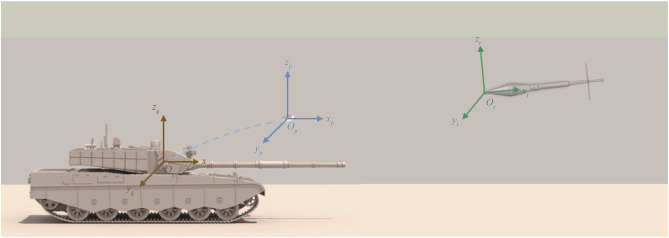
Este trabajo de investigación propone un método rápido y preciso para evaluar el daño que causan los interceptores de los Sistemas de Protección Activa (APS) de los blindados, sobre los proyectiles antitanque actuales. Los autores dividen el cohete “amenaza” en tres zonas funcionales críticas: la espoleta, el revestimiento y la carga explosiva. Para cada zona se establecen criterios de falla específicos utilizando análisis de circuitos, penetración geométrica y simulación de impacto. De esa manera establecen un marco de evaluación de daños sobre los cohetes que son impactados por la nube de fragmentos del interceptor, tratando de buscar la mayor eficiencia localizada de los impactos, para provocar la destrucción de la cabeza de guerra o la detonación prematura de la amenaza.
Abstract
With the widespread application of active protection systems (APS) in tank warfare, accurately assessing the damage effects of interceptors against rocket projectiles has become a critical challenge for improving battlefield survivability. Here, a rapid and precise assessment method is proposed. First, partition the rocket into three functional zones—Fuse, Liner, and Charge—via target characteristic analysis. Multi-zone damage criteria are established, where failure thresholds for the fuse, liner, and charge are quantified via equivalent circuit analysis, geometric penetration constraints, and shock initiation simulation, respectively. Subsequently, a “Point-to-Surface Distance Method with an Enclosing Shell” is proposed to optimize the dynamic projectile-target intersection calculation, enhancing computational efficiency and avoiding unnecessary calculations, while ensuring geometric precision. Based on this framework, the coupling effects of intercept distance and attack angle on damage probability are systematically investigated using Monte Carlo Method. The results reveal a mechanism governing damage mode evolution. While the damage probability is saturated in the near-field, a significant non-linear behavior emerges with increasing intercept distance. At large attack angles, more fragments hit the charge, driving a transition in damage mode from “Loss of Warhead Power” to “Premature Detonation”. This mechanism extends the 50% damage probability threshold from 1.3 m to 3.7 m, a nearly threefold increase. This methodology provides a scientific basis for the intercept parameter design of APS, with significant military value.
 Fuente: https://www.sciencedirect.com