El artículo del Bulletin of the Atomic Scientists, analiza el uso de la inteligencia artificial (IA) en el ámbito militar y advierte que la presencia formal de humanos supervisando las operaciones (Ciclo OODA) no garantiza un control real ni previene los riesgos asociados a la automatización de las decisiones. Señala que la creciente complejidad y velocidad de los sistemas de combate basados en IA, pueden reducir al operador humano a una mera figura decorativa, que aprueba decisiones algorítmicas sin comprenderlas ni cuestionarlas a fondo. Asimismo, destaca que las declaraciones oficiales sobre el mantenimiento del control humano suelen ser insuficientes frente a la realidad operativa, donde el sesgo de automatización y la presión del tiempo erosionan el juicio crítico. Por ello, su autora concluye que se necesitan marcos normativos más rigurosos, transparencia y salvaguardas técnicas estrictas, que aseguren una supervisión verdaderamente significativa y eviten la delegación irresponsable de decisiones letales cuando se emplean estas tecnologías.
In March 2026, Admiral Brad Cooper, head of US Central Command, described how AI tools helped his personnel sort through vast amounts of information and reduce the time needed to process tasks from hours or days to seconds during Operation Epic Fury against Iran. Alongside his emphasis on speed regarding such missions, Cooper also offered reassurance: “Humans will always make final decisions on what to shoot and what not to shoot and when to shoot.”
The assurance reflects a broader confidence that human authority can be preserved even as AI-enabled systems accelerate the pace of military operations and play a growing role in the kill chain. Yet, the key challenge in the interaction between personnel and AI-enabled systems is not whether humans remain involved in military decision-making, but how that involvement is designed and governed so that it remains meaningful and not just nominal.
Consider an operator deciding whether to authorize a strike on a building, uncertain whether the structure is being used for military or civilian activities. The operator’s AI-enabled decision-support system identifies it as a potential military target, drawing on multiple sources of information. The operator has been trained to assess the technology’s recommendations in terms of ethical, legal, and strategic criteria, and the AI-enabled decision-support system presents the basis for its assessment, its confidence level, and its limitations. With time to examine the sources and consider alternative explanations, the system supports the operator’s judgement. Now imagine the same operator, but with little training, using a poorly designed interface that obscures the evidence and limitations, while they are under pressure to clear hundreds of similar assessments quickly. In the latter situation, the operator retains formal decision authority and makes the final decision but has far less opportunity to exercise meaningful judgement.
This is a problem that military AI governance must increasingly confront. Keeping humans in the loop is a good first step towards responsible integration of military AI. But it should not be the be-all and end-all of responsible integration. Therefore, any declaration that a human will remain in the loop with regard to AI-assisted military decisions should come with key policies or structures to ensure that personnel will have meaningful control over their decision.
To achieve this, militaries must ensure responsible procurement, training, and structures. They should secure and test AI systems that allow personnel to scrutinize recommendations, recognize uncertainty, and understand the limits of their use. Training must prepare personnel to seek corroboration, challenge recommendations, and disregard outputs when warranted. Even then, military organizations must provide the time and authority to exercise that judgment, opportunities for independent verifications, and incentives that reward scrutiny. Meaningful human control is therefore a continuous responsibility for the whole military organization, extending well beyond the individual making the final decision.
Responsible procurement. Private sector actors develop or supply many military AI capabilities. States, therefore, need to engage with industry to establish clear requirements for the systems they acquire. This is important because commercial incentives and proprietary development practices do not always align with military operational, legal, and accountability requirements. So, before systems are even in the hands of militaries, industry developers should design AI support systems in a way that enables operators to have meaningful oversight. However, the accelerating race to acquire AI-enabled systems, exemplified by NATO’s acquisition of Palantir’s Maven Smart System in just six months, raises concerns that pressure to adopt these technologies may come at the expense of rigorous scrutiny.
Without this first step, keeping a human in the loop can mean little if the system is too difficult to understand or obscures the information needed to assess its recommendations. Procurement requirements should therefore mandate clear, intuitive interfaces that communicate the rationale behind outputs, and well of associated uncertainty and limitations. Testing should examine whether the system, including its interface, allows operators to critically evaluate AI recommendations under realistic operating conditions. Embedding or deploying engineers alongside military personnel, where appropriate, can help developers understand the challenges operators face.
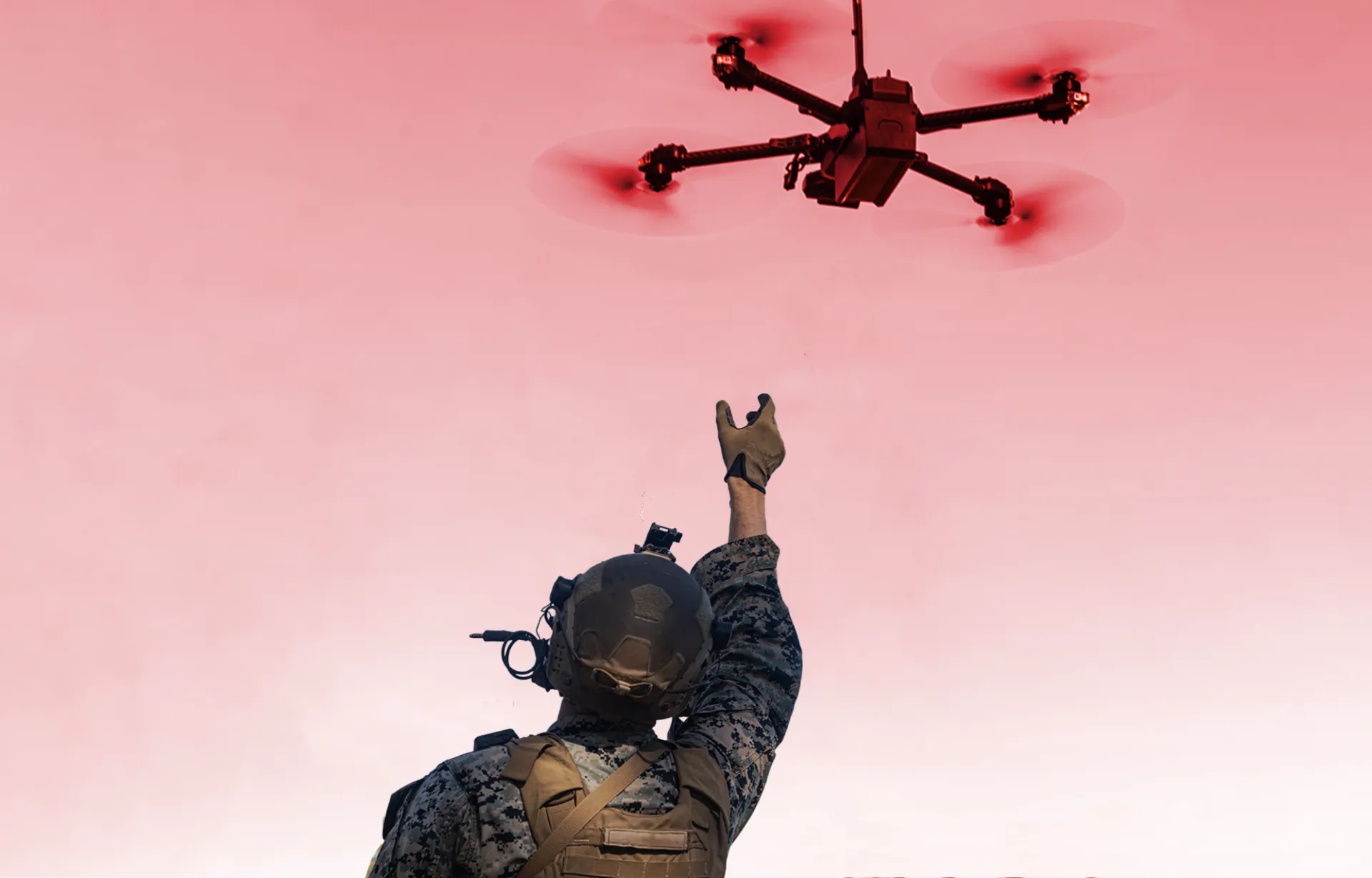
Further, procurement should establish not only what a system can do, but also where its capabilities stop. The Saker Scout, a Ukrainian AI-powered drone, illustrates why this matters: This uncrewed aerial vehicle can recognize military equipment but cannot distinguish Ukrainian from Russian targets. Rostyslav Olenchyn of Twist Robotics, the Kyiv-based defense-technology company that developed the drone, warns: “You should be sure there are no civilians, and not your own people.” Suppliers should disclose such limitations, and militaries should test whether the proposed safeguards and operating restrictions are adequate for the conditions in which they expect to use it.
Finally, explainability requirements should reflect the different information users need to understand and evaluate AI decisions depending on their roles and responsibilities. Meaning, different users require different forms of transparency. Operators need information that helps them assess a recommendation in the circumstances at hand, and commanders and investigators may need records that allow them to reconstruct how an output informed an action.
Responsible training. Once a system meets procurement standards, personnel tasked with using the system must be trained to understand its limitations and know when to rely on, verify, or challenge its recommendations. As Anna Rubinstein, who previously served as Chief of Responsible Artificial Intelligence for the National Geospatial-Intelligence Agency and as the Director of Test and Evaluation for Project Maven, told DefenseScoop, “We can’t just drop technology in somebody’s lap—you have to make sure the training and the tradecraft is there to support it.”
Training must also reflect the responsibility placed on personnel. In WIRED, Katrina Mason reported that former US Navy officer Emelia Probasco had spent a month learning how to operate the AEGIS Combat System (Lockheed Martin’s integrated naval weapons system), when to use it, and the circumstances in which it could fail. More than five years after Maven Smart System’s rollout, Probasco noted that its users lacked comparable preparation. For those making lethal decisions, Probasco argued, “soldiers should be trained as if it were a weapons system.”
Finally, training should not be treated as a one-time technical qualification, but rather continuous. Personnel should practice responding to incomplete information, misleading recommendations, unfamiliar conditions, and possible adversarial manipulation. Exercises should assess whether those who use these systems recognize uncertainty, seek corroboration, and disregard an output when warranted. Developers or suppliers should also provide training on the capabilities, limitations, intended uses, and known failure modes of their systems.
Responsible structures. Even with responsible procurement and continuous and thorough training, keeping a human in the loop does not guarantee meaningful control. The organizational structures around that person must make it possible to exercise judgement.
For example, what happens if an adversary manipulates the information fed to a system? An output may still look convincing, and its explanation may not reveal the problem. A trained operator cannot be expected to detect every instance of manipulation simply because they retain final decision authority. Militaries need monitoring, opportunities for independent verification, and clear procedures for investigating concerns or limiting reliance.
Personnel workload is also key to ensure that the human in the loop retains meaningful judgement. The Financial Times reports that as AI generates recommendations and outputs at greater speed and scale, human review can become a bottleneck. Training someone to scrutinize those recommendations achieves little if they have hundreds of recommendations to assess and insufficient time to do so. Where meaningful assessment is impossible, personnel need clear options for seeking more information, referring a decision to a commander, or limiting use of the system.
Finally, organizational incentives also shape operators’ ability to exercise meaningful judgment. Although operators may formally have the authority to reject an AI recommendation, they may feel unable to do so if commanders reward rapid acceptance or treat requests for verification as obstruction. Personnel should thus be assessed on the quality of their judgement, including justified challenges and requests for further scrutiny. There is little point in procuring systems that support scrutiny and training people to think critically if the organization then discourages scrutiny and critical thinking.
Ultimately, keeping a human meaningfully in control is a matter of accountability, as well as operational effectiveness. When an AI-assisted decision goes wrong, attention will turn to the human who approved it. Scrutiny, however, must also extend to those who selected the system, set the pace of operations, and shape the conditions in which it was used.
Fuente: https://thebulletin.org