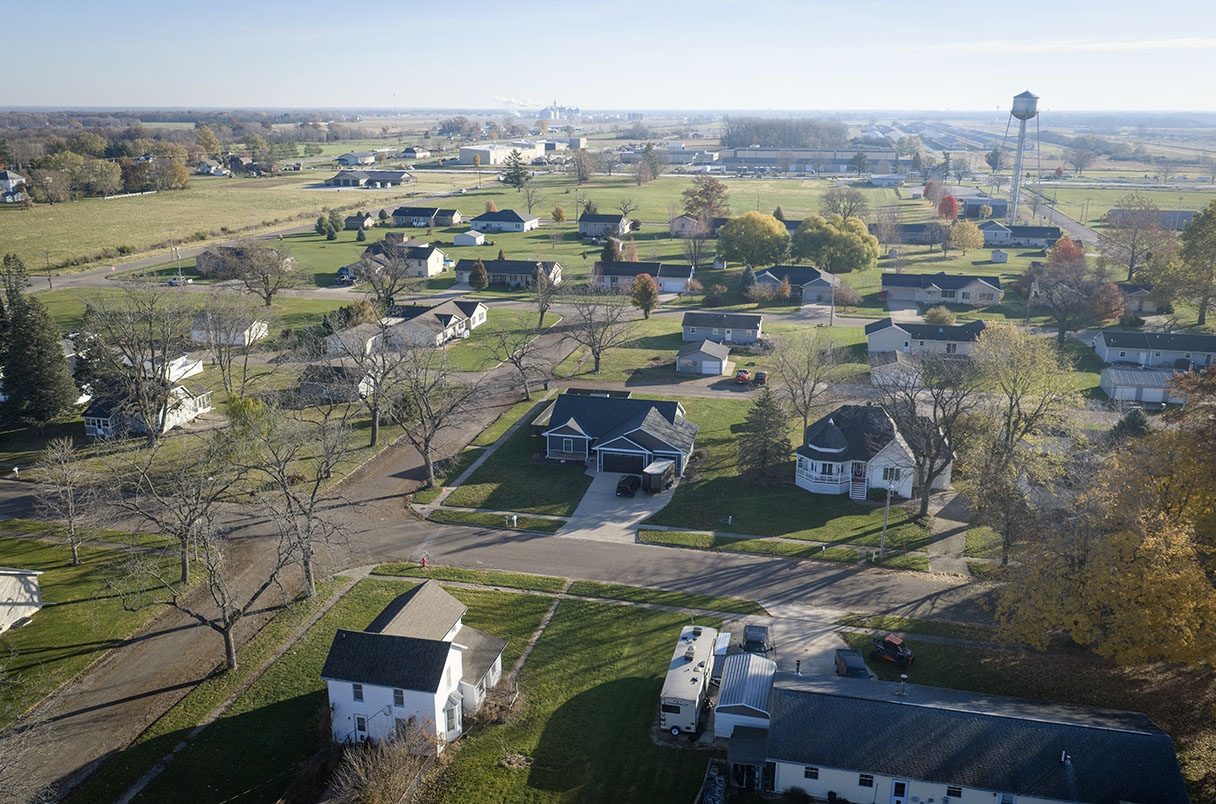
El US Army programó para el 25Nov26, dos detonaciones controladas en una planta de municiones de Middletown, Iowa, con el objetivo de destruir 68 barriles (Aprox 4.5 tn) de Azida de Plomo degradada e inestable. Aunque las autoridades sostienen que hacerlos explotar es la única alternativa segura frente al riesgo de un estallido accidental al manipularlos, la operación generó gran preocupación entre los residentes locales y organizaciones ambientalistas, que incluso intentaron frenar en la justicia. Los modelos oficiales realizados por expertos, estiman que la explosión liberará una columna de humo y polvo con partículas tóxicas de plomo capaz de desplazarse hasta unos 160 km. Ante la falta de tiempo y lo que consideran información insuficiente sobre los riesgos reales para la salud y el ambiente, investigadores de la Universidad de Iowa y científicos independientes desplegaron de urgencia sensores de aire y kits de muestreo de suelo antes y después del estallido, sumándose además un monitoreo aéreo y satelital de la NASA para medir la dispersión real del metal pesado en la región.
The U.S. Army plans to blow up a dangerous cache of raw material for munitions tomorrow morning at an ammunition factory in Middletown, Iowa. The blast could send more than 3 tons of lead dust into the atmosphere, a prospect that has alarmed residents and scientists, many of whom were unaware of the plans until last week. “It’s essentially a lead bomb,” says Patrick O’Shaughnessy, an occupational and environmental health researcher at the University of Iowa. “Now it’s a matter of how much gets ejected out of the bunker.”
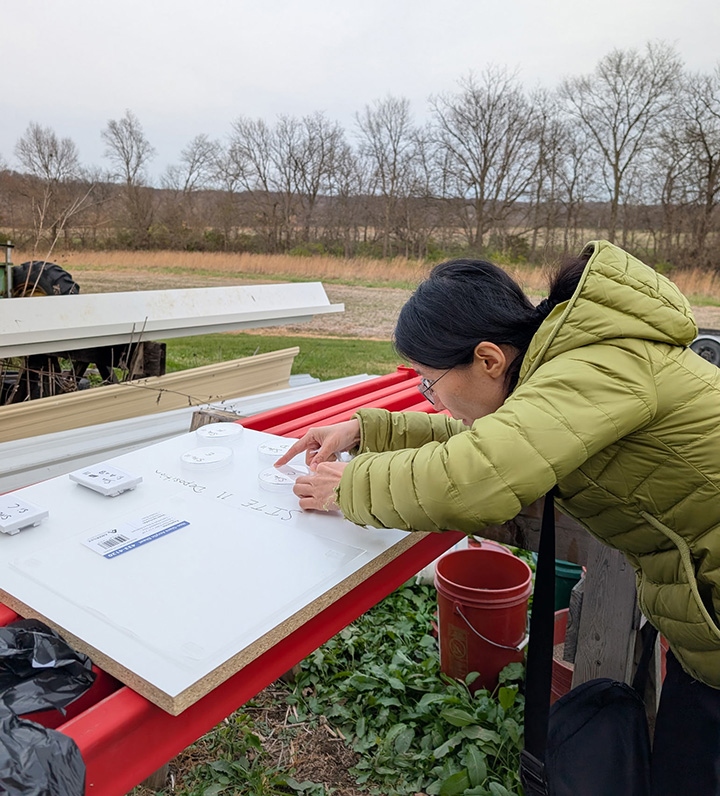
To better understand the health risk that will result, scientists in several states plan to track and sample the dust plume, and they are now scrambling to measure background lead concentrations for comparison. The University of Iowa has had a team of researchers preparing for days, and others are joining in. Atmospheric scientist Vishal Verma of the University of Illinois Urbana-Champaign (UIUC) received a call last night from the U.S. Army asking him to help monitor the blast. “I couldn’t sleep after that,” he recalls. This afternoon, he and several graduate students were driving to Iowa with air samplers and particle size spectrometers.
Lead azide is the main ingredient in a special explosive used as a detonator in bombs, artillery shells, and other explosive projectiles because it is especially sensitive to motion. Earlier this year, the Army discovered that lead azide in 68 barrels, stored for several decades, had begun to crystallize, making it vulnerable to blowing up spontaneously. The Army says intentionally detonating this material is the best way to eliminate that threat, and doing so is urgent because winter temperatures raise the risk of an explosion. The Army plans to use concrete barriers and foam to contain the blast, lessening dust. Still, it expects a plume to rise and spread perhaps 60 kilometers with dust at a hazardous level and has alerted nearby residents to take precautions such as staying indoors for a few hours after the blast.
Originally scheduled for last week, the explosion was delayed because of weather changes. The predicted path of the plume has also shifted, from Iowa City toward Illinois, and now southwest toward Missouri, fueling anxiety in rural communities. The changing predictions have “added to a kind of psychological stress,” O’Shaughnessy says.
The Environmental Protection Agency (EPA) has a team at the detonation site to monitor the outcome, but O’Shaughnessy says federal officials have not communicated much or coordinated with academic researchers. To ensure independent public data, University of Iowa environmental engineer David Cwiertny mobilized a team of scientists, which has set up about 18 monitoring sites that extend to about 40 kilometers southwest of the plant, repositioning gear as forecasts changed. They are now measuring background levels.
Cwiertny and O’Shaughnessy have received many offers of help. A former postdoc flew back from Columbia University on a red-eye flight the day before the blast’s previous scheduled date. His university shipped overnight a high-volume sampler that can pull in 1000 liters of air per minute to detect minute concentrations of lead, and it has been set up directly in the plume’s expected path. O’Shaughnessy says an environmental geochemist at Oregon State University has offered to assist with analyzing samples. And a software engineer has contributed an atmospheric model that can predict pollution dispersal.
The blast won’t cause any kind of agricultural disaster, says Andrew Margenot, a UIUC soil biogeochemist. He points out that Midwest topsoil has about 20 parts per million (ppm) of lead. Even if all of the lead from the detonation settled onto a single 100-hectare cornfield, it would remain well below the EPA’s 200 ppm residential threshold. And once in the soil, lead binds tightly to clay and organic matter, and crops effectively filter it out. Margenot says he has reassured worried farmers all weekend.
The true danger is acute inhalation near the blast zone and in the path of the dust plume. ”It’s going to be like a smoldering brush fire—just having smoke full of lead hitting people in their homes,” Margenot says. Verma says measuring the physical dimensions of the airborne lead is paramount. “The smallest particles are very efficient in penetrating in the deep part of the lungs,” Verma says.
This afternoon, EPA and the Army held a joint press conference. “We are putting the full force of the agency behind this effort to ensure we are doing everything possible to protect human health and the environment,” said Thomas Croci, EPA’s associate administrator for National Security and Operations Coordination.
Public advisories to stay indoors and wash playground equipment are prudent, but O’Shaughnessy stresses that testing is essential to confirm that neighborhoods are safe from lead dust. He hopes the university data, expected late next week, will provide the accountability residents have been demanding.
Fuente: https://www.science.org