En el presente trabajo realizado y publicado por “The Bulletin Of American Sscientist” y denominado “Nuclear Notebook 2026 ” los autores mencionan que EEUU se ha embarcado en un amplio programa de modernización nuclear, que implica la sustitución de todos los sistemas de lanzamiento de armas nucleares, por versiones más modernas en las próximas décadas. Se estima que EE.UU mantiene un arsenal de aproximadamente 3.700 ojivas nucleares, stock que continúa sin cambios respecto del año anterior. De ese total, 1.770 ojivas están desplegadas y aproximadamente 1.930 están en reserva. De las ojivas desplegadas, 400 se encuentran en misiles balísticos intercontinentales (ICBM), 970 en submarinos, 300 en bases de bombarderos en EEUU y 100 bombas nucleares tácticas en Europa.
The United States has embarked on a wide-ranging nuclear modernization program that will ultimately see every nuclear delivery system replaced with newer versions over the coming decades. In this issue of the Nuclear Notebook, we estimate that the United States maintains a stockpile of approximately 3700 warheads—an unchanged estimate from the previous year. Of these, only about 1770 warheads are deployed, while approximately 1930 are held in reserve. Additionally, approximately 1342 retired warheads are awaiting dismantlement, giving a total inventory of approximately 5042 nuclear warheads. Of the approximately 1770 warheads that are deployed, 400 are on land-based intercontinental ballistic missiles, roughly 970 are on submarine-launched ballistic missiles, 300 are at bomber bases in the United States, and approximately 100 tactical bombs are at European bases. The Nuclear Notebook is researched and written by the staff of the Federation of American Scientists’ Nuclear Information Project: director Hans M. Kristensen, associate director Matt Korda, and senior research associates Eliana Johns and Mackenzie Knight-Boyle.
This article is freely available in PDF format in the Bulletin of the Atomic Scientists’ digital magazine (published by Taylor & Francis) at this link. To cite this article, please use the following citation, adapted to the appropriate citation style: Hans M. Kristensen, Matt Korda, Eliana Johns, and Mackenzie Knight-Boyle. 2026. “United States nuclear weapons, 2026.” Bulletin of the Atomic Scientists, 82(2): 119–150. DOI: https://doi.org/10.1080/00963402.2026.2633029
To see all previous Nuclear Notebook columns in the Bulletin of the Atomic Scientists dating back to 1987, go to https://thebulletin.org/nuclear-notebook/.
As of February 2026, we estimate that the US Department of Defense maintains an estimated stockpile of approximately 3700 nuclear warheads for delivery by ballistic missiles and aircraft. Most of the warheads in the stockpile are not deployed but rather stored for potential upload onto missiles and aircraft as necessary. We estimate that approximately 1770 warheads are currently deployed, of which roughly 1370 strategic warheads are deployed on ballistic missiles and another 300 at strategic bomber bases in the United States. An additional 100 tactical bombs are deployed at air bases in Europe. The remaining warheads—approximately 1930—are in storage as a so-called “hedge” against technical or geopolitical surprises. Several hundred of those warheads are scheduled to be retired before 2030 (see Table 1).

While the majority of the United States’ warheads comprise the Department of Defense’s military stockpile, retired warheads under the custody of the Department of Energy awaiting dismantlement constitute a “significant fraction” of the United States’ total warhead inventory (US Department of Energy 2024b, F-6). Dismantlement operations include the disassembly of retired weapons into component parts that are then assigned for reuse, storage, surveillance, or additional disassembly and subsequent disposition (US Department of Energy 2023b, 2–11).
The pace of warhead dismantlement has slowed significantly in recent years: While the United States dismantled on average more than 1000 warheads per year during the 1990s, in 2023 it dismantled only 69 warheads—the lowest number since the 1990s (National Nuclear Security Administration 2024a). According to the Department of Energy, “[d]ismantlement rates are affected by many factors, including weapon system complexity, availability of qualified personnel, equipment, facilities, logistics, policy and directives, and legislative requirements” (US Department of Energy 2024a, 2–14). The US Department of Energy stated in April 2023 that it “was on pace to complete the dismantlement of all warheads retired before Fiscal Year (FY) 2009 [Sep. 2008] by the end of FY 2022 [Aug. 2022]” but that the COVID-19 pandemic “delayed the dismantlement of a small number of these retired warheads until after FY 2022 [Aug. 2022]” (US Department of Energy 2023a, 2–12). The FY 2025 Stockpile Stewardship and Management Plan reported that the Pantex Plant—where all warhead assembly and disassembly activities take place—surpassed its FY 2023 dismantlement goals and increased its staffing to support its FY 2024 commitments. It also reportedly completed the dismantlement of all remaining W84 warheads that had previously been in the queue—a process that took approximately 15 years from start to finish for the entire stockpile of 400 warheads (Kristensen 2010; US Department of Energy 2024a, 2–14).
Warhead dismantlement and disposition is an important process for the National Nuclear Security Administration (NNSA), as the new warheads that the United States is building rely on critical components from warheads that are currently awaiting retirement and eventual dismantlement. For example, the new B61-12 and B61-13 gravity bombs utilize modified versions of the physics packages used in the current B61-4 and B61-7 gravity bombs, respectively.
Based on these timelines and recent dismantlement rates, we estimate that the United States possesses approximately 1342 retired—but still intact—warheads awaiting dismantlement, giving a total estimated US inventory of approximately 5042 warheads.
The US nuclear weapons are thought to be stored at an estimated 24 geographical locations in 11 US states and five-six European countries (Kristensen and Korda 2019, 124). The number of locations will increase over the next decade as nuclear storage capacity is added to three air bases in the United States—Ellsworth, Dyess, and Barksdale—and two in the United Kingdom—RAF Lakenheath and RAF Marham. The location with the most nuclear weapons by far is the large Kirtland Underground Munitions and Maintenance Storage Complex south of Albuquerque, New Mexico. Most of the weapons in this location are retired weapons awaiting dismantlement at the Pantex Plant in Texas. The state with the second-largest inventory is Washington, which is home to the Strategic Weapons Facility Pacific and the ballistic missile submarines at Naval Submarine Base Kitsap. The submarines operating from this base carry more deployed nuclear weapons than any other base in the United States.
The United States has embarked on an ambitious plan to overhaul its nuclear weapons arsenal and command and control systems over the next three decades though the modernization effort has faced significant political, financial, and logistical challenges. Based on the Congressional Budget Office’s (2017) estimate, the modernization effort—combined with the costs of fielding and operating existing systems—was expected to cost $1.2 trillion over the next 29 years (Congressional Budget Office 2017). In its most recent estimate, the Congressional Budget Office projected these costs to reach $946 billion over the 2025 to 2034 period alone (Congressional Budget Office 2025a). Historical trends and chronic delays to the modernization program indicate that the price tag is likely to continue increasing over time.
In addition to the ongoing warhead modernization programs, the United States is also starting to consider how follow-on warhead programs will ultimately shape the US force posture. A new nuclear sea-launched cruise missile is being developed to enter the force in the early-2030s. Moreover, in 2024, the Nuclear Weapons Council approved two studies on non-ballistic reentry vehicles and hard and deeply buried targets (US Department of Energy 2024a, 5–14). The FY26 Congressional Justification sought a budget increase to fully fund the concept and assessment phase for two potential new warheads: one from the Next Generation Reentry Capabilities (NGRC) program (provisionally named WXX), as well as “a variety of Hard and Deeply Buried Target (HDBT) defeat efforts” (US Department of Energy 2025, 213, 218). One of these appears to be a “prototype air-delivered nuclear delivery system…to address a United States Strategic Command capability gap…to close this gap in the near term.” The prototype will be developed using F-15E and B-2 aircraft starting in 2026, examine several nuclear warhead options, and be completed in 2029 (US Department of Defense 2025c). The language suggests the prototype may be powered.
In 2023, multiple governmental advisory commissions published reports intended to influence the US nuclear posture. The US State Department’s International Security Advisory Board report on “Deterrence in a World of Nuclear Multipolarity” advised the United States to pursue competition with Russia and China “without accelerating arms race instability or risking runaway competition” (US State Department 2023b). In contrast, the Congressionally mandated report on “America’s Strategic Posture,” published in October 2023, included a broad range of recommendations for the United States to prepare to increase the number of deployed warheads, as well as to scale up its production capacity of bombers, air-launched cruise missiles, ballistic missile submarines, non-strategic nuclear forces, and warheads (US Strategic Posture Commission 2023). It also called for the United States to deploy multiple warheads on land-based intercontinental ballistic missiles (ICBMs) and consider adding road-mobile ICBMs to its arsenal.
While neither report represents official US government policy, the Strategic Posture Commission report’s status as a bipartisan document has been particularly useful for nuclear advocates to push for additional nuclear weapons (The Heritage Foundation 2023; Hudson Institute 2023; Thropp 2023). The second Trump administration has already attempted to adopt some of the more hawkish policies included in the Strategic Posture Commission and other non-governmental nuclear advisory papers. For example, some have advocated that the United States prepare to resume nuclear testing—something no country aside from North Korea has done since the 1990s—primarily as a demonstration of resolve (Peters 2025). In October 2025, Donald Trump made several statements indicating a desire to resume nuclear testing, followed by affirmation from Secretary of Defense Pete Hegseth (Price and Ceneta 2025). During his confirmation hearing, the Trump administration’s nominee for US STRATCOM Commander, Vice Admiral Richard Correll, cautioned that Trump was probably not referring to explosive nuclear testing (Hitchens 2025), although this was not confirmed by the president. After the confusion created by Trump’s statement, the US Department of State published US Intelligence that China had conducted very small explosive tests using decoupling to reduce seismic signals (DiNanno 2026).
Research methodology and confidence
The analyses and estimates made in the Nuclear Notebook are derived from a combination of open sources: (1) state-originating data (e.g. government statements, declassified documents, budgetary information, military parades, and treaty disclosure data); (2) non-state-originating data (e.g. media reports, think tank analyses, and industry publications); and (3) commercial satellite imagery. Because each of these sources provides different and limited information that is subject to varying degrees of uncertainty, we crosscheck each data point by using multiple sources and supplementing them with private conversations with officials whenever possible.
Collecting and analyzing accurate information about US nuclear forces is significantly less challenging than for most other countries, as the United States is the most transparent nuclear-armed state. To that end, we assess that the estimates included in this Nuclear Notebook come with a relatively high degree of confidence.
The United States is one of only a small handful of countries that has published data about the exact size of its nuclear stockpile. While this data is not released annually and largely depends upon the whims of the administration in power, in 2024, the US government responded positively to a declassification request made by the Federation of American Scientists and disclosed the size of the stockpile and number of annually dismantled warheads through September 2023 (National Nuclear Security Administration 2024a). The disclosure revealed that as of September 2023, the United States’ nuclear stockpile included 3748 warheads—only 40 more than our previous estimate of 3708 (Kristensen et al. 2024; National Nuclear Security Administration 2024a). We estimate that the stockpile will continue to decline slightly over the next decade as modernization programs consolidate the remaining warheads.
In addition, the United States also releases highly detailed assessments and reports relating to its nuclear forces, including the NNSA’s Stockpile Stewardship and Management Plan, budgetary justification documents, and environmental impact statements, among others. Government officials are also legally responsive to checks and balances, particularly Congress, which regularly asks for programmatic and budgetary updates on nuclear weapons programs. These checks are supported by robust watchdog, civil society, and media organizations, including government-funded agencies like the Government Accountability Office and the Congressional Budget Office, investigative journalists, and nongovernmental organizations that report on and critique government programs and plans.
We generally rely on official sources and images—as well as commercially or freely available satellite imagery—to analyze the United States’ nuclear arsenal and, whenever possible, try to corroborate the credibility of any unofficial claims with multiple sources. Satellite imagery can be particularly useful in monitoring construction at military facilities, as well as identifying which types of missiles, vessels, or aircraft are present at bases. In certain cases, useful imagery about nuclear systems can also be obtained through social media posts—both from military and civilian accounts—and can be used in conjunction with satellite imagery for more concrete analysis.
Finally, the United States is party to a bilateral arms control treaty with Russia—the New Strategic Arms Reduction Treaty (New START)—that until recently produced biannual datasets of deployed strategic nuclear forces. Russia suspended its participation in New START in February 2023, and in response the United States has not published any aggregate numbers since May 2023, when it declared that it had 1419 warheads attributed to 662 deployed ballistic missiles and heavy bombers as of March 1, 2023 (US State Department 2023a). The 2022 Nuclear Posture Review stated that “[t]he United States will field and maintain strategic nuclear delivery systems and deployed weapons in compliance with New START Treaty central limits as long as the Treaty remains in force” (US Department of Defense 2022a, 20), and the second Trump administration has so far adhered to this plan.
The New START warhead numbers reported by the US State Department differ from the estimates presented in this Nuclear Notebook for several reasons. The New START counting rules artificially attribute one warhead to each deployed bomber, even though US bombers do not carry nuclear weapons under normal circumstances. Moreover, the Nuclear Notebook counts as deployed all weapons stored at bomber bases that can quickly be loaded onto the aircraft, as well as nonstrategic nuclear weapons at air bases in Europe. This provides a more realistic picture of the status of US-deployed nuclear forces than the treaty’s artificial counting rules.
The New START treaty has proven useful so far in keeping a lid on both countries’ deployed strategic forces. Since the treaty expired in February without a successor agreement in place, both the United States and Russia could potentially increase their deployed nuclear arsenals by uploading several hundred stored reserve warheads onto their launchers. Additionally, if the treaty’s verification and data-exchange arrangements are not replaced, both countries will lose important information about each other’s nuclear forces. Until the treaty’s so-called “suspension,” the United States and Russia had completed a combined 328 on-site inspections and exchanged 25,017 notifications (US State Department 2022).
Nuclear planning and nuclear exercises
Since 1994, each presidential administration has conducted a review of the US nuclear posture that describes the administration’s guidance for US nuclear policy and strategy. The three most recent Nuclear Posture Reviews (NPR)—published in 2010, 2018, and 2022—have remained relatively consistent. Like previous NPRs, the most recent review said the United States reserved the right to use nuclear weapons under “extreme circumstances to defend the vital interests of the United States or its allies and partners” and rejected policies of nuclear “no-first-use” or “sole purpose” (US Department of Defense 2022a, 9). Even so, the 2022 NPR noted that the United States “retain[s] the goal of moving toward a sole purpose declaration and [it] will work with [its] Allies and partners to identify concrete steps that would allow [it] to do so.” (For a detailed analysis of the 2022 NPR, see Kristensen and Korda 2022).
The most significant change made in Biden’s 2022 NPR was the walking back of two Trump-era commitments. Specifically, Biden’s review attempted to cancel the proposed nuclear sea-launched cruise missile (SLCM-N) and continued with the retirement of the B83-1 gravity bomb. As of February 2026, it remained unclear whether the Trump administration intends to conduct a Nuclear Posture Review; the 2025 National Security Strategy and the 2026 National Military Strategy only mention US nuclear forces and strategy briefly.
In addition to policy, the nuclear arsenal and its role are shaped by plans and exercises that create the strike plans and practice how to carry them out.
The current strategic nuclear war plan—OPLAN 8010-12—consists of “a family of plans” directed against four identified adversaries: Russia, China, North Korea, and Iran. Known as “Strategic Deterrence and Force Employment,” OPLAN 8010-12 first entered into effect in July 2012 in response to the operational order Global Citadel. The plan is designed to be flexible enough to absorb normal changes to the posture as they emerge, including those flowing from the NPR. Several updates have been made since 2012, but more substantial updates will trigger the publication of what is formally considered a “change.” The April 2019 change refocused the plan toward “great power competition,” incorporated a new cyber plan, and reportedly blurred the line between nuclear and conventional attacks by “fully incorporat[ing] non-nuclear weapons as an equal player” (Arkin and Ambinder 2022a, 2022b). Under President Trump, the menu of military options for Iran reportedly appears to now include a renewed emphasis on nuclear weapons (Klippenstein 2025).
OPLAN 8010-12 also “emphasizes escalation control designed to end hostilities and resolve the conflict at the lowest practicable level” by developing “readily executable and adaptively planned response options to de-escalate, defend against, or defeat hostile adversary actions” (US Strategic Command 2012). While not new, these passages are notable, not least because the Trump administration’s NPR criticized Russia for an alleged willingness to use nuclear weapons in a similar manner, as part of a so-called “escalate-to-deescalate” strategy.
OPLAN 8010-12 is a whole-of-government plan that includes the full spectrum of national power to affect potential adversaries. This integration of nuclear and conventional kinetic and non-kinetic strategic capabilities into one overall plan is a significant change from the strategic war plan of the Cold War that was almost entirely nuclear, extremely large-scale, and “massively destructive” (Hyten 2017). The US Department of Defense’s 2022 Nuclear Posture Review and 2023 Strategy for Countering Weapons of Mass Destruction reaffirm the importance of flexibility, integration, and tailored plans (US Department of Defense 2022a, 2023a).
The Nuclear Employment Strategy published by the Trump administration in 2020 reiterated this objective: “If deterrence fails, the United States will strive to end any conflict at the lowest level of damage possible and on the best achievable terms for the United States, and its allies, and partners. One of the means of achieving this is to respond in a manner intended to restore deterrence. To this end, elements of US nuclear forces are intended to provide limited, flexible, and graduated response options. Such options demonstrate the resolve, and the restraint, necessary for changing an adversary’s decision calculus regarding further escalation” (US Department of Defense 2020, 2). This objective is not just directed at nuclear attacks, as the 2018 NPR called for “expanding” US nuclear options against “non-nuclear strategic attacks.”
In March 2024, the Biden administration issued new nuclear employment guidance, superseding the previous administration’s guidance. Press reports claimed the new guidance shifted focus to China (Sanger 2024); however, an unclassified version of the guidance released in November shows that Russia remains the “acute threat” (US Department of Defense 2024c, 1). The guidance does direct “that the United States be able to deter Russia, the PRC, and the DPRK simultaneously in peacetime, crisis, and conflict” (2). But, for years, the plan has been to deter those countries simultaneously, although the guidance does not require achieving all war objectives against Russia and China at the same time.
To practice and fine-tune the strike plans resulting from the guidance, the armed forces regularly conduct several nuclear-related exercises. Each April, Air Force Global Strike Command conducts its Prairie Vigilance exercise at Minot Air Force Base in North Dakota to practice B-52 strategic readiness and nuclear generation operations (US Strategic Command 2025a). The Vigilance exercise normally leads up to Strategic Command’s annual week-long Global Thunder large-scale exercise toward the end of the year that “provides training opportunities that exercise all US Strategic Command mission areas, with a specific focus on nuclear readiness” (US Strategic Command 2021a). The most recent iteration of Global Thunder began on October 21, 2025 (US Strategic Command 2025b).
These developments have been influenced by Russia’s invasions of Ukraine in 2014 and again in 2022. One example of this involves the expansion of bomber operations and updates to strike plans. Very quickly after the Russian annexation of Crimea, the US Strategic Command (US STRATCOM) increased the role of nuclear bombers in support of the US European Command (Breedlove 2015), which, in 2016, put into effect a new standing war plan for the first time since the Cold War (Scapparotti 2017).
Before 2018, the bomber operations were called the Bomber Assurance and Deterrence missions but have been redesigned as Bomber Task Force missions to bring a stronger offensive capability to the forward bases and make those forward deployments more capable. Whereas the mission of Bomber Assurance and Deterrence was to train with allies and have a visible presence to deter Russia, the mission of the Bomber Task Force is to move a fully combat-ready bomber force into the European theater (Wrightsman 2019). These changes are evident in the increasing number—and more provocative nature—of bomber operations over Europe, in some cases very close to the Russian border (Kristensen 2022a). For example, in March 2024, a nuclear-capable B-52—part of a pair operating over Eastern Europe—flew into the Gulf of Finland toward St. Petersburg all the way to Russian airspace before it abruptly turned south over the Baltic States (Kristensen 2024d). Two months later, two B-52s from a Bomber Task Force deployed to RAF Fairford in the United Kingdom flew over the Baltics and at one point were within a dozen kilometers of Kaliningrad (Gordon 2024). Additionally, in July 2024, two B-52s flew through Finnish airspace for the first time before landing in Romania to start the first B-52 deployment in that country (US Air Forces in Europe – Air Forces Africa 2024). While these two particular aircraft were not nuclear-capable, another nuclear-capable B-52 flew east of Svalbard Island, south toward the Russian missile submarine base on the Kola Peninsula, and further over northeastern Norway and Finland in November 2024 on its way to Europe (Kristensen 2024a). US strategic bombers now routinely operate over the territory of new NATO members, Sweden and Finland. Similar types of flights continued throughout 2025.
These changes are important indications of how US strategy—including nuclear operations—has changed in response to deteriorating East-West relations and the new “great power competition” and “strategic competition” strategy promoted by the Trump and Biden administrations, respectively. In recent years, there has also been an increase in the mix of B-52 and B-2 deployments to Australia. In August 2024, for example, a bomber task force of three B-2 bombers deployed to Royal Australian Air Force Base Amberley, Australia to “demonstrate interoperability and bolster our collective ability to support a free and open Indo-Pacific” (Pike 2024). Additionally, in November 2024, six B-52 bombers deployed to Al Udeid Air Base in Qatar (at least five of six were nuclear-capable), likely as a signal to Iran amid the ongoing conflict in the Middle East (Kristensen 2024b). They also illustrate a growing integration of nuclear and conventional capabilities, as reflected in the new strategic war plan. B-52 Bomber Task Force deployments typically include a mix of nuclear-capable aircraft and aircraft that have been converted to conventional-only missions. Integration of nuclear and conventional bombers into the same task force can potentially have implications for crisis stability, misunderstandings, and the risk of nuclear escalation because it could result in overreactions and misperceptions about whether it is a conventional or nuclear signal.
Additionally, since 2019, US bombers have been practicing what is known as an “agile combat employment” strategy by which all bombers “hopscotch” to a larger number of widely dispersed smaller airfields—including airfields in Canada—in the event of a crisis. In May 2025, B-52s deployed to Morón Air Base in Spain to conduct Agile Combat Employment missions from “smaller, more flexible locations across Europe and Africa,” according to the Air Force (US Air Forces in Europe – Air Forces Africa 2025). This strategy is intended to increase the number of aimpoints for a potential adversary seeking to destroy the US bomber force, therefore raising the ante for an adversary to attempt such a strike and increasing the force’s survivability if it does (Arkin and Ambinder 2022a). However, this doctrine can be challenged if an adversary has enough long-range weapons to target several locations simultaneously, especially those with tankers, or if its ability to find and engage targets is faster than the Air Force’s ability to launch an attack (Blaser 2024).
Land-based ballistic missiles
The US Air Force (USAF) operates 400 silo-based Minuteman III ICBMs and keeps “warm” another 50 silos to load stored missiles if necessary, for a total of 450 silos. Land-based missile silos are divided into three wings: the 90th Missile Wing at F.E. Warren Air Force Base in Colorado, Nebraska, and Wyoming; the 91st Missile Wing at Minot Air Force Base in North Dakota; and the 341st Missile Wing at Malmstrom Air Force Base in Montana. Each wing has three squadrons, each with 50 minuteman III silos collectively controlled by five launch control centers. We estimate there are up to 800 warheads assigned to the ICBM force, of which about half are deployed (see Table 1).
The 400 deployed Minuteman IIIs carry one warhead each, either a 300-kiloton W87/Mk21 or a 335-kiloton W78/Mk12A. ICBMs equipped with the W78/Mk12A, however, could technically be uploaded to carry two or three independently targetable warheads each, for a total of 800 warheads available for the ICBM force. The USAF occasionally test-launches Minuteman III missiles with unarmed multiple independently targetable reentry vehicles (MIRVs) to maintain and signal the capability to reequip some of the Minuteman III missiles with additional reentry vehicles, if desired.
The Air Force conducts several Minuteman III flight tests each year. These tests, called Glory Trips, are long-planned, and the Air Force consistently states that they are not scheduled in response to any external events. The Air Force conducted two successful test launches in February and May 2025 of Minuteman IIIs with one reentry vehicle each (Air Force Global Strike Command Public Affairs 2025; 341st] Missile Wing Public Affairs 2025).
Although the Minuteman III was initially deployed in 1970, it has been modernized several times, including in 2015, when the missiles completed a multibillion-dollar, decade-long modernization program to extend their service life until 2030. The modernized Minuteman III missiles were referred to by Air Force personnel as “basically new missiles except for the shell” (Pampe 2012).
Part of the ongoing ICBM modernization program involves upgrades to the Mk21 reentry vehicles’ arming, fuzing, and firing system at a total procurement cost of nearly $1 billion (US Department of Defense 2023b, 135; 2023c). The publicly stated purpose of this refurbishment is to extend the vehicles’ service lives, but the effort appears to also involve adding a “burst height compensation” to enhance the targeting effectiveness of the warheads (Postol 2014). The first production unit was approved in March 2024, and Sandia National Laboratory reported that the modernized fuze was successfully tested for the first time as part of a Minuteman III ICBM test launch on June 4, 2024. With these milestone achievements, Sandia reported that all “indicators look positive for the program to move into its production phase” (Deshler 2024; Sandia National Laboratories 2024). These modernization efforts complement a similar fuze upgrade underway to the Navy’s W76-1/Mk4A warhead.
Early acquisition activities for a new ICBM reentry vehicle—the Mk21A—began in FY24 (US Air Force 2024a). The Mk21A, which is being developed by Lockheed Martin, will be integrated into the new Sentinel ICBM to bolster its payload suite and will be capable of carrying the new W87-1 warhead currently in development and future warheads (US Air Force 2024a, 569). The Mk21A RV was most recently tested in June 2024 aboard a Minotaur I space launch vehicle (Air Force Nuclear Weapons Center Public Affairs 2024c). The Air Force plans to begin delivering the new reentry vehicle in FY32 and estimates the total cost for the reentry vehicle to be $4.05 billion (US Air Force 2024a).
The Air Force plans to purchase a total of 659 Sentinel missiles—400 of which would be deployed, while the remainder will be used for test launches and as spares (Capaccio 2020). Non-governmental experts, including those conducting Department of Defense-sponsored research, have questioned the Pentagon’s procurement process and lack of transparency regarding its decision to pursue the Sentinel option over other potential deployment and basing options (Dalton et al. 2022, 4). Moreover, it is unclear why an enhancement of ICBM capabilities would be necessary for the United States. For instance, any such enhancements would not mitigate the inherent challenges associated with launch-on-warning, risky territorial overflights, or silo vulnerabilities to environmental catastrophes or conventional counterforce strikes (Korda 2021). Additionally, even if adversarial missile defenses improved significantly, the ability to evade missile defenses lies with the payload—not the missile itself. By the time an adversary’s interceptor would be able to engage a US ICBM in its midcourse phase of flight, the ICBM would already have shed its boosters, deployed its penetration aids, and be guided solely by its reentry vehicle—which can be independently upgraded as necessary. For this reason, it is not readily apparent why the US Air Force would require its ICBMs to have capabilities beyond the current generation of Minuteman III missiles; the Air Force has yet to publicly explain why.
The Air Force’s publicly stated rationale for the Sentinel program lies primarily with the age of the Minuteman III, with multiple high-ranking officials—including the former Commander of US STRATCOM and the Chair of the House Armed Services Committee—categorically stating that Minuteman III cannot be life-extended (Erwin 2021; Rogers 2023). These claims have since proven incorrect, following the Minuteman III Program Office’s conclusion that it would be possible to continue operating the Minuteman III until 2050, and that “the missile itself is performing well” (Government Accountability Office 2025a, 23–25). However, these revelations only came out publicly after it became clear that Sentinel would not meet its original deployment deadlines.
For example, both the Air Force and the prime contractor, Northrop Grumman, failed to predict the true costs and needs of the program. The original plans called for reusing the Minuteman III’s existing copper command and control cabling for the Sentinel, as well as refurbishing all 450 launch facilities (Losey 2024). Both assumptions have proven incorrect; more than 7500 miles of cabling will now need to be replaced with fiber optic cables, and the launch facilities will need to be re-dug and reconstructed, rather than simply refurbished. According to Sen. Kevin Cramer (a Republican from North Dakota), the Air Force is planning to “largely use the same locations” to dig the new launch facilities. During a keynote speech at the 2026 Nuclear Deterrence Summit, Cramer stated, “It’s amazing how much room there is on the other side of those [base] fences” (Exchange Monitor 2026). From his remarks, it remains unclear whether the Air Force will need to adjust the security perimeters for the launch complexes or whether the existing perimeters will be sufficient to house both the old and new launch facilities.
The unexpected replacement of the cabling will necessarily require additional easements of nearby private land by the Air Force; local landowners in the vicinity of F.E. Warren received letters in May 2025 indicating that the Air Force would require an additional 100 feet of land for these new utility corridors (Sentinel Systems Program Office 2025). Delays have also been created due to staffing shortfalls, clearance procedures, IT infrastructure challenges, and trouble with communication and supply chains on the part of Northrop Grumman (Gebara 2024; Government Accountability Office 2023a, 88; LaPlante 2024). Although external analysts at the time had predicted some of these challenges, procurement was accelerated, with key milestones being green-lit by the Department of Defense before the program reached full maturity.
Satellite imagery shows how the plan for the Sentinel’s launch facilities gradually changed as new requirements were added. For instance, construction at the test site at Vandenberg Space Force Base in California was initially intended to build additional supporting infrastructure for the launch facility, with the Minuteman III silo itself remaining intact. But imagery from late 2024 and early 2025 indicated a substantially larger construction footprint, with the silo itself being rebuilt according to new specifications (see Figure 1). These construction activities correspond to changes in a rendering of the new launch facility modeled by Northrop Grumman; around February 2024, Northrop Grumman swapped its previous rendering that noted the reclamation of the Minuteman III silo with a new one that now classified the silo as a “new Sentinel facility” (Korda and Knight-Boyle 2025, 5). In January 2026, Exchange Monitor reported that the Air Force is considering designing modular silos that can be manufactured off-site using pre-cast concrete and then dropped into place—similarly to how China is designing the new silos for its three new missile silo fields (Exchange Monitor 2026). This would presumably cut down on construction costs at the cost of silo hardening.
The revelations of Sentinel’s budgetary and programmatic overruns were only publicly announced in 2024—more than three years after the Pentagon approved the Sentinel’s Milestone B decision in September 2020, authorizing the program to proceed to the engineering and manufacturing development phase. As a result, it is no surprise that the Sentinel’s budget has skyrocketed beyond its initial program baseline, triggering a Nunn-McCurdy breach in December 2023, which requires the Secretary of Defense to conduct a root-cause analysis and renewed cost assessment of the program (Knight 2024b). In July 2024, the Department of Defense announced the results of its Nunn-McCurdy review, revealing an even higher projected cost for the Sentinel program than reported at the time of the breach at $141 billion and an expected delay of “several years” (US Department of Defense 2024a; Congressional Budget Office 2025a, 7). These amounts do not include the costs for the new Sentinel warhead—the W87-1—which is projected to cost up to $14.8 billion, or the plutonium pit production that the US Air Force and US Strategic Command say is needed to build the warheads (Government Accountability Office 2020).
During a press conference announcing the results of the Nunn-McCurdy review, the Under Secretary of Defense for Acquisitions and Sustainment stated that “in September of 2020, the knowledge of the ground-based segment of this program was insufficient in hindsight to have a high-quality cost estimate” (US Department of Defense 2024a). What this means is that the most consequential stage of the program to date was approved without a comprehensive understanding of the likely cost growth. As Senator Cramer noted during his 2026 keynote address at the Nuclear Deterrence Summit, “it sort of irritated me that somebody didn’t design better earlier” (Exchange Monitor 2026).
Despite these challenges, the Pentagon certified the Sentinel program to continue (US Department of Defense 2024a). Per the requirements of the Nunn-McCurdy Act, the program’s Milestone B approval was revoked, and a new one is scheduled for 2027 (Marrow 2025a).
Program officials had originally announced that the first Sentinel prototype would conduct a test flight by the end of 2023, but this schedule has been delayed and is now planned to happen before March 2028 (Bartolomei 2021; Government Accountability Office 2025b). Between 2023 and 2025, the Air Force and Northrop Grumman conducted a series of static firing tests to assess the individual stages of the Sentinel’s three-stage propulsion system (Air Force Nuclear Weapons Center Public Affairs 2023, 2024a, 2024b, 2025a, 2025b). According to Northrop Grumman, the company also conducted a series of “shroud fly-off and missile modal tests” in early 2024 to evaluate the forward (forebody) and aft (booster) sections of the Sentinel (Northrop Grumman 2024a). In October 2025, Northrop Grumman and the Air Force completed the critical design review for the Sentinel Launch Support System—the digital command and control infrastructure for the weapon system (Northrop Grumman 2025).
According to a USAF program report published in 2020, the Air Force must deploy 20 new Sentinel missiles with legacy reentry vehicles and warheads to achieve initial operating capability (IOC), scheduled for FY29 (Sirota 2020). However, the reported several-year schedule delay indicates that the program might not reach initial operating capability until FY33. Interestingly, a provision in the Senate version of the FY26 National Defense Authorization Act (NDAA) bill that would have established an initial operational capability date for the Sentinel program of September 30, 2033, did not make it into the final NDAA text, suggesting a lack of confidence in the Air Force’s ability to achieve this milestone (US Congress 2025a; S.1071 n.d.). A September 2033 IOC date would have aligned with the Pentagon’s 2024 announcement that the Sentinel program was delayed by at least three years (Hadley 2024). The omission could indicate anticipation by Congress of potential further delays to Sentinel’s schedule beyond the Air Force’s most recent estimate. Despite the program’s failures and continued setbacks, Congress authorized $3.8 billion—$1.2 billion more than requested—for Sentinel in its FY26 NDAA (S.1071 n.d.).
In a 2020 briefing slide, the Air Force indicated that a three-year delay could reduce the number of ICBMs on alert by approximately 85 (Air Force Nuclear Weapons Center 2020). As a result, the Secretary of Defense granted the Air Force a waiver to reduce the number of Minuteman III tests per year, in order to conserve airframes and parts (Government Accountability Office 2025a, 24). It is also possible that the Pentagon may choose to upload additional warheads onto deployed ICBMs to prepare for a possible reduction in the overall number of ICBMs on alert below the congressionally mandated requirement of 400 deployed ICBMs (US Strategic Posture Commission 2023).
According to the US Air Force, the new Sentinel missile will meet existing user requirements but will have the adaptability and flexibility to be upgraded throughout its lifecycle and will have a greater range than the current Minuteman III (US Air Force 2016). Still, it is unlikely that the Sentinel will have enough range to target countries like China, North Korea, and Iran without flying over Russia.
The Sentinel missile will be able to carry multiple warheads, possibly up to two per missile. The Air Force initially planned to equip the Sentinel with life-extended versions of the existing W78 (the modified version of which was known as Interoperable Warhead 1) and W87 warheads. However, in 2018, the Air Force and the NNSA canceled the upgrades and instead proposed a Modification Program to replace the W78 and eventually the W87 with a new warhead known as the W87-1. This new warhead will use a W87-like plutonium pit along with “a well-tested IHE [Insensitive High Explosive] primary design” and will be incorporated into the new Mk21A reentry vehicle (US Department of Energy 2018). The Weapons Development Cost Report for the W87 modernization program lists the total estimated cost to be up to $15.9 million, not including the costs associated with the production of the new plutonium pits (National Nuclear Security Administration 2023, 8–31).
As required by the FY18 National Defense Authorization Act, the NNSA set an ambitious course of action for producing at least 80 plutonium pits per year by 2030 to meet the Sentinel’s planned deployment schedule. However, due to the agency’s consistent inability to meet project deadlines and its lack of a latent large-scale plutonium production capability, the NNSA notified Congress in 2021 of what independent analysts had long predicted—that the agency will not be able to meet the 80-pit requirement (Demarest 2021; Government Accountability Office 2020; Institute for Defense Analyses 2019). To come as close to the annual pit production requirement as possible, the Savannah River Plutonium Processing Facility has been tasked with producing 50 of the plutonium pits, while the other 30 will be produced at Los Alamos National Laboratory. A repurposed, never-completed, Mixed Fuel Oxide Fuel Fabrication facility at the Savannah River Site was originally scheduled to come online in 2030 to support the goal of 50 pits per year, but the date of completion was extended to between 2032 and 2035 (National Nuclear Security Administration 2021). The NNSA will likely face further obstacles to carrying out its pit production program as a US federal judge ruled in September 2024 that the Department of Energy (DOE) and the NNSA violated the National Environmental Policy Act (NEPA) by failing to conduct a sufficient environmental impact assessment of their two-site pit production plan (Guzmán 2024). A new Programmatic Environmental Impact Statement for plutonium pit production was announced in May 2025, and the final study is scheduled for completion by approximately May 2027 (National Nuclear Security Administration 2025a). The delays to the pit production mission prompted the Acting Administrator of the National Nuclear Security Administration to write a letter authorizing the Office of Enterprise Assessments to conduct a special study interrogating NNSA’s leadership and management of the pit production mission in August 2025 (Robbins 2025).

The deployment of the new warhead for the Sentinel—the W87-1—is expected in the early 2030s (US Department of Energy 2024a). Due to the expected deployment timeline for the W87-1, the NNSA reported in 2023 that the Sentinel would be initially fielded with a modified version of the existing W87 known as the W87-0 (National Nuclear Security Administration 2023, 1–6). Despite the Sentinel program’s several-year schedule delay pushing its expected deployment to coincide with that of the W87-1, a September 2024 DOE and NNSA report to Congress reaffirms the plan to field the missiles initially with the W87-0 (US Department of Energy 2024a). The NNSA announced in October 2024 the completion at Los Alamos of the first production unit of a plutonium pit for the W87-1 program (National Nuclear Security Administration 2024b).
The Air Force is faced with a tight construction schedule for the deployment of the Sentinel. Each launch facility is expected to take at least 10 months to upgrade, while each missile alert facility will take approximately 16 months (US Air Force 2023). The Air Force intends to upgrade all 450 launch facilities, demolish all 45 missile alert facilities, reconstruct 24 of them, and build 45 communication support buildings and 24 new launch centers (US Air Force 2023). Since each missile alert facility is currently responsible for a group of 10 launch facilities, this could indicate that each missile alert facility may eventually be responsible for up to 18 or 19 launch facilities once the Sentinel becomes operational (Korda 2020).
Construction for the Sentinel program began in 2023 at F.E. Warren Air Force Base, where the first Sentinel deployments will take place. The Air Force announced that the first Minuteman III silo—LF 5E10 at F.E. Warren—was decommissioned in 2025 (Marrow 2025b). Although the service did not disclose exactly when this took place, satellite imagery indicates significant deviations from normal activities, particularly since mid-August (see Figure 2). Very likely, the silo was already empty and in “warm” status at the time of decommissioning.

After F.E. Warren, Sentinel construction and deployment will then take place at Malmstrom Air Force Base and finally at Minot Air Force Base (Air Force Global Strike Command 2024).
As the Sentinel missile gets deployed, the Minuteman III missiles will be removed from their silos and temporarily stored at their respective host bases before being transported to Hill Air Force Base, the Utah Test and Training Range, or Camp Navajo in Arizona. The rocket motors will eventually be destroyed at the Utah Test and Training Range, while non-motor components will be decommissioned at Hill Air Force Base. To that end, new storage igloos will be constructed at Hill Air Force Base and Utah Test and Training Range (US Air Force 2020). The last Minuteman III ICBM is scheduled to be replaced in 2052 (Huser 2024).
The three ICBM bases will also receive new training, storage, and maintenance facilities, as well as upgrades to their Weapons Storage Areas. The first base to receive this upgrade is F.E. Warren, where substantial construction began in the spring of 2020 on the new underground Weapons Storage and Maintenance Facility (Kristensen 2020a), and was completed by April 2025 (Air Force Nuclear Weapons Center Public Affairs 2025c). A groundbreaking ceremony for Malmstrom Air Force Base’s new Weapons Generation Facility was held in March 2024, and construction is visible on satellite imagery (Rhynes 2024). Construction of a new Missile-Handling and Storage Facility and Transporter Storage Facility also appears to have begun at F.E. Warren.
Nuclear-powered ballistic missile submarines
The US Navy operates a fleet of 14 Ohio-class ballistic missile submarines (SSBNs), of which eight operate in the Pacific from their base near Bangor, Washington, and six operate in the Atlantic from their base at Kings Bay, Georgia. For years the submarine fleet has been rotationally undergoing a lengthy reactor refueling overhaul to extend each boat’s lifespan. Since the last overhaul was completed in February 2023, all 14 boats could now potentially be deployed until 2027 when the first Ohio-class submarine is expected to retire (PSNS and IMF Public Affairs 2023; US Navy 2019). But because operational submarines undergo minor repairs at times, the actual number at sea at any given time is usually closer to eight or 10. Four or five of those are thought to be on “hard alert” in their designated patrol areas, while another four or five boats could be brought to full alert status in hours or days.
The boats
Design of the next generation of ballistic missile submarines, known as the Columbia-class, is well underway. The 12 Columbia-class will be 2000 tons heavier than the Ohio-class but will be equipped with 16 missile tubes rather than its predecessor’s 20. (Ohio-class submarines have 24 missile tubes by design, which have been reduced to 20 operational tubes to meet New START’s limits.) The Columbia-class submarine program, which is expected to account for nearly one-fifth of the budget of Navy’s entire shipbuilding program from the mid-2020s to the mid-2030s, is projected to cost nearly $130 billion (US Department of Defense 2024b).
The lead boat in a new class is generally budgeted at a significantly higher amount than the rest of the boats, as the Navy has a longstanding practice to incorporate the entire fleet’s design detail and non-recurring engineering costs into the cost of the lead boat. As a result, the Navy estimates the procurement cost of the first Columbia-class SSBN—the USS District of Columbia (SSBN-826)—at approximately $16.1 billion, followed by $9 billion for the second boat (Congressional Research Service 2025a). Construction of the lead boat began on October 1, 2020—the first day of FY 2021, the keel was laid down in June 2022, and the boat passed its 50 percent construction completion metric in August 2024 (US Navy 2022; Parrella 2024). Full construction on the second—USS Wisconsin (SSBN-827)—began in October 2023, and the keel was laid in August 2025 (US Navy 2025; Parrella 2024). The Pentagon awarded General Dynamics Electric Boat a $2.28 billion contract to support procurement and serial production for the next five SSBNs, to be completed in December 2031 (US Department of Defense 2025a). The third boat will be named USS Groton (SSBN-828) (see Figure 3).

Certain elements of construction were originally delayed due to the COVID-19 pandemic, but after several years of full-scale construction, the Navy continues to face delays due to challenges with design, material costs, inflation, and quality of work on the lead submarine (Eckstein 2020; Government Accountability Office 2023b, 2024, 2025). The Navy declared a schedule breach in November 2024, necessitating an update to the SSBN-826 program baseline (Government Accountability Office 2025b). Even though the Columbia program is the top procurement priority for the Navy, the lead boat of the Columbia-class is now seeing a 17-month delay, surpassing previous delay projections (Congressional Research Service 2025b; US Navy 2024a). This means that the lead boat could be delivered as late as March 2029 unless construction improvements are accelerated. After the boat is delivered, sea trials are then expected to last three years, at which point the existing schedule for the first deterrence patrol to take place in 2031 may be overly ambitious. The first Columbia-class SSBN will be homeported in Kings Bay.
A June 2025 Government Accountability Office (GAO) report attributed slow periods of construction to “out-of-sequence work” that “resulted from missing instructions in some design products that detail how to build the submarine. For example, some areas of the submarine were missing electrical work and holes for pipe installation” (Government Accountability Office 2025b, 148). The program was re-sequenced in an attempt to improve schedule performance, but the ability for program managers to further optimize construction is limited.
The Columbia-class submarines will be significantly quieter than the current Ohio-class fleet. This is because a new electric-drive propulsion train will turn each boat’s propeller with an electric motor instead of louder, mechanical gears. Additionally, the components of an electric-drive propulsion train can be distributed around the boat, increasing the system’s resilience, and lowering the chances that a single weapon could disable the entire drive system (Congressional Research Service 2000, 20). The Navy has never built a nuclear-powered submarine with electric-drive propulsion before, which has created technical delays for a program that is already on a very tight production schedule. The Columbia-class will also include other new design elements, including an X-shaped stern control rudder design (compared to the existing “cross-shaped” design used on Ohio-class and Virginia-class boats), a new missile compartment, and a new reactor that—unlike those of the Ohio-class SSBNs—will not require refueling during its entire life cycle (Congressional Budget Office 2023, 26).
The Navy plans for the oldest Ohio-class boats to begin going offline in fiscal year 2027—starting with the USS Henry M. Jackson (SSBN-730)—around the same time that the first Columbia-class boat was originally expected to be delivered (Office of the Chief of Naval Operations 2024; Parrella 2024). The second Ohio-class boat to be decommissioned is scheduled to be the USS Alabama (SSBN-731) in 2028 (Office of the Chief of Naval Operations 2024). Due to the delays in Columbia-class construction, however, the Navy has initiated a process to life-extend up to five Ohio-class SSBNs—beginning with the USS Alaska (SSBN-732)—from their planned 42-year life spans to 45–46 years (Katz 2023; Parrella 2024). So far, the Navy has included in its long-term plan a service-life extension for one of these submarines (Congressional Budget Office 2025b). The shipbuilding plan projects that the total number of operational SSBNs will fluctuate between 14 and 12 boats while the Ohio-class goes offline and the Columbia-class comes online. Given that the Ohio-class retirement and Columbia-class production schedules are not completely aligned, this means that the total number of operational SSBNs will dip below the full complement of 12 boats for approximately three years during the acquisition/retirement process if only one Ohio-class is life-extended (Congressional Research Service 2023, 6).
As Kings Bay and Kitsap prepare to accommodate the new Columbia-class SSBNs, their infrastructure will undergo significant upgrades. This includes security, maintenance bays, and Trident refit facilities. The Navy’s FY26 Military Construction budget included plans to construct a Trident Refit Facility Warehouse at Kitsap for receiving, storing, and shipping materials required to support submarine refit (US Department of the Navy 2025). The Trident Refit Facility at Kings Bay will also undergo expansion, a project that began in January 2025 to improve industrial and logistics support for the eventual dual-class fleet maintenance requirements (Hamlin 2025a). That same month, construction of a new Nuclear Regional Maintenance Department (NRMD) facility also began at Kings Bay. The facility will serve as a centralized hub for propulsion maintenance and repairs for both the Ohio and Columbia-Class SSBNs (Hamlin 2025b).
The missiles
Each Ohio-class submarine can carry up to 20 Trident II D5 sea-launched ballistic missiles (SLBMs), a number reduced from 24 to meet the limits of New START. The 14 Ohio-class SSBNs could potentially carry up to 280 such missiles, but the United States has stated that it will not deploy more than 240, and the last New START data from 2023 counted only 220 missiles as deployed. The Navy has nearly completed replacing the original Trident II D5 with a life-extended and upgraded version known as Trident II D5LE. (LE stands for “life-extended.”) The last D5s were scheduled to be replaced with D5LEs by the end of 2025 (Wolfe 2024, 3). Over the course of four days in September 2025, the US Navy flight tested four unarmed Trident II D5LE missiles from the USS Wyoming Ohio-class SSBN off the coast of Florida (Crew-Kelly 2025).
The D5LE, which has a range of more than 12,000 kilometers, is equipped with the new Mk6 guidance system designed to “provide flexibility to support new missions” and make the missile “more accurate,” according to the Navy and Draper Laboratory (Draper Laboratory 2006; Naval Surface Warfare Center 2008). According to budget documents, “the US Navy modernized the TRIDENT II (D5) missiles to the D5LE version, enhancing submarine survivability with increased range, minimizing costs by maximizing payload, and adding hard target kill capability for deployment on OHIO and COLUMBIA-class submarines” (US Department of Defense 2025d).
The D5LE upgrade will replace existing Trident SLBMs on British ballistic missile submarines and will also initially arm the new British Dreadnought-class ballistic missile submarines and hulls 1 through 8 of the Columbia-class when they enter service (Wolfe 2025, 5).
Instead of building a completely new ballistic missile like the Air Force wants to do with the Sentinel ICBM, the Navy plans to do a substantial second life extension of the Trident II D5LE to ensure it can operate through 2084. While the D5LE2 missile, as it is known, represents continuity in the sense that it will still be a Trident SLBM, several older parts that no longer exist in the current supply chain will be redesigned (US Department of Defense 2024b). The D5LE2’s System Requirements Review is scheduled for 2025, Preliminary Design Review for 2028, and Critical Design Review for 2032. Low-Rate Initial Production will commence in 2034, and the missile’s first flight test from an SSBN is planned for 2036 (US Navy 2024b).
The D5LE2 is scheduled to enter service on the ninth Columbia-class SSBN beginning in FY 2039, following which it will be back-fitted to the remaining eight boats over the following decade as each boat returns to port for routine maintenance (Wolfe 2021; 2025, 5). The final D5LE SLBM is scheduled to be retired in 2049, at which point all Columbia-class SSBNs in the US fleet should have been fitted with D5LE2 SLBMs (US Navy 2024b).
The warheads
Each Trident SLBM can carry up to eight nuclear warheads, but they normally carry an average of four or five warheads, for an average load-out of approximately 90 warheads per submarine. The payloads of the different missiles on a submarine are thought to vary significantly to provide maximum targeting flexibility, but all deployed submarines are thought to carry the same combination. Normally, around 950 warheads are deployed on the operational SSBNs, although the number can be lower due to the maintenance of individual submarines. Overall, SSBN-based warheads account for approximately 70 percent of all warheads attributed to the United States’ deployed strategic launchers under New START. We estimate there may be up to 1920 warheads assigned to the SSBN fleet, although the number might be a little lower (see Table 1).
Three warhead types are deployed on US SLBMs: the 90-kiloton enhanced W76-1, the 8-kiloton W76-2, and the 455-kiloton W88. The W76-1 is a refurbished version of the W76-0, which is being retired, apparently with a slightly lower yield but with enhanced safety features added. The Mk4A reentry body that carries the W76-1 is equipped with a new arming, fuzing, and firing unit with better targeting effectiveness than the old Mk4/W76 system (Kristensen, McKinzie, and Postol 2017). The Navy is upgrading the Mk4A to a Mk4B reentry body featuring a Shape Stable Nose Tip, which is designed to provide more consistent flight performance and improve accuracy (Wolfe 2024). The NNSA expects to complete the first production units for the W76-1 and W76-2 Mk4B retrofit in FY26 (US Department of Energy 2025).
The higher-yield W88 warhead is currently undergoing a life-extension program that modernizes the arming, fuzing, and firing components, addresses nuclear safety concerns by replacing the conventional high explosives with insensitive high explosives, and will ultimately support future life-extension options (US Department of Energy 2024b, 2–11). The first production unit for the W88 Alt 370 was completed on July 1, 2021, half had been delivered by the first quarter of 2023, and production is expected to be completed in the fourth quarter of FY25 with transition of the program to stockpile sustainment planned for FY26 (US Department of Energy 2024a, 2–11, 2024b, 2025).
The W76-2 only uses the warhead fission primary to produce a yield of about 8 kilotons. We estimate that no more than 25 were ultimately produced, and that one or two of the 20 missiles on each SSBN is armed with one or two W76-2 warheads each, while the remainder of the SLBMs will be filled with either the 90-kiloton W76-1 or the 455-kiloton W88 (Arkin and Kristensen 2020). The Biden NPR agreed “that the W76-2 [warhead] currently provides an important means to deter limited nuclear use”; however, the review left the door open for the weapon to be removed in the future, noting: “Its deterrence value will be re-evaluated as the F-35A [aircraft] and LRSO [air-launched cruise missile] are fielded, and in light of the security environment and plausible deterrence scenarios we could face in the future” (US Department of Defense 2022a, 20). This passage suggests that the W76-2 warhead could potentially be removed from service closer to the turn of the decade.
The United States is also planning to build a new SLBM warhead—the W93—which will be housed in the Navy’s proposed Mk7 aeroshell (reentry body). According to the Department of Energy, its “key nuclear components will be based on currently deployed and previously tested nuclear designs and extensive stockpile component and materials experience,” and that “certification of the W93 will not require additional underground nuclear explosive testing” (US Department of Energy 2024a, 1–7; Wolfe 2025, 8). The W93 is intended to initially supplement, rather than replace, the W76-1 and W88. Another new warhead is subsequently planned to eventually replace those warheads in the future. In March 2025, the W93/Mk7 program proceeded into Phase 2A for Design Definition and Cost Study (Wolfe 2025, 8). The completion of the W93ʹs first production unit is tentatively scheduled for 2034–2036 (US Department of Energy 2022, 2–10). In September 2024, the NNSA projected the W93 program to cost $27.6 billion (in then-year dollars) over the next 25 years, which is $4.7 billion more than the NNSA’s cost estimate published the previous year (US Department of Energy 2024a, 5–32; 2023b, 8–32).
US-UK collaboration
The US sea-based nuclear weapons program also supports the United Kingdom’s nuclear deterrent. The missiles carried on the Royal Navy ballistic missile submarines are from the same pool of missiles carried on US SSBNs. The warhead uses the Mk4A reentry body and is thought to be a slightly modified version of the W76-1 (Kristensen 2011); the UK government calls it the “Holbrook” (UK Ministry of Defence 2015). The Royal Navy also plans to use the new Mk7 for the replacement warhead it plans to deploy on its new Dreadnought submarines in the future. A 2021 update to Parliament reaffirmed that “[t]he UK warhead will be integrated with the US supplied Mark 7 aeroshell to ensure it remains compatible with the Trident II D5 missile and delivered in parallel with the US W93/Mk7 warhead programme” (Government of the United Kingdom 2021). In 2023, the US Navy Director for Strategic Systems Programs clarified that, “the development of the Mk7 reentry system to support the US W93 warhead program is also critical to the development of a next generation nuclear warhead and reentry system for the UK. The two nations are working separate but parallel warhead programs with collaboration between the two” (Wolfe 2023).
Deterrence patrols
In the past 25 years, deterrence patrol operations have changed significantly, with the annual number having declined by more than half, from 64 patrols in 1999 to between 30 and 36 annual patrols in recent years. Most submarines now conduct what are called “modified alerts,” which mix deterrent patrol with exercises and occasional port visits (Kristensen 2018). While most ballistic missile submarine patrols last 77 days on average, they can be shorter or, occasionally, last significantly longer. In October 2021, for example, the USS Alabama (SSBN-731) completed a 132-day patrol, and in June 2014, the USS Pennsylvania (SSBN-735) returned to its Kitsap Naval Submarine Base in Washington after a 140-day deterrent patrol—the longest patrol ever by an Ohio-class ballistic missile submarine (US Strategic Command 2021b). In the Cold War years, nearly all deterrent patrols took place in the Atlantic Ocean. In contrast, more than 60 percent of deterrent patrols today normally take place in the Pacific, reflecting increased nuclear war planning against China and North Korea (Kristensen 2018).
Ballistic missile submarines normally do not visit foreign ports during patrols, but after Russia’s invasion of Ukraine in 2014, the US Navy started to conduct a few foreign port visits per year to send political messages and to improve the visibility of its ballistic missile submarines. Port visits by US submarines have continued every year since, except in 2020, to locations including Scotland, Alaska, Guam, Gibraltar, and South Korea—the first time that nuclear weapons visited South Korea since the US weapons were removed from the Korean Peninsula in 1991 (Mongilio 2023). The US Navy has also increasingly released images of its SSBNs on patrol in specific theaters, including the Arabian Sea in October 2022, the Norwegian Sea in June 2024, and the North Atlantic Ocean in July 2025 (US Central Command 2022; US Strategic Command 2024; Chan 2025).
Strategic bombers
The aircraft
The US Air Force currently operates a fleet of 19 B-2A bombers (all of which are nuclear-capable) and 76 B-52 H bombers (46 of which are nuclear-capable). Of the 21 original B-2 aircraft, only 19 are still operational. One bomber was lost in service in 2008, and another crashed in 2022 at Whiteman Air Force Base. In 2024, the Air Force decided that the crashed B-2 would be retired rather than fixed and returned to service (Tirpak 2024). It is possible to distinguish between the conventional-only and nuclear-capable versions of the B-52 H due to the inclusion of externally observable features, specifically small 30-centimeter fins attached to blisters on each side of the aircraft. By observing these fins and other corresponding data sources, it is possible to develop a comprehensive and high-confidence list of which B-52 H tail numbers are nuclear-capable and which are conventional-only (Scappatura and Tanter 2024). (A third strategic bomber, the B-1B, is not nuclear-capable.)
The FY2025 NDAA authorized the Secretary of the Air Force to reconvert the conventional B-52s to be able to carry nuclear weapons no later than 30 days after the expiration of New START (H.R. 5009). The Air Force has not confirmed whether it will heed Congress’s recommendation, although in August 2024, an official from the service’s B-52 program office reportedly said that the Air Force was prepared to meet the NDAA’s timeline and that the conversion would be “relatively easy” (Albon 2024).
Of these bombers, we estimate that approximately 60 (18 B-2As and 42 B-52Hs) are assigned nuclear missions under US nuclear war plans, although the number of fully operational bombers at any given time is lower. The New START data from September 2022, for example, only counted 43 deployed nuclear bombers (10 B-2As and 33 B-52Hs) (US State Department 2023a). The bombers are organized into nine bomb squadrons in five bomb wings at three bases: Minot Air Force Base in North Dakota, Barksdale Air Force Base in Louisiana, and Whiteman Air Force Base in Missouri. The number of nuclear bomber bases will be increased to five once the Air Force’s new strategic bomber—the B-21 Raider—enters service (Kristensen 2017b). Given that at least 100 B-21 bombers will replace 19 B-2 bombers and all B-1 non-nuclear bombers, it seems likely that the number of nuclear-capable bombers will increase significantly.
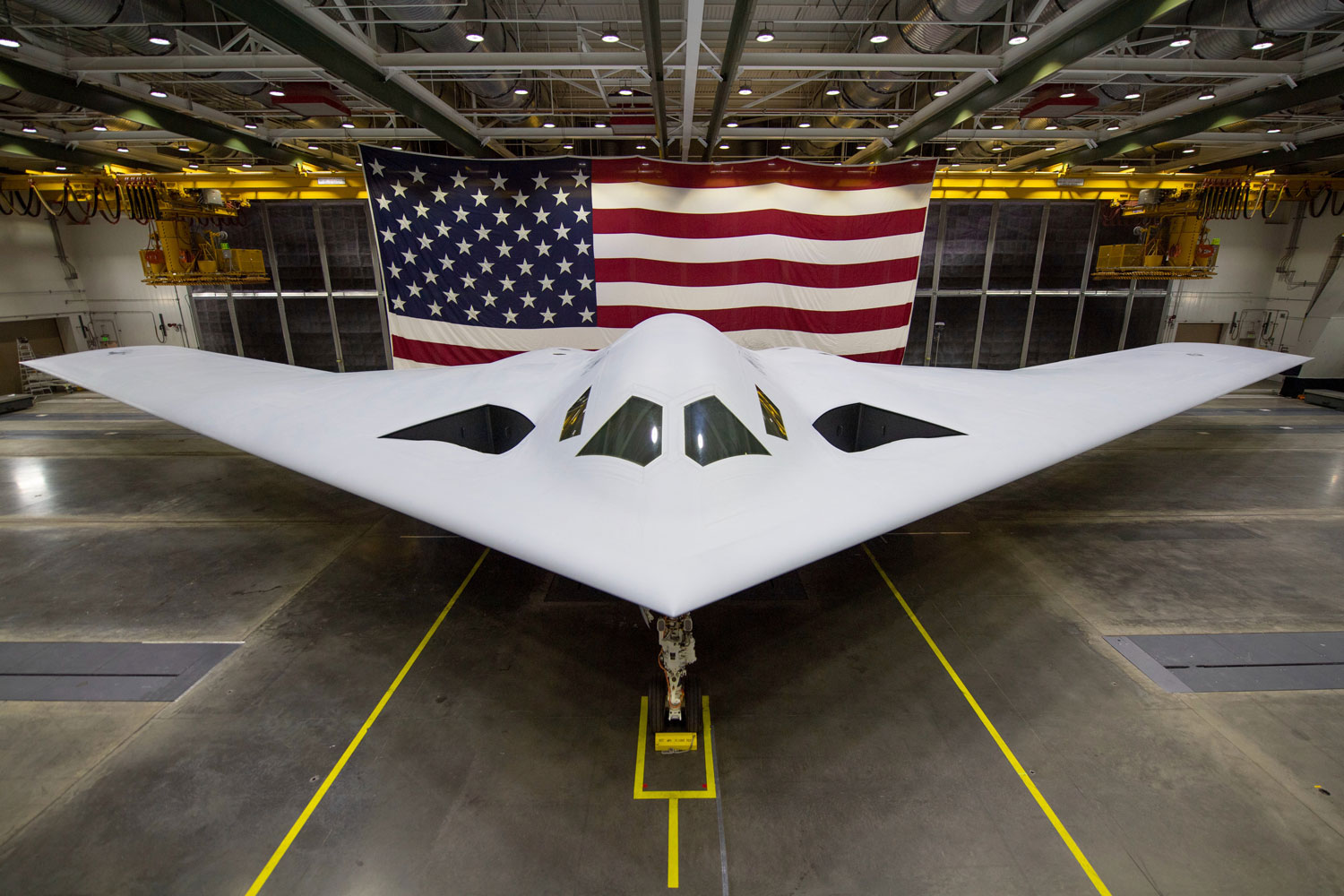
Many of the B-21’s design details remain classified; however, since it began test flights in late 2023, more details have emerged via the release of official and unofficial photographs and videos. These images have indicated that the B-21 shares several design elements with the B-2, but it is slightly smaller and has a reduced weapons capability (US Air Force 2022; Femath 2024). In addition, the B-21 has a narrower forward field of view relative to the B-2, which is likely related to the aircraft’s more advanced sensors that allow the pilot to see outside the aircraft without a large windscreen (Rogoway 2024). The B-2, by comparison, has a wraparound windscreen with a tinted glass pane that is attached during nuclear missions to shield the pilot’s eyes from a nuclear blast (Rogoway 2017).
It is expected that the Air Force will procure at least 100 (possibly as many as 145) of the B-21, with the latest service costs estimated at approximately $203 billion for the entire 30-year operational program, at an estimated cost of $550 million per plane in base-year 2010 dollars, which would exceed $800 million in 2025 dollars (Northrop Grumman 2024b). The budget and many design details of the B-21 are still secret. The Air Force has kept the date of initial operational capability (IOC) secret but has said that the bomber is expected to enter service in the mid-2020s (US Air Force 2024b). According to Northrop Grumman’s CEO, Northrop is working with the Air Force to try to speed up production of the B-21. In July 2025, Congress passed the budget reconciliation bill, which includes $4.5 billion for accelerating B-21 production (Losey 2025).
The B-21 will be capable of delivering the B61-12 and B61-13 guided nuclear gravity bombs and the future AGM-181 long-range standoff (LRSO) air-launched cruise missile, as well as a wide range of non-nuclear weapons, including the Joint Air-to-Surface Standoff (JASSM) cruise missile.
In March 2022, Secretary of the Air Force Frank Kendall revealed plans to develop an “unmanned bomber” counterpart drone to accompany the B-21, but Kendall reportedly told Breaking Defense in July 2022 that the Air Force was scrapping the idea because it was “not turning out to be cost effective” (Insinna 2022; Tirpak 2022). The B-21 itself, however, will be capable of unmanned operations according to the Air Force (US Air Force n.d..). In 2016, then-Commander of Air Force Global Strike Command Gen. Robin Rand expressed his desire to keep B-21s manned for nuclear operations. “If you had to pin me down, I like the man in the loop; the pilot, the woman in the loop, very much, particularly as we do the dual-capable mission with the nuclear weapons,” he said (Military.com 2016).
The B-21 began flight testing at Edwards Air Force Base in November 2023 (Marrow 2024). In September 2025, the Air Force announced the arrival of a second B-21 test aircraft at Edwards, saying the additional aircraft will allow testing to progress to critical mission systems and weapons integration (US Department of Defense 2025b). The B-21 bombers will first be deployed at Ellsworth Air Force Base (South Dakota), followed by Whiteman Air Force Base (Missouri) and Dyess Air Force Base (Texas), in that order (Hoffman 2024). Construction at Ellsworth AFB began in 2022, and the base’s new Weapons Generation Facility, which will store and maintain nuclear bombs and cruise missiles, broke ground in April 2024 and is estimated to be completed by January 2027 (Kenney 2024; US Department of Defense 2024d). Ellsworth AFB is currently expected to host two B-21 squadrons (one operational squadron and one training squadron). However, according to South Dakota Sen. Mike Rounds, a second operational squadron might eventually be stationed at Ellsworth Air Force Base in the future (News Center 1 2022).
The conversion of the non-nuclear B-1 host bases to receive the nuclear B-21 bomber will increase the overall number of bomber bases with nuclear weapons storage facilities from two bases today (Minot AFB and Whiteman AFB) to five bases by the 2030s (see Figure 4; Kristensen 2020b). A new Weapons Generation Facility is also under construction at Barksdale AFB, which will reinstate the base’s nuclear storage capability once complete (Knight 2024a). Recent satellite imagery suggests construction of the facility is nearing completion.

In addition, a significant modernization campaign is also planned for the USAF’s B-52Hs. The Air Force plans to replace the engines, electrical power generation systems, cockpit displays, and radar systems on all B-52 aircraft—an upgrade substantial enough to warrant a change in designation from the B-52 H to the B-52J and to keep the aircraft operational into the 2050s. Initial Operational Capability for the B-52Js is scheduled for February 2033 (Government Accountability Office 2024, 69–72). The Air Force is now reportedly reconsidering the scope of the radar upgrade after the program incurred an estimated 17 percent cost increase in early 2025, constituting a significant Nunn-McCurdy breach (Tirpak 2025a).
The missiles
To arm the B-52Hs and the incoming B-21, the Air Force is developing a new nuclear air-launched cruise missile (ALCM) known as the AGM-181 LRSO. It will replace the AGM-86B air-launched cruise missile in 2030.
The LRSO will arm both the 46 nuclear-capable B-52Hs and the new B-21, the first time a US stealth bomber will carry a nuclear cruise missile. The USAF plans to procure 1087 missiles; 67 of these will be for testing and development, and so far, the number of nuclear warheads for the missiles is not planned to increase (Government Accountability Office 2025b, 81). The Government Accountability Office (GAO) estimates the cost for development and production of the missile at around $15.5 billion in FY2025 dollars (approximately $14 million per missile); combined with the Department of Energy’s most recent projection for the warhead program cost, the total estimated cost for the LRSO reaches almost $28 billion (Government Accountability Office 2025b, 81; US Department of Energy 2024a). Notably, the GAO reports that the cost estimates for missile production of both the Office of the Secretary of Defense and the Air Force are approximately $1.9 billion apart, indicating that the LRSO program costs have not yet stabilized (Government Accountability Office 2024, 82).
The LRSO has been in flight testing since 2022; a senior Air Force official reported in August 2025 that the missile had conducted four successful test flights since the beginning of 2025 (Ahlawat 2025; Tirpak 2023). The Air Force released the first artistic rendering of the LRSO in June 2025, suggesting that the missile’s development had reached a stage where tests would be more visible to the public (Tirpak 2025b). Indeed, on October 29, 2025, an aviation photographer captured what appeared to be a test flight of the LRSO; the photograph shows a B-52 H test aircraft carrying two cruise missiles that closely resemble the rendering released by the Air Force (D’Urso and Cenciotti 2025). The LRSO missile itself is expected to be entirely new, with significantly improved military capabilities compared with the ALCM, including longer range, greater accuracy, and enhanced stealth.
The warheads
Each B-2 can carry up to 16 nuclear bombs (the B61-11 and B61-12 gravity bombs and the B61-7 until the B61-13 enters service), and each B-52 H can carry up to 20 air-launched cruise missiles (the AGM-86B). B-52 H bombers are no longer assigned gravity bombs (Kristensen 2017a). An estimated 805 nuclear weapons, including approximately 500 ALCMs, are assigned to the bombers, but only about 300 weapons are thought to be deployed at bomber bases (see Table 1). The estimated remaining 505 bomber weapons are thought to be in central storage at the large Kirtland Underground Munitions Maintenance and Storage Complex outside Albuquerque, New Mexico. The number of weapons deployed at bomber bases will likely increase in the future with the arrival of the B-21 and the addition of nuclear storage capability at multiple bases.
The Department of Energy is designing and producing modified and new warheads for delivery by the US Air Force strategic delivery systems. One of these—the W80-4—is planned to be a modified version of the W80-1, which is currently used in the existing ALCM. The W80-4, which will eventually be carried by the LRSO, is the first warhead designed for use with a new missile in over three decades. The NNSA authorized the production engineering phase (Phase 6.4) for the W80-4 in March 2023 and reported in its FY 2025 stockpile stewardship summary that the warhead had completed joint flight testing with the LRSO (Government Accountability Office 2024, 82; US Department of Energy 2024a). Despite design and technical maturity delays, DOE officials told the GAO that the warhead remains on track for its first production unit milestone in FY 2027 (Government Accountability Office 2024, 2025b). The First Production Unit of the W80-4 is scheduled for delivery in September 2027 (US Department of Energy 2023c), and warhead production is scheduled to be completed in FY 2031 (Leone 2022).
In addition to the W80-4, a new gravity bomb—the B61-13—is currently being produced, and another—the B61-12—completed production in December 2024 (National Nuclear Security Administration 2025b). The B61-12 is the United States’ first guided, standoff nuclear gravity bomb, and uses a modified version of the warhead used in the B61-4 gravity bomb, which has a maximum yield of approximately 50 kilotons and several lower-yield options. However, it is equipped with a guided tail kit to increase accuracy and standoff capability, allowing strike planners to select lower yields for existing targets to reduce collateral damage.
The B61-12 became operational with the B-2 bombers in 2023 (National Nuclear Security Administration 2023) and fighter-bombers in 2024 (National Nuclear Security Administration 2024c). The B61-12 consolidated three of the five legacy types (the B61-3, -4, and -7) into one bomb, leaving the US stockpile with three types of B61 gravity bombs (the B61-11, -12, and the -13 once complete). The B61-12 also replaced all legacy B61 bombs that had been deployed in Europe (see “Nonstrategic nuclear weapons” section).
The United States was initially expected to produce approximately 480 B61-12 bombs. But in 2023, the Pentagon announced that a small portion of this initial allotment will instead be produced as the B61-13, a gravity bomb with a much larger yield (US Department of Defense 2023d). The B61-13 will use the warhead from the B61-7 but will add the safety and control features of the B61-12, as well as a guided tail kit for higher accuracy. As such, the B61-13 will have a maximum yield close to the B61-7’s 360 kilotons, which is significantly higher than the B61-12’s yield of 50 kilotons. The B61-13 will be designed for the future B-21 bomber and possibly the B-2 until the bomber’s retirement. The military justification for the new B61-13 gravity bomb is difficult to identify through open sources, although it appears that the bomb will have a mission related to broad area targeting and perhaps holding some underground targets at risk.
The B61-13’s development may also be related to the effort to retire the B83-1—the United States’ most powerful nuclear warhead with an explosive yield of up to 1.2 megaton (Kristensen and Korda 2023). The 2022 Nuclear Posture Review directed the retirement of the B83-1, which has long been targeted for retirement due to its age, high yield, and redundancy in the US arsenal. We anticipated the B83-1’s formal retirement in 2025, but the NNSA’s FY2026 budget request lists the bomb as active in the US nuclear stockpile and requests funds to maintain and sustain it “until all B83 gravity bombs are retired and dismantled” (National Nuclear Security Administration 2025c). This suggests that a small number of B83-1s remain in the stockpile as of early 2026, although given their imminent retirement, they are unlikely to be deployed. The United States is likely waiting to complete the bomb’s retirement until the B61-13 enters service.
In May 2025, the Secretary of Energy announced that the NNSA had completed assembly of the first B61-13—nearly a year ahead of schedule (National Nuclear Security Administration 2025d). The NNSA projected production of the B61-13 to conclude in FY2028, but it may finish earlier if production continues ahead of schedule (National Nuclear Security Administration 2024c).
Nonstrategic nuclear weapons
The United States has only one type of nonstrategic nuclear weapon in its stockpile: the B61-12 gravity bomb, which has a yield of up to 50 kilotons. With its recently completed deployment, the B61-12 replaced the B61-3 and -4 versions, which had yields varying from 0.3 kilotons up to 170 and 50 kilotons, respectively. Approximately 200 B61-12 bombs are currently stockpiled for delivery by nonstrategic aircraft (see Table 1). About 100 of these are currently deployed at six bases in five European countries: Aviano and Ghedi in Italy; Büchel in Germany; Incirlik in Türkiye; Kleine Brogel in Belgium; and Volkel in the Netherlands. This number has declined since 2009, partly due to the reduction of operational storage capacity at Aviano and Incirlik (Kristensen 2015). A seventh country—Greece—has a contingency nuclear strike mission and accompanying reserve squadron, but it does not host any US nuclear weapons (Kristensen 2022b). It is possible that B61-12 bombs have also been deployed to RAF Lakenheath; unique flight signatures indicate the likelihood of a 2025 shipment. However, the unfinished construction of infrastructure required for the nuclear mission raises questions about whether the flight actually contained nuclear weapons, as headlines suggested (Johns 2025). Nonetheless, if US nuclear weapons were not yet stored at Lakenheath at the time of publication in March 2026, we estimate that approximately 20 weapons will be stored at Lakenheath upon completion of the requisite security infrastructure. If already deployed to Lakenheath, that would raise the number of US nuclear weapons in Europe to an estimated 120 bombs (Kristensen et al. 2025).
The other 80 to 100 B61 bombs are stored in the United States for backup and potential use by US fighter-bombers in support of allies outside Europe, including Northeast Asia. The fighter-bombers include F-15Es from the 391st Fighter Squadron of the 366th Fighter Wing at Mountain Home in Idaho (Carkhuff 2021).
In addition to the integration on the B-2 and the future B-21 heavy bombers, the B61-12 bomb has been integrated on US and allied-operated dual-capable aircraft (DCA), including the F-15E, the F-16C/D, the F-16MLU, the PA-200 Tornado, and the F-35A. In January 2025, then-NNSA Administrator Jill Hruby first indicated that deployment of the B61-12 to Europe had been completed, saying “NATO is strong. The new B61-12 gravity bombs are fully forward deployed” (National Nuclear Security Administration 2025e). The increased accuracy of the B61-12 will give the tactical bombs in Europe the same military capability as strategic bombs used by the bombers in the United States. Although the B61-12 has not been designed as a designated earth-penetrator like the B61-11, it does appear to have some limited earth-penetration capability that will increase the capability of the stockpile in Europe to hold at risk underground targets (Kristensen and McKinzie 2016). While the old PA-200 Tornado and F-16MLU jets will not be able to make use of the increased accuracy provided by the B61-12 tail kit, the F-15E and new F-35A will.
The arrival of the B61-12 bomb in Europe is part of a broad nuclear modernization plan by NATO that also involves upgrading aircraft and the weapons storage system (Kristensen 2022b). All NATO allies that host US nuclear weapons—except Türkiye—are acquiring the F-35A Lightning II for the continuation of their respective nuclear missions. Until then, Belgium and Italy will continue to use the F-16, and Italy and Germany will continue to use the PA-200. RAF Lakenheath in the United Kingdom was the first USAF base in Europe to receive the nuclear-capable F-35A fighter-bombers, followed by Volkel in the Netherlands (Korda and Kristensen 2023; Kristensen 2024c).
The Belgian, Dutch, German, and Italian air forces are currently assigned an active nuclear strike role with US nuclear weapons. Under normal circumstances, the nuclear weapons are kept under the control of US Air Force personnel; their use in war must be authorized by the US president. A 2022 NATO factsheet states that “a nuclear mission can only be undertaken after explicit political approval is given by NATO’s Nuclear Planning Group and authorization is received from the US President and UK Prime Minister” (NATO 2022).
Incirlik Air Base in Türkiye hosts an estimated 20 to 30 B61 nuclear bombs for delivery by US aircraft or, in a contingency, Turkish F-16 aircraft. Unlike other NATO partners, Türkiye does not allow the US to permanently base its aircraft at Incirlik; in a crisis, US aircraft would have to fly to the base to pick up the B61 bombs, or the bombs would have to be shipped out for use.
Despite the New York Times reporting in 2019 that US officials had reviewed emergency nuclear weapons evacuation plans for Incirlik (Sanger 2019), United States Air Force Europe A10 leaders visited Incirlik in July 2023 to discuss the “surety mission” and “the role that Incirlik plays in strategic deterrence,” indicating that the nuclear mission at Incirlik is still in effect (Myricks 2023). (“Surety” is a term commonly used by the Pentagon and the Department of Energy to refer to the capability to keep nuclear weapons safe, secure, and under positive control, whereas the “A10 office” is the Air Force’s office for “Strategic Deterrence and Nuclear Integration.”) This is further reinforced by ongoing infrastructure work at nuclear weapon storage sites in Türkiye (US Department of Defense 2022a).
In addition to the return of the nuclear mission to RAF Lakenheath, the United Kingdom announced in June 2025 plans to purchase F-35As from the United States and join NATO’s nuclear sharing mission. The jets will be based at RAF Marham from the mid-2030s, presumably along with US B61-12s (HM Government 2025).
NATO’s nuclear modernization also involves life-extending the weapons storage security system, including upgrading command and control, as well as security, at the six active bases (Aviano, Büchel, Ghedi, Kleine Brogel, Incirlik, and Volkel), one additional base (RAF Lakenheath), and one training base (Ramstein). Specifically, these upgrades include the installation of double-fence security perimeters, modernizing the weapon storage and security systems as well as the alarm communication and display systems, and the operation of new secure transportation and maintenance system trucks (Kristensen 2021). Security upgrades now appear to have been completed at all six active bases. A loading pad designed for US C-17 aircraft, which transport nuclear weapons and service equipment, has also been added at Kleine Brogel, Büchel, Ghedi, and Volkel (Kristensen 2024c).
NATO also appears to be increasing the profile of the dual-capable aircraft posture. For example, NATO is now publicly announcing its annual Steadfast Noon tactical nuclear weapons exercise and releasing official videos promoting the exercise. In October 2024, the two-week exercise involved the participation of 13 countries and more than 60 aircraft, including fighter jets and US B-52 bombers (NATO 2024). Notably, Finland, a formally neutral country, also participated in the exercise only 18 months after it joined NATO (Kristensen 2024c). The 2025 iteration of Steadfast Noon appears to have been the largest so far, with the participation of 71 aircraft and 14 countries, including all of the Scandinavian countries (Denmark, Finland, Norway, and Sweden) (NATO 2025; Cook 2025).
Finally, in addition to these air-delivered capabilities, the United States is also developing a new non-strategic nuclear sea-launched cruise missile (SLCM-N), which was proposed during the first Trump administration (US Department of Defense 2018, 55). The Biden administration sought to cancel the SLCM-N, noting that “[f]urther investment in developing SLCM-N would divert resources and focus from higher modernization priorities for the US nuclear enterprise and infrastructure, which is already stretched to capacity after decades of deferred investments. It would also impose operational challenges on the Navy” (US Office of Management and Budget 2022). This is because to carry nuclear weapons onboard, Navy crews would require specialized training and would need to adopt strict security protocols that could operationally hinder these multipurpose vessels (Woolf 2022). Additionally, deployed nuclear sea-launched cruise missiles would take the place of more flexible conventional munitions for vessels on patrol, thus incurring a substantial opportunity cost (Moulton 2022).
Despite the Biden administration’s conclusions, however, Congress forced the administration to establish the SLCM-N as a program of record. The FY2025 NDAA authorized $252 million for research, development, testing, and evaluation of SLCM-N and $70 million for the warhead. The NDAA also limited the Navy Secretary’s travel funding until an SLCM-N program office was established and staffed. It further required the establishment of a separate, dedicated program element for the development of the SLCM-N beginning with the President’s FY2026 budget request (H.R. 5009).
Congress and the Trump administration are now working to speed up SLCM-N’s development. In an unusual move, the administration’s FY2026 budget requested money for defense programs via reconciliation rather than the typical annual discretionary funding process. Subsequently, Congress’s July 2025 reconciliation act—nicknamed the “One Big Beautiful Bill Act”—included $2 billion to the Department of Defense and $400 million to the NNSA to “accelerate the development, procurement, and integration” of the SLCM-N missile and warhead, respectively (US Congress 2025b).
The FY2026 NDAA authorized an additional $210 million for the Department of Defense to develop the missile for SLCM-N and $50 million for the NNSA to develop the warhead. Most notably, the new NDAA accelerates SLCM-N’s timeline by two years. The law repeats the IOC date of September 30, 2034, established by the FY24 NDAA, but also requires DOD to deliver a certain number of SLCM-N—a number to be determined by the Nuclear Weapons Council (an interagency body that oversees the US nuclear weapons stockpile)—by September 30, 2032, to achieve “limited operational deployment” before IOC (S. 1071).
The plans for the SLCM-N’s warhead have been modified over the past two years. The SLCM-N was originally expected to use the W80-4 warhead that is being developed for the LRSO (US Department of Energy 2024a); this plan was then shifted to the development of a “W80-4 ALT” under the FY2024 NDAA (H.R. 2670). The following year’s NDAA amended the language to allow the NNSA to develop an alternative warhead to the W80-4 ALT if necessary, designated as the “W80-X ALT” (H.R. 5009). In January 2026, officials from Sandia National Laboratories and Lawrence Livermore National Laboratory confirmed that the SLCM-N warhead would be called the W80-5 and noted that it “just came up and we’ve been working on it for less than a year at this point” (Salem 2026). Since the W80-5 warhead is a modification of the W80 warhead rather than an alteration—meaning that it actually changes the weapon’s operational capabilities—it is unclear whether the number of W80-4 warheads that are being procured for the LRSO will be reduced by a corresponding amount. If not, then the size of the US nuclear stockpile will increase once the SLCM-N is fielded.
In December 2025, President Trump announced the development of a new class of battleships for the Navy, the Trump-class, and confirmed that the ships would be armed with the SLCM-N (Johnston 2025). This move would return nuclear weapons to surface vessels for the first time since the early 1990s.
Fuente: https://thebulletin.org