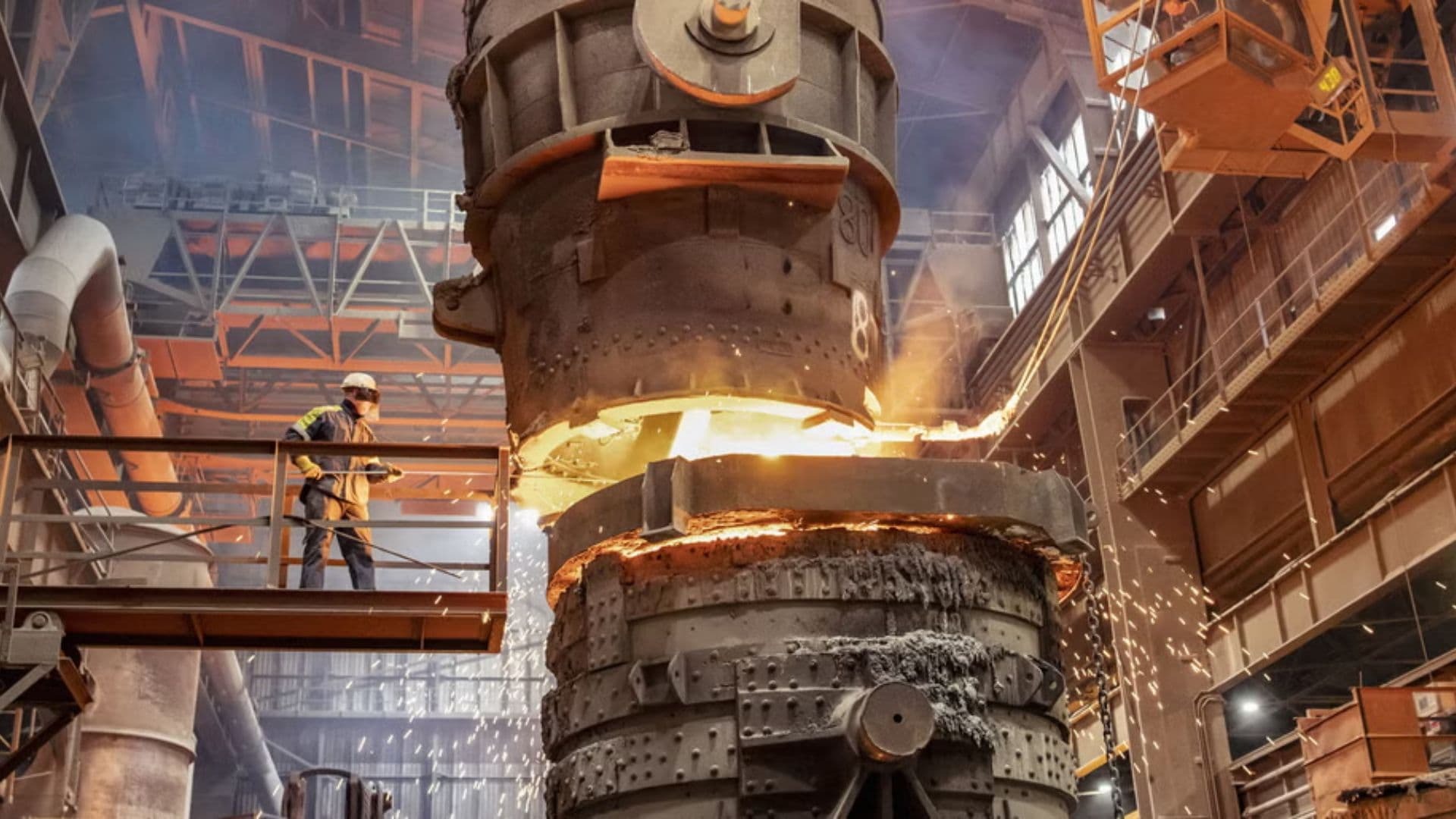
China ha comenzado a operar su primera planta de fabricación de acero con capacidad de producir 1 millón de toneladas, empleando hidrógeno como agente reductor y disminuyendo sensiblemente el nivel de emisiones de CO2. La planta operada por la empresa Baowu Steel, implementó un proceso avanzado de fundición eléctrica basada en hidrógeno, en reemplazo de los métodos tradicionales (Carbón y otros) que generan emisiones dañinas para el medio ambiente. El proyecto sirve como una aplicación práctica de fabricación ecológica y de alta capacidad, permitiendo la transición progresiva de la industria siderúrgica actual de China basada en el uso intensivo del carbón, hacia una infraestructura con menores emisiones.
China has officially put into full operation its first million-tonne near-zero-carbon steel production line in Zhanjiang City, Guangdong Province. This facility, operated by Baowu Steel, reached full operational status on December 23, 2025.
The project serves as a practical application of high-capacity green manufacturing, transitioning the traditionally coal-heavy steel industry toward a lower-emission infrastructure.
“The production line adopts an advanced hydrogen-based metallurgical electric smelting process, replacing traditional coke with hydrogen as the primary reducing agent,” as reported by CGTN.
By using hydrogen, the process fundamentally alters the chemical reactions in the furnace, eliminating a large portion of the carbon dioxide typically generated during the reduction of iron ore.
The core of the facility is a million-tonne hydrogen-based shaft furnace that produces direct reduced iron. This unit has reached its targeted metallization rates, ensuring that the raw material is of sufficient quality for high-end steel production.
Engineering breakthroughs and technical integration
The facility integrates high-efficiency green electric furnaces to process the direct reduced iron into high-grade slabs. Technical specifications from the Zhanjiang operation indicate that this line can reduce carbon emissions by 50 to 80 percent compared to conventional blast furnace methods.
On an annual basis, the project is expected to prevent more than 3.46 million tons of carbon emissions from entering the atmosphere.
“Project staff from Baowu Steel’s Zhanjiang operation said the million-tonne near-zero-carbon steel line can cut more than 3.14 million tonnes of carbon emissions annually, equivalent to creating around 2,000 square kilometers of forest,” reported CGTN.
Related technological developments
Several related developments have surfaced in the Chinese metallurgical sector. Reports from Interesting Engineering have highlighted a “flash ironmaking” technique that has the potential to significantly change production speeds.
This method uses a vortex lance to inject iron ore powder into a high-temperature reactor, where it undergoes a near-instantaneous chemical reaction. This process is noted for being up to 3,600 times faster than older laboratory-scale methods.
While the Zhanjiang line focuses on large-scale hydrogen reduction, these flash techniques represent a parallel effort to improve the efficiency of iron ore processing.
Industrial scale and economic implications
The successful operation of the Zhanjiang line comes at a critical juncture for the industry as it strives to meet the targets set under the 14th Five-Year Plan.
“The 14th Five-Year Plan (2021–2025) period is seen as a critical stage for China’s steel industry to achieve high-quality development, with green transformation as a defining priority,” concluded CGTN.
“During this period, the number of newly certified green steel plants has increased year by year, with a total of 126 added between 2021 and 2024.”
Beyond the direct environmental gains, the project positions China to circumvent international carbon tariffs, such as the EU’s Carbon Border Adjustment Mechanism, by producing high-grade thin steel plates for the automotive and high-end manufacturing sectors with a near-zero carbon footprint.