Los drones, rápidos, silenciosos y letales, se están convirtiendo en una fuerza dominante en la guerra moderna . Son los que detectan enemigos a kilómetros de distancia, lanzan ataques precisos y permanecen en el aire mucho después de que los pilotos humanos hubieran tenido que aterrizar. Ya sea un explorador de alto vuelo rastreando los movimientos de tropas o un dron kamikaze merodeando que se centra en un solo objetivo, estas máquinas están reescribiendo las reglas. El campo de batalla se ha vuelto remoto, y estos drones son los que mandan.
Wars used to be fought differently. It was boots on the ground, troops in the trenches, and challenges that the average civilian couldn’t even imagine. There was a time when owning the skies meant sending in a squadron of jets and hoping pilots made it home. Not anymore. These days, war is increasingly being fought from a controller, a command post, or even a soldier’s backpack.
Drones, fast, quiet, and deadly, are becoming a dominant force in modern warfare. They’re the ones spotting enemies miles away, launching precise strikes, and hanging in the air long after human pilots would’ve needed to land.
Whether it’s a high-flying scout that’s tracking troop movements or a loitering kamikaze drone zeroing in on a single target, these machines are rewriting the rulebook. The battlefield has gone remote, and these are the drones calling the shots.
Note: Some performance details and strike-use claims remain classified; where public confirmation is limited, we describe reported or designed capabilities rather than asserting operational facts.
What Makes These Drones the Kings of the Battlefield?
We didn’t just pick the coolest-looking drones or the newest names out there. Each drone on this list has been used operationally, and many have seen combat use in real conflict zones around the world, from the deserts of the Middle East to the cities of Eastern Europe. We looked at drones that have seen action, shaped outcomes, and sparked conversations at the Pentagon (over a few boxes of pizza, according to the Pizza Index) and beyond. The focus was on battlefield presence, tactical impact, and global influence, not just flashy prototypes or lab-only tech.
Some are American, some are foreign, but all of them have one thing in common: they’re changing the way war is fought. We prioritized drones currently in active use, either by the U.S. military or widely deployed across global conflicts. Drones that provided new forms of mobility, independent AI functions, real-time battlefield intelligence, or creative approaches to loitering munitions stood out.
In short: if it’s reshaping warfare, punching above its weight, or giving generals a new playbook, it made the cut. And these are just the drones we are allowed to know about…
MQ-9 Reaper
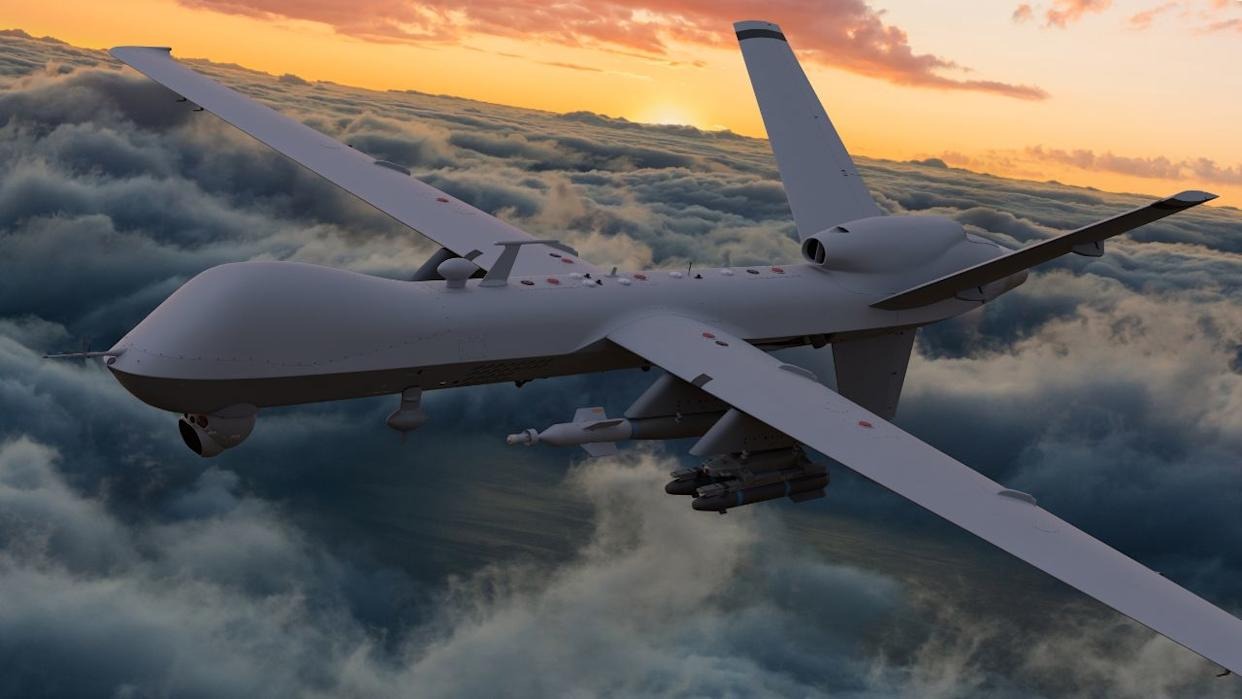
If drones had celebrity status, the MQ-9 Reaper would be the A-lister. Known for its long hours in the sky and ability to strike at a moment’s notice, the Reaper is America’s go-to drone for overseas operations.
It’s earned its stripes flying over hostile zones and tracking everything from insurgent leaders to suspicious convoys. What makes the Reaper especially intimidating (if the name isn’t enough) isn’t just its eyes in the sky, it’s that it can deliver a punch from above. The Reaper has played a leading role in counterterrorism for over a decade and is often the last thing enemies see. Whether operating over the Middle East or across the Pacific, it’s a reminder that American airpower is always watching. For troops on the ground, it’s a guardian angel. For enemies, it’s a ghost they can’t outrun.
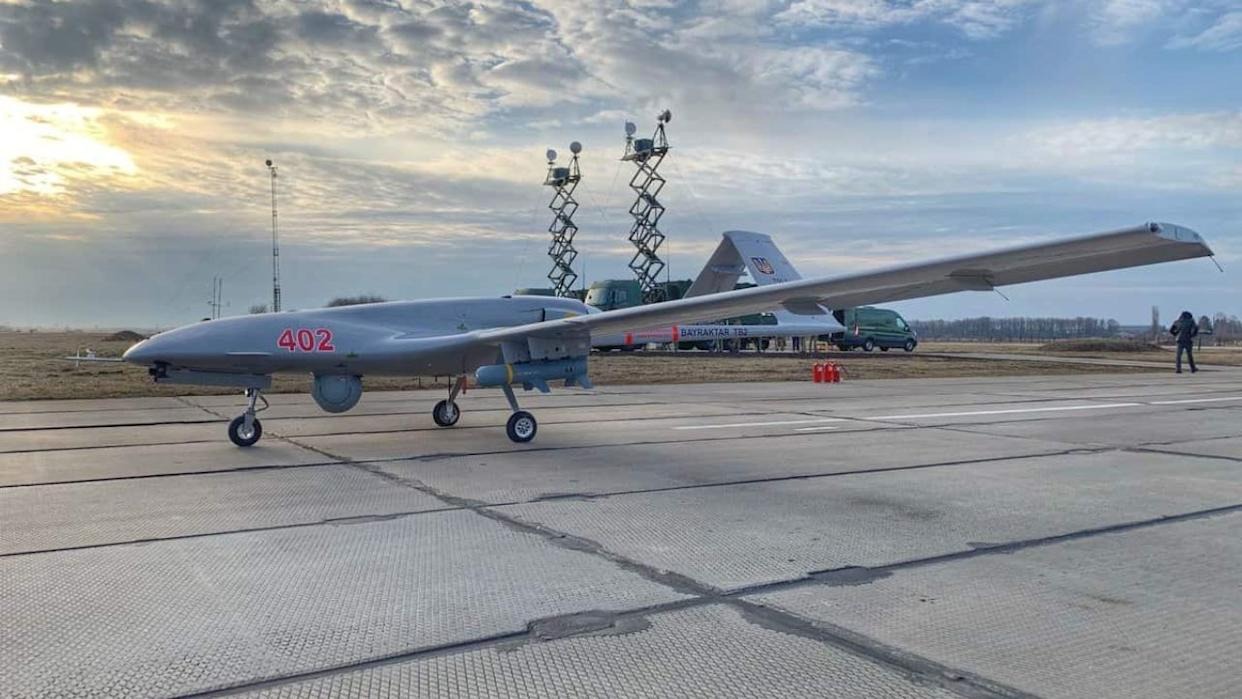
Bayraktar TB2
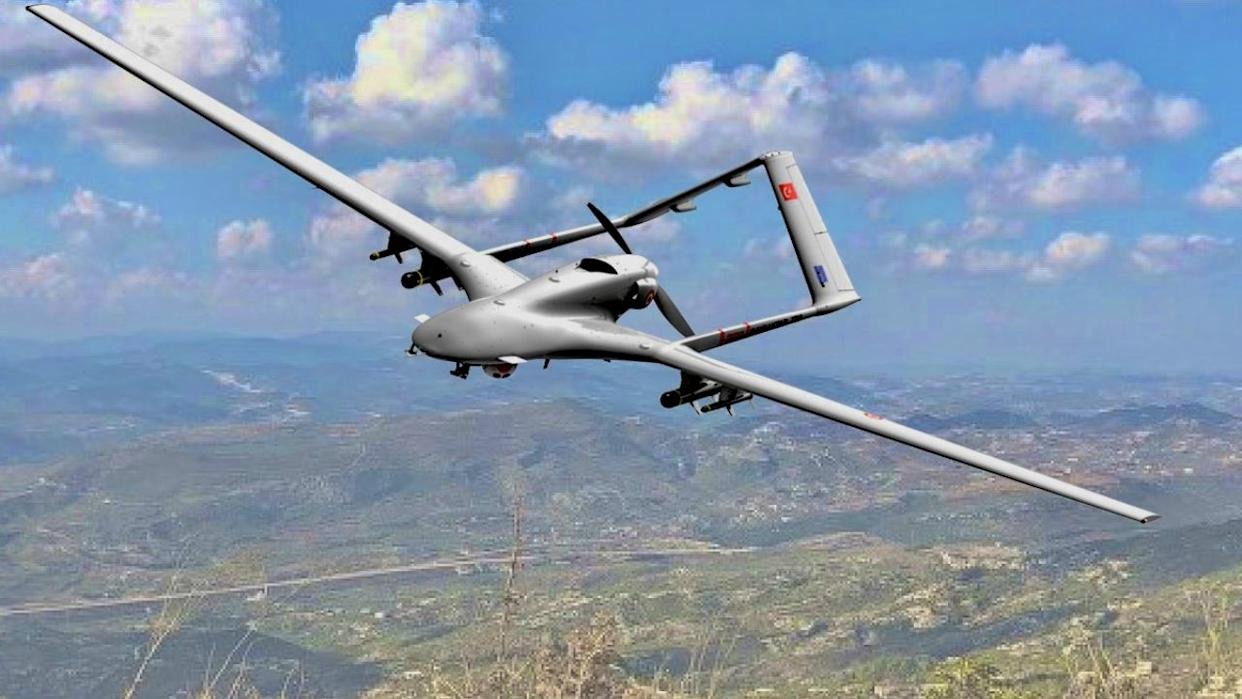
The Bayraktar TB2 became a household name during recent conflicts (okay, maybe not that well known, but still), especially after videos of it neutralizing tanks and artillery went viral. It’s been credited with turning the tide in battles where ground forces were outmatched.
Nations like Ukraine have shown how much damage this drone can cause when used tactically. Its true power isn’t in brute force but in its surgical precision and ability to support small units in big ways. It’s lightweight, cost-effective, and surprisingly deadly for its size. Some call it the underdog of the drone world, but that’s only until it ruins your armored convoy.
In many modern conflicts, the TB2 has been the equalizer, giving smaller countries high-tech leverage. It’s proof that you don’t need to be a superpower to strike like one. This drone has earned its reputation the hard way, one target at a time.
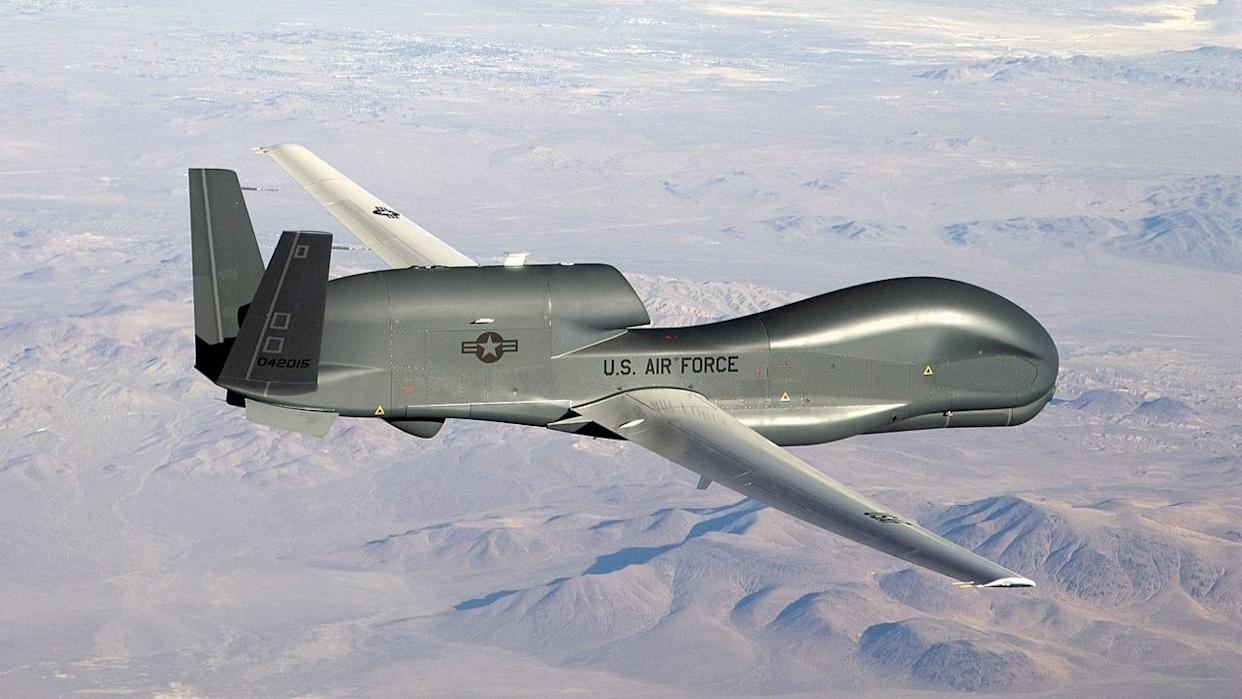
RQ-4 Global Hawk
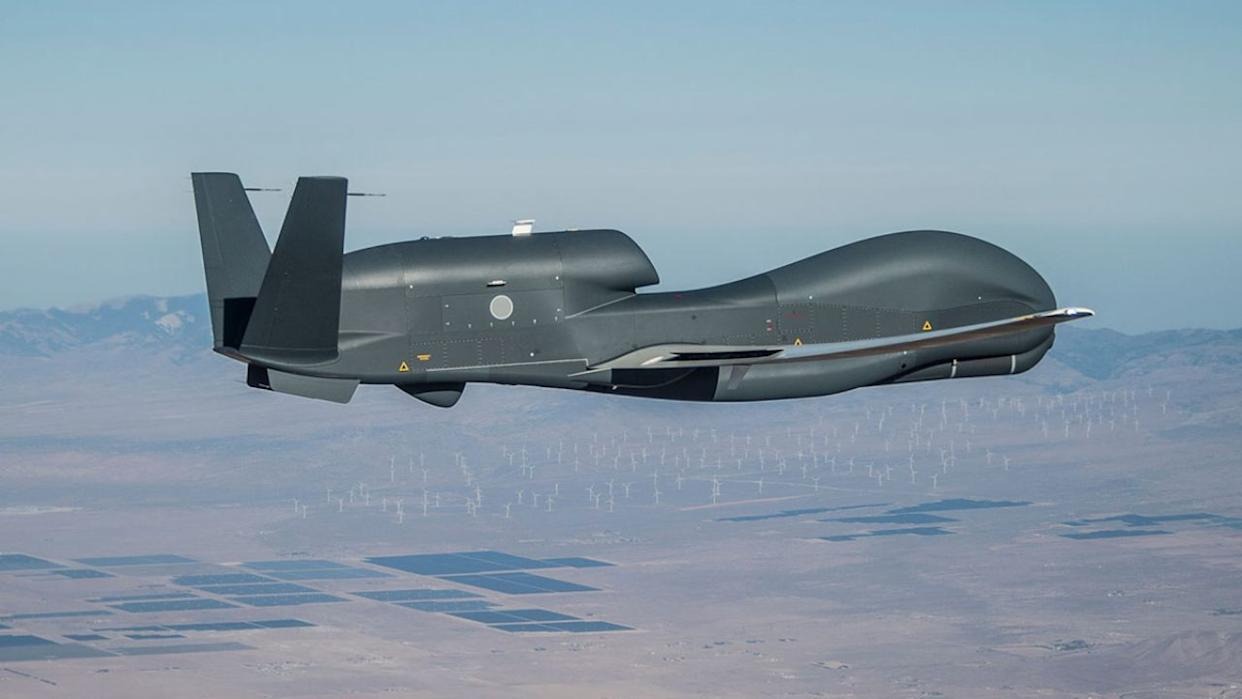
Think of the RQ-4 Global Hawk as the high-flying mastermind behind the scenes. It doesn’t fire missiles, it feeds them to those who do. Its strength lies in its ability to stay airborne for incredibly long periods, sweeping vast areas and relaying live intelligence back to command.
When the U.S. needs to know what’s happening hundreds of miles behind enemy lines, this drone takes the call. It’s like having a satellite that moves and zooms in whenever needed. The Global Hawk is often the reason a mission goes smoothly, it’s the big brain in the sky. While it rarely makes the headlines, its impact is undeniable.
Behind many high-level intelligence-driven operations, there may be a Global Hawk providing persistent ISR whispering in someone’s ear. It doesn’t need weapons to win wars, it just sees everything.
Switchblade 300

It’s not a drone in the traditional sense, it’s a flying grenade with a camera. The Switchblade 300 is one of the most innovative tools on the battlefield today.
Portable, single-use, and deadly, it’s designed to be launched from a soldier’s backpack and dive onto targets with terrifying accuracy. Think of it as a suicide drone with a mission and a live feed. Troops love it because it brings precision strike capability to the front lines without needing air support. It’s the kind of tech that levels the playing field in close-combat zones. Enemies rarely hear it coming, and by the time they do, it’s already too late. Its small size allows it to sneak through gaps in defenses.
In modern warfare, having a personal loitering munition that can strike targets several kilometers away is game-changing. The Switchblade doesn’t just scout, it ends fights.
Heron TP

Built in Israel but often flying in multinational operations, the Heron TP is a heavyweight in the world of military drones. It’s a persistent presence that can dominate an entire region’s airspace.
Used primarily for surveillance and long-range intelligence missions, and designed to carry a variety of payloads, the Heron TP operates like a flying command center. It’s been vital in border security, counterterrorism, and long-range intelligence gathering. Unlike smaller drones that work in bursts, this one plays the long game, quietly watching for hours until the perfect moment to act. It’s highly respected in NATO circles and has been leased/fielded by Germany (with arming debated separately).
Its ability to stay on mission while feeding real-time data to multiple units gives it a huge tactical edge. When it’s in the sky, it’s like having a chess master playing ten games at once. The Heron TP isn’t flashy, it’s relentless.
Shahed-136

The Shahed-136 is one of the most controversial drones on today’s battlefield. It’s not advanced in the traditional sense, it’s cheap, loud, and designed to overwhelm. But that’s exactly why it’s terrifying. In Russian service it’s commonly referred to as Geran-2, including domestically produced variants derived from the Iranian design.
It’s a kamikaze-style drone that sacrifices itself to destroy high-value targets. Iran has exported these in large numbers, and they’ve shown up in places like Ukraine and Syria. They are often launched in large numbers, which can overwhelm defenses, forcing defenders to burn through ammunition or risk getting hit. It’s not about finesse, it’s about numbers and absolute chaos. Cities panic when they hear the telltale drone buzz approaching.
While it lacks the precision of Western drones, it’s reshaped how militaries think about low-cost air threats. The Shahed-136 is proof that even crude tech can shake up modern warfare.
MQ-1C Gray Eagle

A direct descendant of the famous Predator drone, the MQ-1C Gray Eagle takes everything that worked and upgrades it for the next generation. It’s built to fly longer, carry more, and react faster than its predecessor.
Designed specifically for the U.S. Army, it integrates with ground troops in real-time, acting as both scout and sniper. When soldiers need air cover in hostile territory, this is what they want overhead. It can fly low or high, depending on the mission, and can hunt targets with frightening persistence. The Gray Eagle is often the first to arrive and the last to leave a combat zone. Its role in surveillance and strikes makes it a flexible tool across all types of terrain.
While not as famous as the Reaper, it’s highly lethal in its tactical role. The Gray Eagle is the quiet workhorse of the drone fleet, and it’s always watching.
Baykar Bayraktar Mini UAV

Not every battlefield drone needs to be a jet-sized behemoth. Sometimes, the most effective tool is the one a soldier can pull out of a backpack and launch in seconds, and that’s exactly where the Bayraktar Mini UAV shines.
Designed by Turkey’s Baykar, this small but mighty drone has been widely used for frontline reconnaissance and surveillance, including in counterterrorism operations, especially in fast-moving operations where ground troops need eyes in the sky now, not later. It’s light, portable, and built for frontline use, giving soldiers a real-time look at what’s around the corner, over the hill, or hiding in the next alley. It’s not made to fire missiles or carry bombs. Instead, it keeps troops alive. By spotting ambushes, scouting sniper positions, or helping spot targets and adjust artillery fire, the Bayraktar Mini turns regular infantry into tech-powered warriors.
Its quiet presence and birdlike size make it hard to spot, even in daylight, which gives it a major edge in urban warfare or rugged terrain. In recent conflicts, it’s become a must-have tool for fast-moving ground units, proving that sometimes, the smallest drones make the biggest difference.
Hermes 900

Another Israeli drone with global reach, the Hermes 900 is a favorite among modern air forces looking for high-endurance surveillance. It’s big, quiet, and always alert. This drone is often used to patrol borders, coastlines, and no-fly zones.
It’s flown by countries like Brazil, Switzerland, and Mexico, showing how widely trusted and versatile it is. The Hermes 900 is less about shock and awe and more about persistence and presence. Its operators say it feels like having an invisible balloon floating above the battlefield, quietly watching everything. It’s not a headline-grabber, but it plays a vital role in long-term operations.
When military leaders say “we have eyes everywhere,” this is what they mean. For missions that demand constant awareness, the Hermes 900 is the silent sentinel.
Altius-600

Small, sleek, and extremely smart, the Altius-600 is the drone that can sneak into tight spaces and cause big problems. It’s designed for recon, electronic warfare, and precision strikes, all in a compact, launch-anywhere frame.
Think of it as a drone that can hitch a ride on a truck, sub, or plane, then get to work immediately. The ALTIUS-600 has been tested, procured, and fielded in specific programs by the U.S. military for both surveillance and surgical operations. It’s stealthy enough to slip into contested zones without setting off alarms. Some versions are equipped to jam communications or relay enemy positions in real-time.
It’s not a brute-force drone, it’s a scalpel. The Altius-600 is all about flexibility and speed, and it’s being used more and more by special forces. Wherever something needs to disappear without a trace, this drone is already on its way.
Wing Loong II

China’s answer to the Reaper, the Wing Loong II has become a popular export drone among nations that want serious airpower without relying on the U.S. or NATO. It’s been used in North Africa, the Middle East, and Asia, proving itself capable in real combat zones.
Designed to surveil and strike, the Wing Loong II gives smaller militaries a powerful tool that used to be reserved for superpowers. While it mimics Western drones in design, it’s tailored for export with a more accessible price tag. It’s often used in conflicts where official air support is lacking, giving local forces a huge edge. Critics say it lacks the polish of American tech, but it’s hard to argue with its growing popularity.
The Wing Loong II is becoming a fixture in global drone warfare. And with each passing year, it’s getting harder to ignore.
Kargu

Small, circular, and deceptively simple in appearance, the Kargu is a loitering munition designed to pursue individual targets. Developed in Turkey, it has been associated with testing and reported use of autonomous target-selection functions, a capability that has fueled global debate about the role of artificial intelligence in combat. Rather than relying on sheer speed or firepower, Kargu systems are often deployed in numbers, allowing them to saturate defenses and complicate countermeasures.
The Kargu is especially dangerous in tight spaces, where it can dive into buildings or bunkers with precision. What makes it truly chilling is that it may one day decide when to strike without a human in the loop. That idea is both impressive and unsettling. While it’s still early days for full autonomy, the Kargu represents the cutting edge of drone warfare. It’s not just a machine, it’s a moral question flying through the air.
The Silent Revolution in the Sky

Drones aren’t coming, they’re already here, rewriting the way wars are planned, fought, and won. They don’t ask for permission. They don’t need a runway. And they don’t blink when things get messy. From autonomous AI-driven hunters to soldier-launched kamikaze bots, the battlefield has become a drone playground, and America is watching closely.
Whether used for defense, offense, or relentless surveillance, today’s military drones are smarter, faster, and more fearless than ever. They may not wear medals, but they’re earning victories, one silent strike at a time.
Fuente: https://www.aol.com