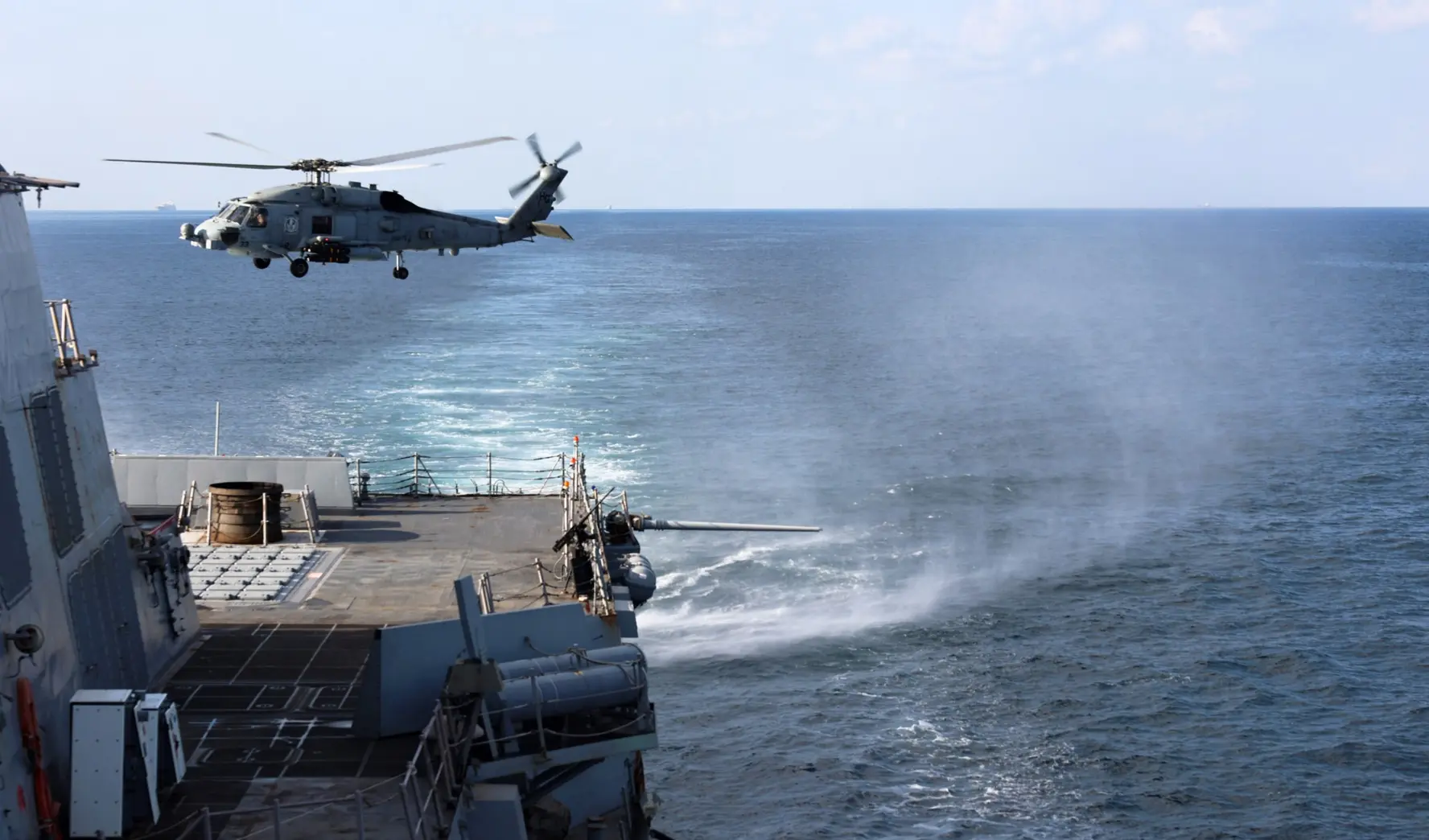
Irán se ha centrado en el uso de minas desde la década de 1980 como una forma eficaz de obstaculizar el tráfico comercial y militar. Poseía una gran cantidad de minas; se estima que eran miles. Sin embargo, no está claro públicamente cuántas de esas minas, ni de qué tipo, ha logrado introducir en el estrecho. Estados Unidos ha estado atacando a los buques minadores e intentando impedir que las minas lleguen al agua. Pero, sin duda, parece existir una amenaza significativa de minas que Irán ha logrado colocar.
Hundreds of U.S. airstrikes have targeted one of Iran’s key strengths in recent months: naval mines. U.S. officials believe those strikes have wiped out 90 percent of Iran’s once-formidable stockpile. But that’s not the only statistic that matters right now. The risk that even a few Iranian mines may have landed in the Strait of Hormuz has helped paralyze shipping traffic in one of the world’s most important waterways.
Scott Savitz is a senior engineer at RAND, a specialist in naval operations and technologies, and an expert in mine warfare. His research has focused on the promise of uncrewed naval ships, the future of the U.S. Coast Guard, competition in the Arctic, and the persistent threat that mines have posed for generations.
Clearing the Strait of Hormuz could be quick and straightforward, he said—if Iran isn’t firing at mine-hunting ships. But the effort could take months if that’s not the case. “Keep in mind,” he added, “the number of mines you need to create an effective minefield is zero. You just need people to perceive that there’s a threat there.”
What is your assessment of the scale and sophistication of the mine threat in the Strait of Hormuz?
Iran has focused on mines since the 1980s as an effective way to stymie commercial and military traffic. It had copious mines—estimates were in the thousands. But it’s not clear at a public level how many of those mines, or what types of mines, it has managed to get into the strait. The U.S. has been targeting mine-laying vessels and trying to prevent mines from getting into the water. But certainly, there does appear to be a meaningful mine threat that Iran has managed to place.
What different types of mines might Iran have used?
Iran has an arsenal of moored mines, which are the classic spiky balls that everyone envisions. They’re tethered to an anchor and blow up when a ship bumps into them. But it also has a number of influence mines. These sit on the seabed and are harder to detect. They detonate when they sense a ship overhead.
How difficult is it going to be to clear a passage to the point that shipping companies perceive that it’s safe again?
You’ve hit on just the right point: People have to perceive that it’s safe enough. We think that Iran has laid a relatively small number of mines. But it is extraordinarily difficult and slow to try to clear mines under fire. Mine countermeasures assets move slowly, in predictable patterns, and largely lack self-defense capabilities. All of this makes them perfect targets. So if Iran is still firing projectiles or sending out small attack boats, that could protract the timeline for months. On the other hand, if it’s quiet, it might be a matter of days.
We think that Iran has laid a relatively small number of mines. But it is extraordinarily difficult and slow to try to clear mines under fire.
You’ve written that mines could play an important role in defending Taiwan against a possible invasion by China. What can Taiwan learn from what is happening now in the strait?
It’s just a reminder of the impact that mines can have. If China were to ever launch an amphibious invasion, it would have to move immense quantities of personnel and materiel in short intervals. Mines can disrupt that. They can delay. They can cause some attrition. They can also channelize ships, forcing them to stay within certain cleared lanes, and thereby making them easier targets. This would all make it hard for China to establish a combat-effective force ashore.
You’ve also studied historical mine warfare. What lessons from past conflicts are relevant here?
During the Korean War, the United States was preparing to launch an amphibious attack against Wonsan, but it was stymied by North Korea’s use of naval mines. An admiral at the time noted: “We have lost control of the seas to a nation without a navy.”
Mine warfare is not the most exciting area of the Navy. It doesn’t involve the most cutting-edge technologies. But these can be exceptionally disruptive weapons.
You worked with the Navy’s mine warfare command before coming to RAND in the early 2010s. How has that experience shaped your research?
I learned a great deal about the challenges that operators face in an area of warfare that doesn’t always get the attention or resources it should. I supported mine warfare exercises around the world—in the Middle East, East Asia, the United States. And I came to really understand the importance of listening to these operators, to better understand how to create opportunities for them to do their jobs better.
Fuente: https://www.rand.org