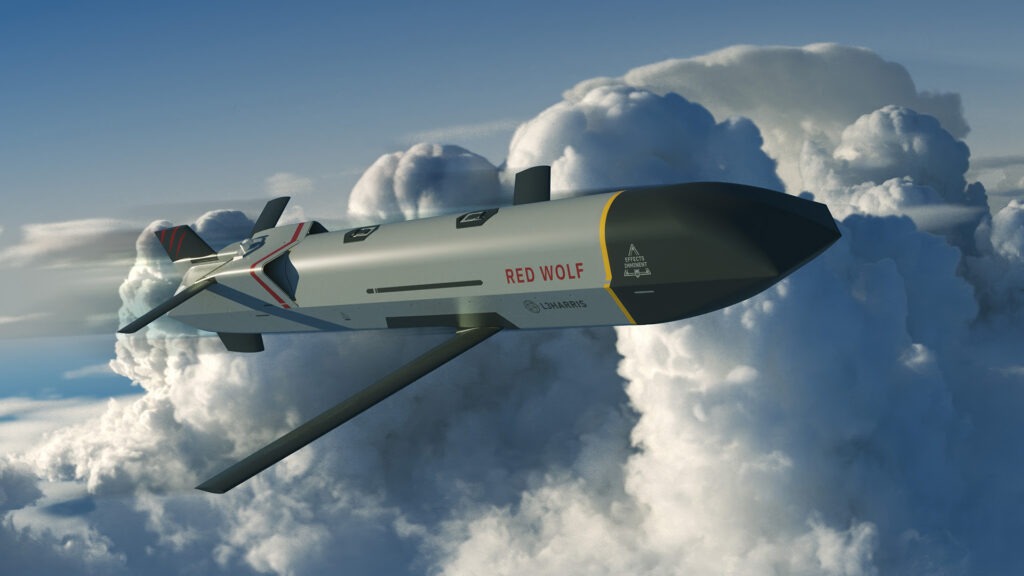
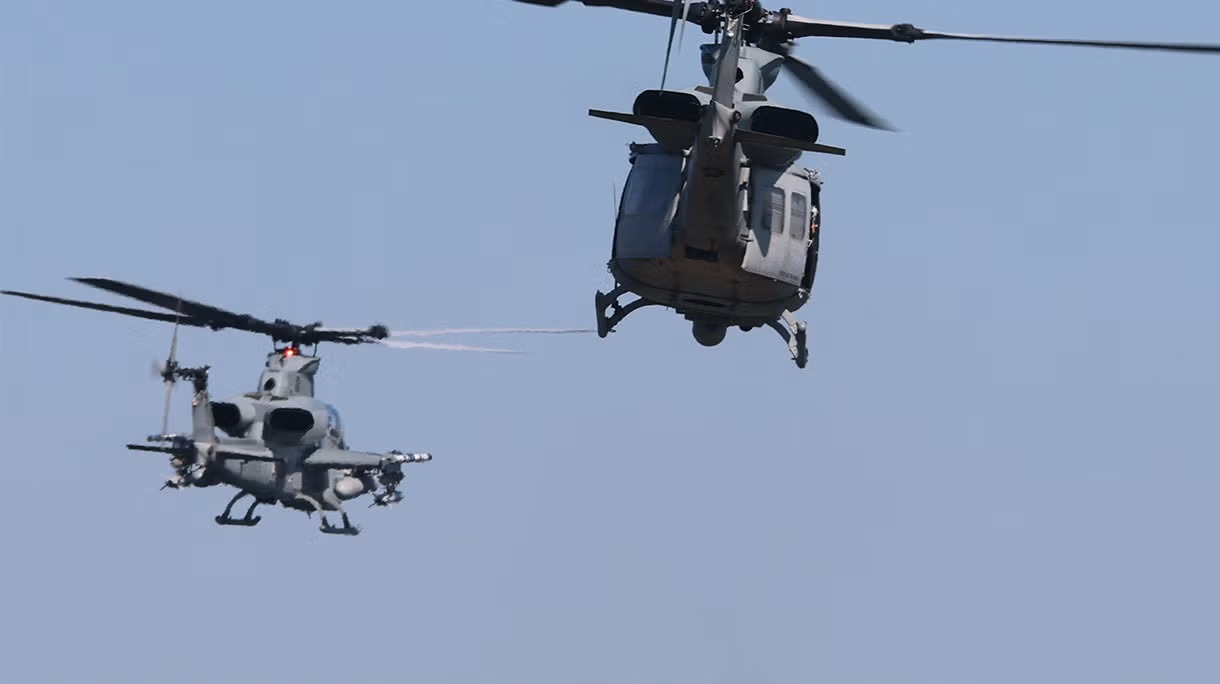
La empresa L3Harris Tech junto al cuerpo de US Marines realizaron ensayos satisfactorios del sistema Vehículo de Lanzamiento Aéreo de Efectos Múltiples “RED WOLF”. Disparado desde un helicóptero liviano AH-1Z “Viper” volando a baja altura, el sistema RED WOLF alcanzó un blanco marítimo a una distancia de 340 km. Se trata de un vehículo “tipo misil” propulsado por motor turbojet que puede llevar una carga de 11kg, tanto para efectos letales como para su empleo como sistema sensor, en acciones de guerra electrónica (GE) o servir como señuelo en el marco de operaciones de ataque. En resumen, un vehículo aéreo de gran versatilidad, para lanzamiento desde pequeñas plataformas como los helicópteros, que aporta a los Marines de extraordinarias capacidades letales y no letales a grandes distancias.
The US Marine Corps has conducted low-altitude live-fire testing of L3Harris Technologies’ Red Wolf launched-effect vehicle over the Atlantic Test Range.
Fired from an AH-1Z Viper helicopter, the munition successfully engaged a sea-based target as part of the Marine Corps’ Long Range Attack Missile (LRAM) capability demonstration.
The LRAM program is intended to provide a long-range precision-strike capability beyond existing rotary-wing munitions such as the AGM-114R-4 Hellfire and the Joint Air-to-Ground Missile–Medium Range. Those systems have effective ranges of approximately 21 miles (34 kilometers) and 10 miles (16 kilometers), respectively.
During the test, Red Wolf also demonstrated its ability to function as a targeting and networking node, highlighting its utility beyond a purely kinetic role.
The event additionally marked the first time a Marine Corps rotary-wing platform employed a weapon system operated via a tablet-based control device.
“This test validated Red Wolf’s advanced tracking and targeting capabilities, further demonstrating its ease of use and integration across platforms,” President at L3Harris’ Space and Airborne Systems Ed Zoiss said.
“We’ve now proven our launched effects vehicles will help provide our warfighters the asymmetrical advantage they need to handle increasingly sophisticated threats without the need to enter into adversary weapon engagement zones.”
Versatile Munition Pack
Red Wolf is a family of “launched effects” that can be employed for precision strike as well as non-kinetic roles, including communications relay, signal detection, electronic attack, and decoy missions.
The turbojet-powered, six-foot (1.82-meter) missile-class vehicle features fold-out fins for stabilization and control and can be equipped with payloads weighing up to 25 pounds (11.4 kilograms).
According to L3Harris, Red Wolf flies at subsonic speed and offers a range of more than 200 nautical miles (approximately 230 miles/370 kilometers) at low altitude, with an endurance exceeding 60 minutes.
This reach allows it to operate outside the engagement envelopes of modern shipborne surface-to-air missile systems and coastal anti-access/area-denial networks.
In a Pacific conflict, the munition could be used to temporarily disrupt a warship’s sensors, creating a window for follow-on salvos from larger weapons such as the Long-Range Anti-Ship Missile or the Joint Strike Missile.
Affordable Missile for a Pacific Fight
The system has been flight-tested more than 40 times since 2020 across a range of platforms, including crewed and uncrewed fixed-wing aircraft, rotorcraft, and ground-based launchers, demonstrating a high level of technical maturity.
With an estimated unit cost of around $300,000, L3Harris is reportedly targeting a production rate of up to 1,000 missiles per year.
Red Wolf supports the Pentagon’s push to augment limited inventories of high-cost long-range strike weapons in a protracted peer conflict, particularly in the Indo-Pacific, where systems such as the Joint Air-to-Surface Standoff Missile–Extended Range and Tomahawk are expensive and production-constrained.
RedWolf is expected to be ready for initial operational fielding in 2026, according to Armada International.
Fuente: https://thedefensepost.com