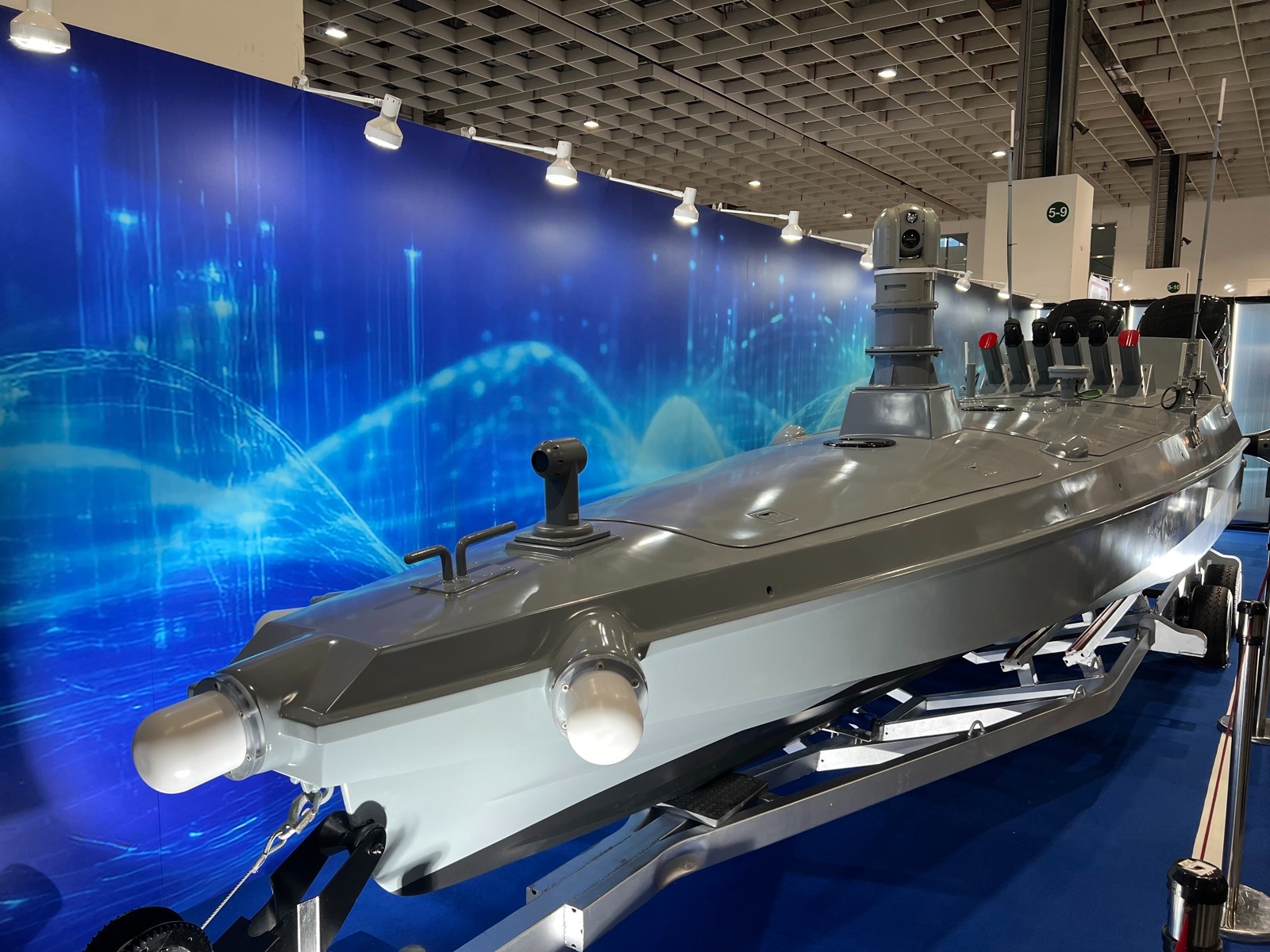
Las autoridades de Defensa de Taiwán han anunciado su decisión de producir 1.600 sistemas autónomos Marinos (USV) de superficie para misiones de ataque, que le permitan hacer frente al eventual conflicto con China. Con un presupuesto asignado de US$ 39.8 Billones, se ha dispuesto que para acelerar la producción de los USV, la responsabilidad de ejecución sea del National Chung-Shan Institute of Science and Technology (NCSIST). Este Instituto tiene una importante experiencia en el desarrollo de sistemas autónomos como el USV Kuai Chi, realizado en cooperación con la empresa estadounidense MARTAC. Los requerimientos principales del sistema son una velocidad de hasta 64 km/h, alcance de 460 km, la capacidad de portar y emplear diferentes tipos de armamento, sistemas sensores y de comunicación, así como operar en enjambres. Se espera que las primeras unidades estén en servicio en 2027.
TAIPEI (Taiwan News) — The military plans to produce 1,600 attack unmanned surface vessels under the proposed NT$1.25 trillion (US$39.85 billion) special budget to strengthen defense in the Taiwan Strait.
Officials said building the hulls is relatively straightforward, but turning them into weapons requires integrating high-performance explosives with advanced guidance and command-and-control systems, per Liberty Times.
To speed production, the Navy Command is expected to commission the National Chung-Shan Institute of Science and Technology as prime contractor. NCSIST has relevant experience through its Kuai Chi program and has signed a cooperation agreement with US USV company MARTAC.
That setup would allow NCSIST to integrate command-and-control, sensors, guidance modules, and explosives into a complete weapons system rather than delivering a standalone platform, officials said. If selected as the primary manufacturer, partial deployment could begin as soon as 2027.
Both the Navy and Army have submitted requirements for the attack USVs. The Navy’s baseline calls for a top speed of at least 64 kilometers per hour and a range of at least 460 km.
The vessels must be capable of autonomous target identification and navigation with collision avoidance, endure sea state level 4 on the Beaufort scale, and operate in swarms. They also need electro-optical/infrared modules and the ability to transmit imagery from up to 44 km away while resisting interference with global navigation satellite systems and radio signals.
Fuente: https://www.taiwannews.com.tw