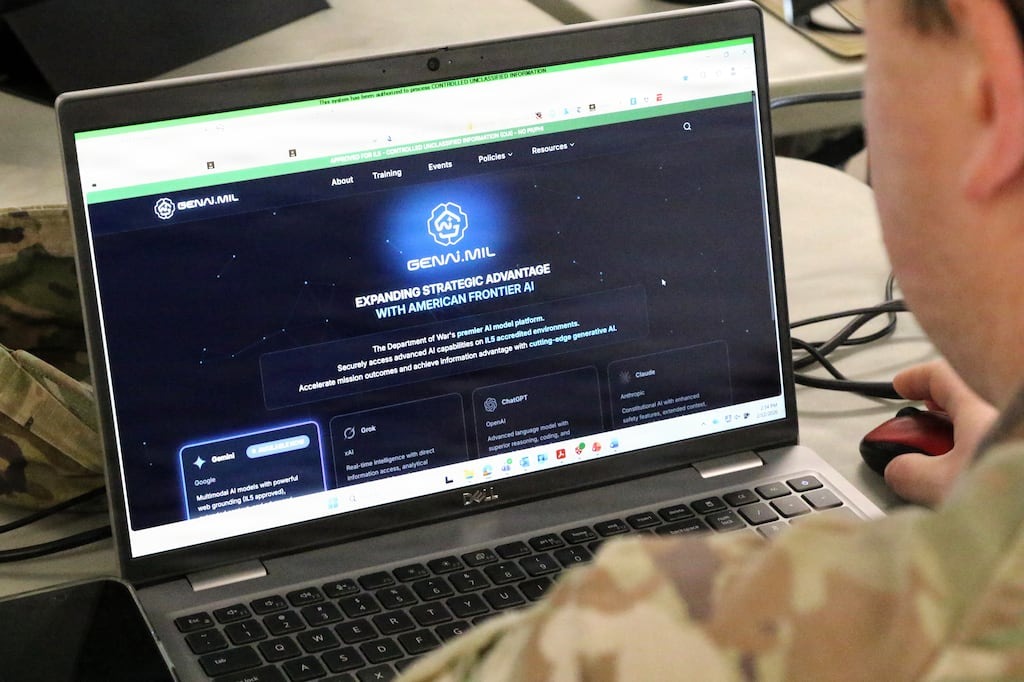
Military Times explica cómo el US ARMY ha comenzado a implementar herramientas de Inteligencia Artificial Generativa (IAG), para agilizar la actualización de su doctrina y manuales operativos. Lo normal es que este proceso de redacción e investigación puede tardar años, por lo que el Directorio de Doctrina de Armas Combinadas (CADD) ha comenzado a utilizar la IA para realizar búsquedas rápidas en bases de datos y redactar así los borradores de las normas. El objetivo es proporcionar bases doctrinarias actualizadas, ante un campo de batalla que evoluciona más rápidamente que la doctrina. No obstante, los militares afirman que la tecnología no sustituye el criterio humano, ya que se han detectado errores o “alucinaciones” donde la IA inventa datos o utiliza fuentes obsoletas. En resumen, esa fuerza busca aprovechar la IA como una herramienta eficiente para recopilar información relevante, mejorar la organización de ideas y la redacción, manteniendo siempre la supervisión de expertos “humanos” para evitar fallos críticos en la normativa.
When a soldier reads a field manual, they are studying the Army’s guide on how to fight. Now, doctrine writers are using artificial intelligence to update those manuals, the service shared in a press release this week.
Leaders at the Combined Army Doctrine Directorate have started training authors on generative AI tools to speed up research and drafting, a move that reflects the military’s broader efforts to quickly push updated guidance to a force facing a rapidly-evolving battlefield.
“We have had people ask us about using AI and large language models to speed up the doctrine development process for years,” said Richard Creed Jr., the directorate’s leader. “So, when some of these tools became available, the first thing we did was figure out their capabilities,” he said.
Doctrine development has historically been a time consuming and tedious process that stretches years, and officials are looking to speed it up by incorporating AI into the writing process, the Army said.
For example, one internally-developed tool lets authors speedily search hundreds of texts for historical examples, transforming a task that may have previously taken days of investigation. Another tool helps writers check grammar and how easy their work is to comprehend, freeing up leaders to focus on other parts of the process.
Still, officials noted in the release that the technology is far from perfect and cannot be used without human judgment .
Lt. Col. Scott McMahan, a doctrine writer assigned to the Operational Level Doctrine Division acknowledged that the tools are flawed and that AI models may “hallucinate,” and make up information that is not factually accurate. The models are improving though, he said.
“You treat it like a resourceful and motivated young officer who might not know all the information, but they can certainly assist you in cutting some corners and being a little more efficient,” McMahan said.
Army leaders have been talking about AI on the battlefield as well, warning that a future large-scale fight could overwhelm human capacity with thousands of targets per day. The service has also stood up a dedicated AI and machine learning career field for officers to specialize.
Fuente: https://www.militarytimes.com