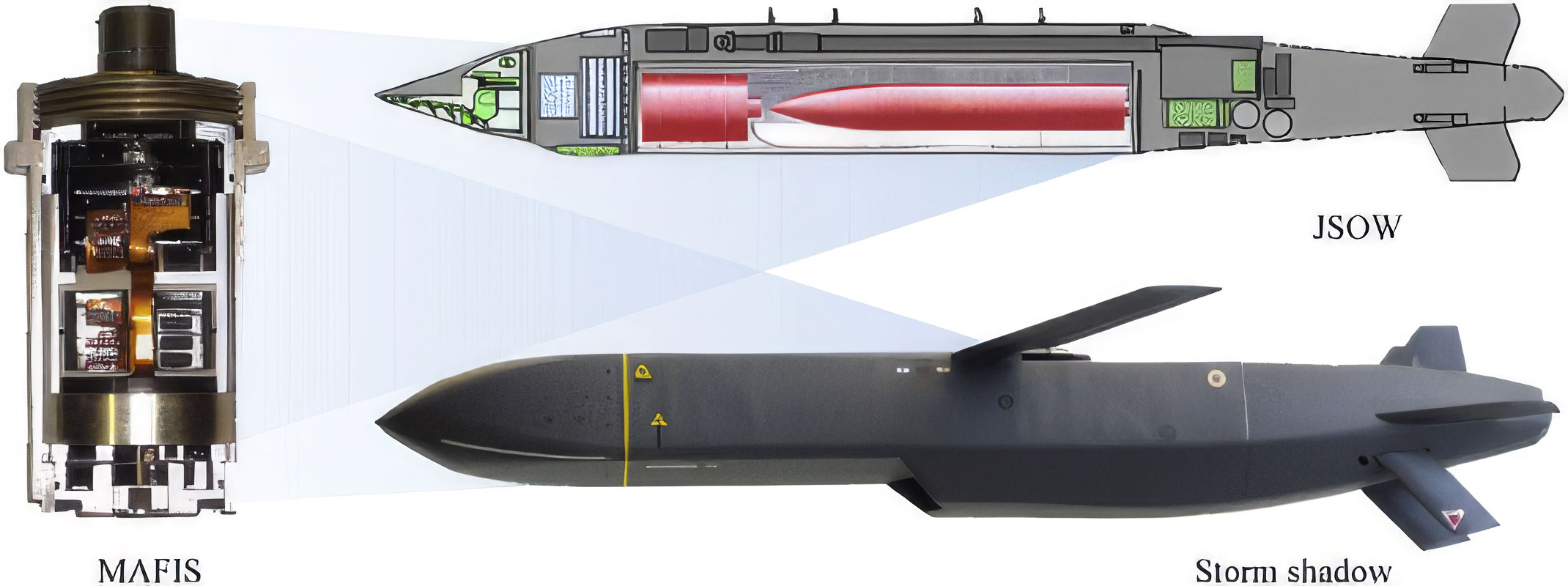
Las espoletas de penetración para objetivos reforzados (HTPF,) por sus siglas en inglés, son componentes clave para la toma de decisiones y el control de la iniciación en armas de penetración, afectando directamente la efectividad de las ojivas contra objetivos reforzados y profundamente enterrados. Si bien se han logrado avances sustanciales gracias a la evolución de los requisitos operativos y las innovaciones tecnológicas, las HTPF existentes aún no satisfacen las demandas de los sistemas de armas cada vez más inteligentes. El artículo organiza el desarrollo de las HTPF en cuatro etapas tecnológicas basadas en la cadena de activación-información-
Abstract
As the core decision-making and initiation-control unit in penetration weapons, the hard-target penetration fuze (HTPF) is critical to the terminal lethality of warheads against hard and deeply buried targets. Driven by growing operational demands and advances in key technologies, significant progress has been made in HTPF development. However, current HTPF designs and performance levels still cannot fully meet the evolving requirements of intelligent weapon systems. This article provides a comprehensive overview of the development of HTPFs, with emphasis on their technical evolution, key enabling technologies, and future trends. First, the technical evolution of HTPFs is systematically reorganized according to the trigger-information-decision chain, by which HTPFs are classified into four technical stages. This classification links triggering mechanisms, primary information sources, initiation-control modes, and representative engineering models, and is further used to compare the technological pathways of major countries. Second, following the operational sequence of digital programmable HTPFs, a system-level framework is established by coupling projectile-fuze load characteristics, dynamic response and protection, hard-target information sensing and feature extraction, precision initiation control, and performance evaluation. Within this framework, the advantages, limitations, and engineering applicability of representative technologies and methods are analyzed in detail. On this basis, the main development trends of HTPFs are identified, including high-survivability embedded electronics, multi-domain information sensing and fusion, and the stepwise use of artificial intelligence as an auxiliary recognition module while retaining deterministic safety-and-arming logic. This review provides a valuable reference for the design, evaluation, and engineering application of next-generation intelligent HTPFs.
 Fuente: https://doi.org